Nadda meets Nepal Health Minister at first BIMSTEC Health Summit
Synopsis
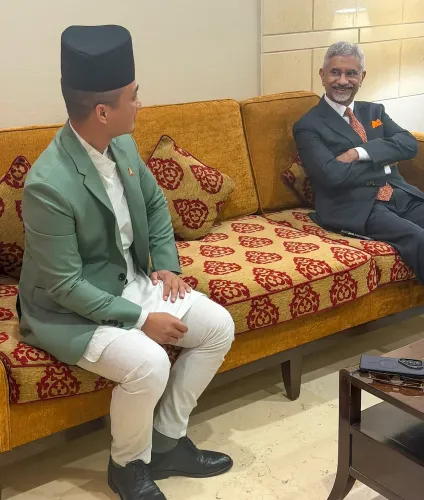
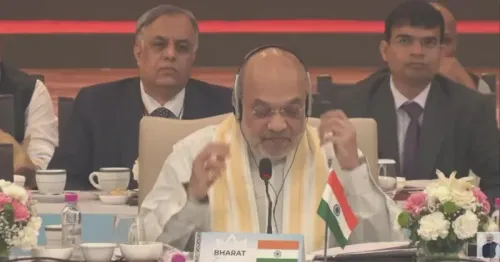
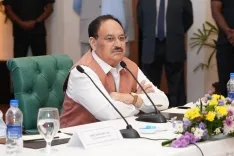
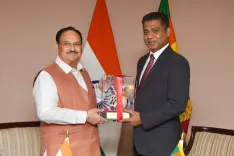
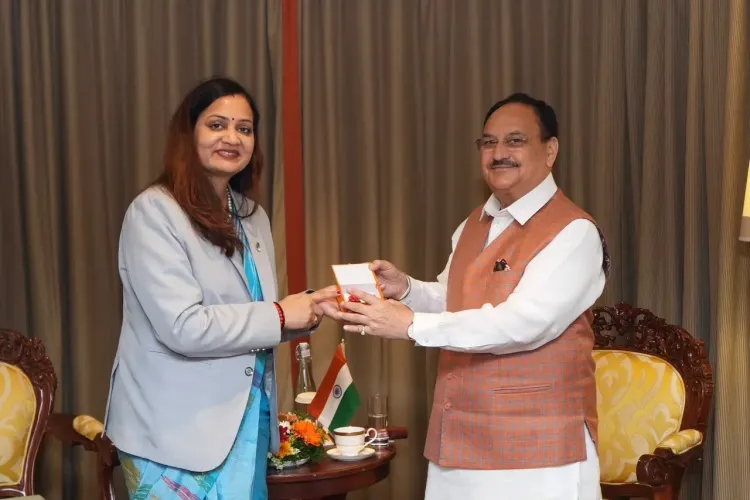
Union Health Minister J. P. Nadda met Nepal's Health Minister Neesha Mehta on the sidelines of the first BIMSTEC Health Ministers' Meeting in Colombo on November 11, discussing bilateral healthcare cooperation, affordable access, and shared expertise under India's Neighbourhood First policy.
Key Takeaways
Union Health Minister J.
Nadda met Nepal's Minister for Health and Food Safety Neesha Mehta in Colombo on November 11, 2026 .
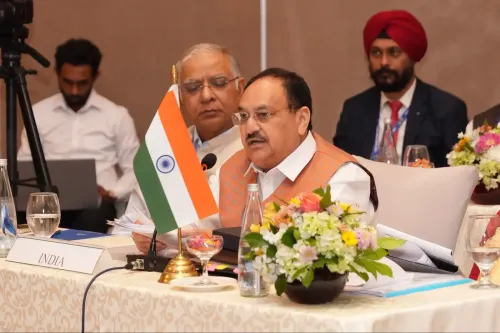
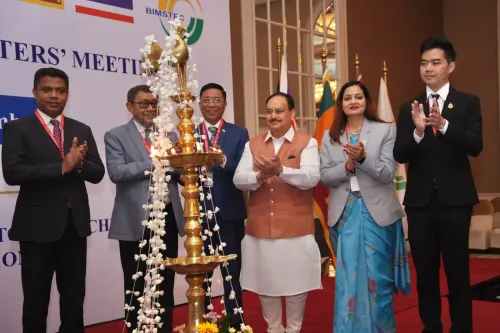
The meeting took place at the First BIMSTEC Health Ministers' Meeting — the first dedicated health ministerial under the BIMSTEC framework.
Discussions covered deepening bilateral and regional health cooperation, sharing expertise, and advancing affordable, accessible, quality healthcare.
India's engagement is anchored in Prime Minister Modi's Neighbourhood First policy , articulated in 2014 .
BIMSTEC — the Bay of Bengal Initiative for Multi-Sectoral Technical and Economic Cooperation — groups seven nations and has flagged health as a priority sector since the 2018 Kathmandu summit .
Follow-up actions, including potential bilateral health MoUs between India and Nepal, will be closely watched.
On the sidelines of the First BIMSTEC Health Ministers' Meeting in Colombo, Union Health Minister J. P. Nadda held bilateral talks with Nepal's Minister for Health and Food Safety, Ms. Neesha Mehta, on Wednesday, November 11, 2026 — a meeting that underscored how India's regional health diplomacy is finding concrete expression at the multilateral table.
India-Nepal health ties take centre stage in Colombo
Nadda described the discussions as 'fruitful', covering three specific pillars: deepening bilateral and regional health cooperation, sharing expertise and best practices, and advancing access to affordable, accessible, and quality healthcare. The meeting is notable as the first-ever dedicated Health Ministers' gathering under the BIMSTEC framework — the Bay of Bengal Initiative for Multi-Sectoral Technical and Economic Cooperation, a seven-nation grouping that has steadily expanded its sectoral agenda since its founding.
India and Nepal share an open border and one of South Asia's most intertwined people-to-people relationships. That connectivity has long translated into cross-border flows of patients, medical workers, and pharmaceutical supplies — giving bilateral health talks a practical urgency beyond diplomatic formality.
Modi's Neighbourhood First doctrine as the policy anchor
Prime Minister Narendra Modi articulated the Neighbourhood First policy in 2014, placing immediate neighbors — Nepal prominently among them — at the top of India's foreign-engagement priorities. Nadda's post explicitly invoked the doctrine, signalling that the Colombo meeting is not an isolated diplomatic courtesy but a deliberate expression of that sustained strategic posture.
The BIMSTEC leaders' summit in Kathmandu in 2018 had already flagged health cooperation as a priority sector for the grouping. The 2026 Health Ministers' Meeting in Colombo represents a structural follow-through on that commitment — moving from leaders' declarations to ministerial-level operational engagement.
What the first BIMSTEC health ministers' platform signals
The significance of this meeting lies as much in the format as in the content. A standalone health ministerial under BIMSTEC creates a dedicated institutional channel — separate from heads-of-government summits — for the region's health bureaucracies to coordinate on shared challenges: pandemic preparedness, affordable medicines, cross-border disease surveillance, and medical-worker exchanges.
For India, hosting ambitions in the BIMSTEC health space align with its broader self-positioning as a regional healthcare hub, backed by its generic pharmaceutical industry and a network of bilateral cooperation programmes with neighbours. For Nepal, closer integration with India's health systems offers tangible benefits for communities near the open border who routinely access Indian hospitals and medical facilities.
Follow-up actions — including any bilateral health memoranda of understanding between the two countries — will be the real test of whether the momentum from Colombo translates into measurable outcomes on the ground.
Point of View
Rather than replace, bilateral relationships. The explicit invocation of the Neighbourhood First policy signals continuity of strategic doctrine across successive diplomatic engagements. For the BIMSTEC health architecture, a dedicated ministerial-level platform marks an institutional upgrade that could anchor long-term health-security coordination in the Bay of Bengal region. The India-Nepal channel, given the two countries' open border and deep people-to-people links, remains one of the most operationally consequential bilateral health relationships in South Asia.
NationPress
11 Nov 2026
Frequently Asked Questions
What is the BIMSTEC Health Ministers' Meeting?
The BIMSTEC Health Ministers' Meeting is a dedicated ministerial-level platform under the Bay of Bengal Initiative for Multi-Sectoral Technical and Economic Cooperation, bringing together health ministers from the grouping's seven member nations. The first such meeting was held in Colombo in November 2026.
What did JP Nadda discuss with Nepal's health minister in Colombo?
Union Health Minister J. P. Nadda held discussions with Nepal's Minister for Health and Food Safety Neesha Mehta on deepening bilateral and regional health cooperation, sharing expertise and best practices, and advancing affordable, accessible, and quality healthcare for both countries.
What is India's Neighbourhood First policy?
India's Neighbourhood First policy was articulated by Prime Minister Narendra Modi in 2014 and prioritises deeper engagement with India's immediate neighbours — including Nepal — across sectors such as trade, connectivity, and healthcare.
Why is India-Nepal health cooperation significant?
India and Nepal share an open border and deep historical and cultural ties, with many communities on both sides routinely accessing each other's health facilities. This makes health cooperation one of the most practically impactful dimensions of the bilateral relationship.
What BIMSTEC health milestones led to the 2026 Colombo meeting?
The BIMSTEC leaders' summit in Kathmandu in 2018 formally flagged health sector cooperation as a priority for the grouping. The 2026 Colombo meeting represents a structural follow-through, elevating health engagement to a dedicated ministerial-level format for the first time.