JP Nadda in Colombo for first-ever BIMSTEC Health Ministers' Meeting
Synopsis
For the first time in BIMSTEC's history, health ministers from seven Bay of Bengal nations are convening in Colombo — and India's JP Nadda is leading the charge. With antimicrobial resistance, pandemic preparedness, and climate-linked health risks on the agenda, this inaugural forum could mark the start of a structured multilateral health architecture for a region home to 1.7 billion people.
Key Takeaways
JP Nadda arrived in Colombo on 10 November for the first-ever BIMSTEC Health Ministers' Meeting .
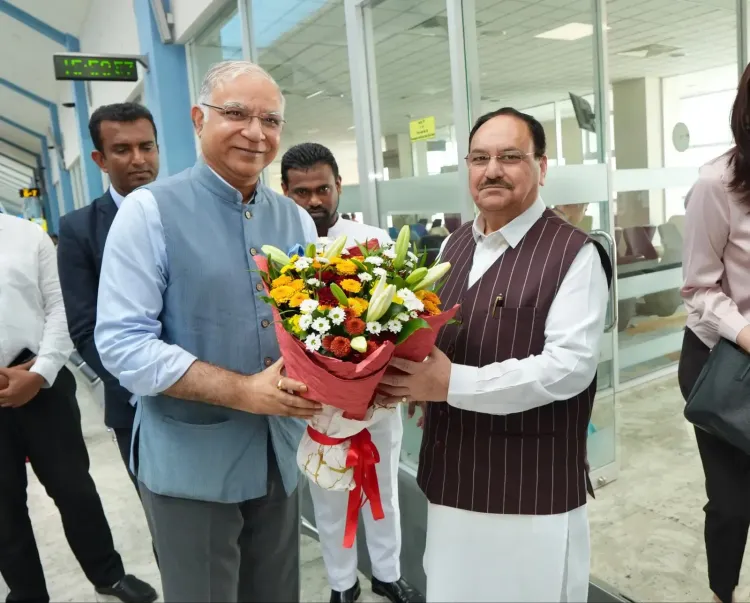
India's High Commissioner Santosh Jha received Nadda upon arrival in the Sri Lankan capital.
The BIMSTEC Senior Officials' Meeting on Health began the same day as a preparatory session.
Key agenda items include pandemic preparedness , antimicrobial resistance , digital healthcare , climate change health impacts , and the One Health approach .
Nadda cited PM Modi's Neighbourhood First and Act East policy as the guiding vision for India's participation.
BIMSTEC spans seven nations — Bangladesh, Bhutan, India, Myanmar, Nepal, Sri Lanka, and Thailand — with a combined population exceeding 1.7 billion .
Union Minister of Health and Family Welfare JP Nadda arrived in Colombo, Sri Lanka, on Tuesday, 10 November to attend the landmark first BIMSTEC Health Ministers' Meeting — a historic regional forum convening health leaders from the Bay of Bengal Initiative for Multi-Sectoral Technical and Economic Cooperation bloc for the first time. India's High Commissioner to Sri Lanka, Santosh Jha, received Nadda upon his arrival in the Lankan capital.
Nadda's Agenda and Regional Priorities
Sharing his arrival on X (formerly Twitter), Nadda described the meeting as 'historic' and outlined his intent to advance shared public health priorities across the BIMSTEC region. 'Arrived in Colombo, Sri Lanka, to participate in the historic first BIMSTEC Health Ministers' Meeting. Looking forward to engaging with my counterparts from BIMSTEC member nations to strengthen regional health cooperation, advance shared public health priorities and foster greater collaboration in healthcare,' he posted.
Nadda linked India's participation to Prime Minister Narendra Modi's foreign policy doctrine, adding: 'Guided by Hon'ble Prime Minister Shri Narendra Modi Ji's vision of Neighbourhood First and Act East, India remains committed to building a healthier, more resilient and prosperous BIMSTEC region.'
Senior Officials' Meeting Kicks Off Proceedings
Ahead of the ministerial-level gathering, the BIMSTEC Senior Officials' Meeting on Health commenced in Colombo on the same day, serving as a preparatory session. According to Colombo-based broadcaster Ada Derana, discussions at the senior officials' level are centred on identifying common regional health challenges, building collective response mechanisms, and facilitating the exchange of technical expertise among member states.
Key Issues on the Table
The ministerial discussions are expected to cover a broad spectrum of health governance concerns, including the prevention and control of communicable diseases and pandemics, preparedness and response to public health emergencies, and the strengthening of disease surveillance systems. Delegates will also examine the resilience of national healthcare systems across member states.
Further agenda items include digital healthcare, medical research, antimicrobial resistance (AMR), the health impacts of climate change, and the One Health approach — a framework that recognises the interconnection between human and animal health. The promotion of traditional medicine is also scheduled for deliberation, an area where India, through its AYUSH framework, holds considerable regional influence.
India's Strategic Interest in BIMSTEC Health Diplomacy
The Ministry of Health and Family Welfare characterised Nadda's visit as 'an important step towards strengthening regional health cooperation, advancing shared public health priorities and deepening India's healthcare partnership with Sri Lanka and other BIMSTEC member nations.' The forum brings together Bangladesh, Bhutan, India, Myanmar, Nepal, Sri Lanka, and Thailand — a combined population of over 1.7 billion people — making regional health coordination a matter of significant public interest.
This is notably the first time BIMSTEC has convened a dedicated health ministers' forum, signalling a deepening of sectoral cooperation within the bloc beyond its traditional focus on trade and connectivity. With antimicrobial resistance and climate-linked health threats rising across the region, the outcomes of this meeting could shape a multilateral health agenda for years ahead.
Point of View
Amid rising antimicrobial resistance and unresolved pandemic-preparedness gaps across South and Southeast Asia, gives it operational urgency beyond symbolism. What will matter is whether Colombo produces a binding framework — surveillance data-sharing, joint procurement, or AMR action plans — or merely a declaration. BIMSTEC has a track record of lofty communiqués without follow-through; a dedicated health ministers' track, if institutionalised annually, would be the real indicator of intent.
NationPress
11 Nov 2026
Frequently Asked Questions
What is the BIMSTEC Health Ministers' Meeting?
The BIMSTEC Health Ministers' Meeting is a multilateral health forum bringing together ministers from the seven BIMSTEC member nations — Bangladesh, Bhutan, India, Myanmar, Nepal, Sri Lanka, and Thailand. The Colombo meeting on 10 November 2026 is the first time such a ministerial-level health summit has been convened under the BIMSTEC framework.
Why is JP Nadda attending the BIMSTEC meeting in Colombo?
JP Nadda, India's Union Minister of Health and Family Welfare, is attending to represent India at the inaugural BIMSTEC Health Ministers' Meeting. His participation advances India's Neighbourhood First policy and aims to deepen regional cooperation on issues like pandemic preparedness, antimicrobial resistance, and digital healthcare.
What topics are being discussed at the BIMSTEC health summit?
The summit's agenda covers communicable disease prevention and pandemic control, public health emergency preparedness, disease surveillance system strengthening, digital healthcare, medical research, antimicrobial resistance, climate change health impacts, the One Health approach, and promotion of traditional medicine.
What is the One Health approach mentioned in the BIMSTEC discussions?
The One Health approach is a framework that recognises the interconnected nature of human, animal, and environmental health. It is a key agenda item at the BIMSTEC meeting, reflecting growing concern over zoonotic diseases and ecosystem-driven health risks across the region.
How does this meeting relate to India's foreign policy?
Nadda linked India's participation to Prime Minister Narendra Modi's Neighbourhood First and Act East doctrines, which prioritise strengthened ties with South and Southeast Asian neighbours. Health diplomacy through BIMSTEC is seen as a tool to deepen India's regional influence and build resilient multilateral institutions in the Bay of Bengal area.