Nadda Highlights India's Green Push on World Environment Day
Synopsis
On World Environment Day 2026, Union Health Minister J. P. Nadda highlighted India's environmental record under PM Modi, citing renewable energy expansion and schemes including Namami Gange, Swachh Bharat Abhiyan, the National Green Hydrogen Mission, and Mission LiFE as pillars of the government's ecological agenda.
Key Takeaways
Union Health Minister J.
Nadda posted a World Environment Day message on June 5, 2026 , crediting 12 years of the Modi government's environmental policies.
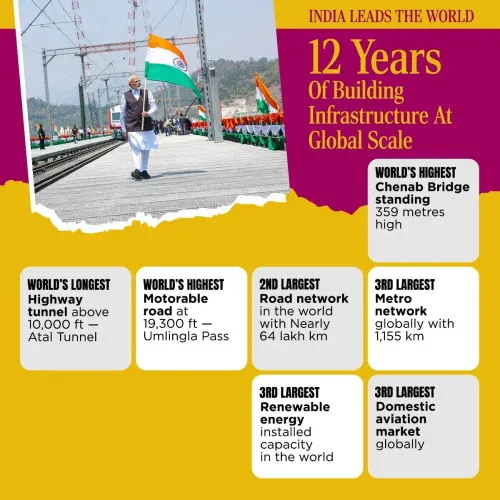
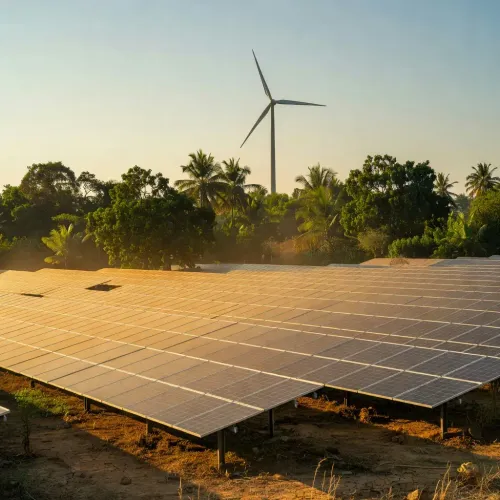
The post claims India has become the world's third-largest renewable energy producer , though this figure could not be independently verified.
Schemes cited include National Green Hydrogen Mission , Swachh Bharat Abhiyan , Namami Gange , Mission LiFE , and Ek Ped Maa Ke Naam .
India updated its Nationally Determined Contributions in 2022 , targeting 50 per cent non-fossil fuel energy capacity by 2030 .
Near-term focus remains on green hydrogen mission milestones and state-level renewable targets ahead of the next Conference of Parties .
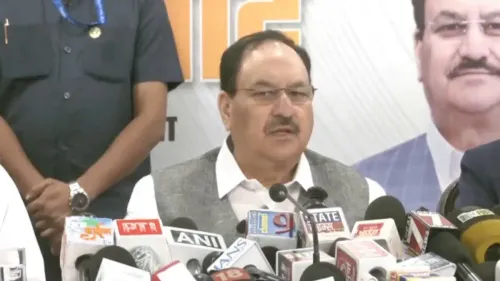
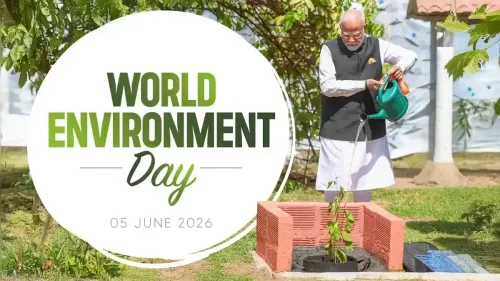
Union Health Minister and BJP national president J. P. Nadda on Friday, June 5, 2026, extended greetings on World Environment Day, citing a range of government-led environmental initiatives undertaken over the past decade under Prime Minister Narendra Modi. In a post on X, Nadda underscored India's renewable energy expansion and several flagship ecological programmes as markers of the administration's environmental record.
Context
World Environment Day, observed annually on June 5 under the aegis of the United Nations, serves as the principal global platform for raising awareness on environmental protection. Nadda's message highlighted what he described as transformative progress over 12 years of the current government, pointing to initiatives spanning clean energy, river conservation, sanitation, and sustainable lifestyles.
In his post, Nadda wrote: 'Over the last 12 years, under the visionary leadership of Hon'ble PM Shri Narendra Modi ji, India has emerged as the world's third-largest renewable energy producer.' He called on citizens to 'reaffirm our commitment to protecting nature and preserving the planet's precious resources.'
Policy Backdrop
The schemes cited by Nadda span multiple policy domains. Swachh Bharat Abhiyan, launched in 2014, targets sanitation and waste management at a national scale. Namami Gange, also announced in 2014, is an integrated conservation programme aimed at rejuvenating the Ganga river system.
The National Green Hydrogen Mission is a central government scheme designed to scale domestic green hydrogen production as part of India's broader decarbonisation agenda. Mission LiFE — Lifestyle for Environment — promotes sustainable consumer behaviour and was launched at COP26. India also updated its Nationally Determined Contributions in 2022, committing to achieving 50 per cent non-fossil fuel energy capacity by 2030.
The Ek Ped Maa Ke Naam campaign, also referenced in the post, is a tree-plantation drive framed around a personal and familial connection to environmental stewardship. The International Solar Alliance, co-launched in 2015, has been a parallel instrument for promoting solar deployment across member nations.
Stakeholders and Impact
India's renewable energy trajectory carries direct implications for the domestic energy sector, millions of households dependent on cleaner cooking and lighting solutions, and the country's standing in global climate negotiations. Expansion of solar capacity, in particular, has been tied to energy security objectives and employment generation in manufacturing and installation.
Environmental programmes such as Namami Gange and Swachh Bharat Abhiyan affect communities along major river corridors and in urban and peri-urban settlements respectively. Mission LiFE is directed at individual behaviour change, seeking to embed sustainability into everyday consumption patterns across a population of over 140 crore.
What's Next
Attention in the near term will focus on implementation milestones under the National Green Hydrogen Mission, including production targets and infrastructure roll-out. State-level renewable energy targets and their alignment with the 2030 national commitment will also be closely tracked ahead of the next Conference of Parties.
As international climate negotiations continue to evolve, India's ability to demonstrate measurable progress on the schemes cited on occasions such as World Environment Day will remain central to its diplomatic positioning on climate finance and technology transfer.
Point of View
The BJP is reinforcing its claim to environmental stewardship ahead of what remains a contested policy space. The invocation of green hydrogen alongside older schemes like Swachh Bharat signals an effort to project forward-looking ambition, not just legacy. Whether the rhetoric translates into verifiable milestones — particularly on green hydrogen and the 2030 NDC targets — will determine how durable this positioning proves in diplomatic and domestic arenas alike.
NationPress
22 Oct 2026
Frequently Asked Questions
What did J. P. Nadda say on World Environment Day 2026?
J. P. Nadda extended greetings on World Environment Day and highlighted India's environmental initiatives over the past 12 years, including renewable energy expansion, the National Green Hydrogen Mission, Namami Gange, Swachh Bharat Abhiyan, and Mission LiFE.
Is India really the world's third-largest renewable energy producer?
The claim that India is the world's third-largest renewable energy producer was made in Nadda's post; however, this specific ranking could not be independently verified from established public records at the time of publication.
What is Mission LiFE?
Mission LiFE, or Lifestyle for Environment, is a government initiative promoting sustainable consumer behaviour among Indian citizens. It was launched at COP26 and encourages individuals to adopt eco-friendly habits in daily life.
What is the National Green Hydrogen Mission?
The National Green Hydrogen Mission is a central government scheme aimed at scaling up domestic production of green hydrogen to support India's decarbonisation goals and reduce dependence on fossil fuels.
What is India's renewable energy target for 2030?
India updated its Nationally Determined Contributions in 2022, committing to achieving 50 per cent of its energy capacity from non-fossil fuel sources by 2030.