Nadda at BIMSTEC Health Meet: India to share healthcare expertise with member nations
Synopsis
India used the inaugural BIMSTEC Health Ministers' Meeting in Colombo to do more than show up — Health Minister J.P. Nadda pledged to host the BIMSTEC Centre of Excellence in Traditional Medicine in Jamnagar, Gujarat, while pushing for a region-wide pandemic preparedness and One Health framework. For a bloc of 1.7 billion people, this first-ever ministerial health meeting could be the architecture for the region's next public health response.
Key Takeaways
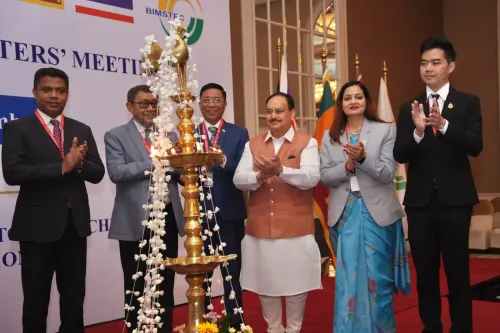
Nadda addressed the inaugural BIMSTEC Health Ministers' Meeting in Colombo, Sri Lanka on 11 November 2026 .
India committed to hosting the BIMSTEC Centre of Excellence in Traditional Medicine in Jamnagar, Gujarat .
Nadda highlighted Ayushman Bharat , digital health, and pandemic preparedness as pillars of India's regional health offer.
He called for enhanced cooperation in health security , One Health , and traditional medicine across BIMSTEC nations.
India's engagement is framed under Prime Minister Narendra Modi 's 'Neighbourhood First' and 'Act East' policy doctrines.
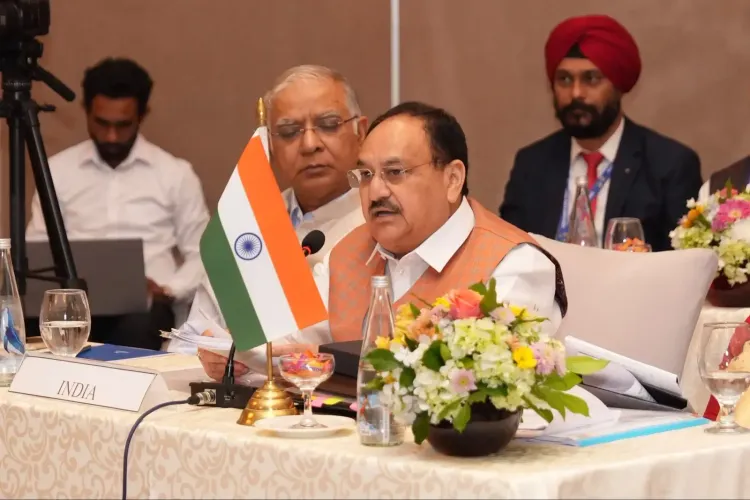
Union Health and Family Welfare Minister J.P. Nadda on Wednesday, 11 November 2026, reaffirmed India's readiness to share its healthcare expertise and best practices with BIMSTEC member nations, addressing the inaugural BIMSTEC Health Ministers' Meeting in Colombo, Sri Lanka. The landmark gathering marks the first time health ministers from BIMSTEC countries have convened under a dedicated multilateral framework.
Key Commitments from India
Nadda highlighted India's strides toward Universal Health Coverage through the Ayushman Bharat scheme, alongside strengthened public health infrastructure and digital healthcare initiatives. He emphasised regional solidarity and called for enhanced cooperation in health security, pandemic preparedness, One Health, and traditional medicine.
A notable announcement was India's commitment to hosting the BIMSTEC Centre of Excellence in Traditional Medicine in Jamnagar, Gujarat, aimed at promoting joint research, capacity building, and knowledge exchange across the region.
Modi's 'One Earth, One Family' Vision
'Guided by Prime Minister Narendra Modi's vision of 'One Earth, One Family, One Future', India remains committed to building a healthier, more inclusive and resilient BIMSTEC region,' Nadda said, according to the Ministry of Health and Family Welfare. He also invoked Modi's 'Neighbourhood First' and 'Act East' policy frameworks as guiding principles for India's regional health diplomacy.
Nadda's Arrival and Bilateral Engagements
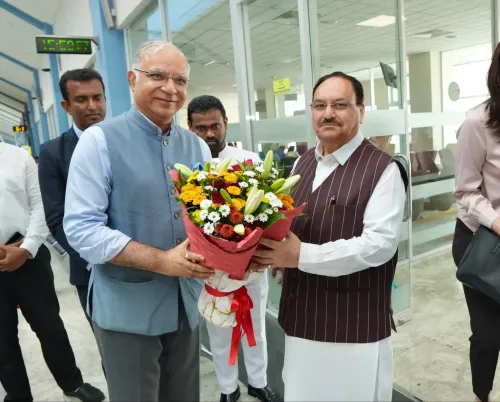
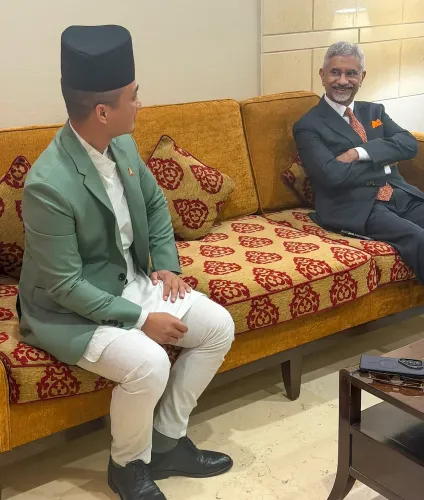
Nadda arrived in Colombo on Tuesday and was received by Indian High Commissioner Santosh Jha. On the sidelines of the meeting, he expressed intent to engage bilaterally with counterparts from BIMSTEC member nations to advance shared public health priorities and foster greater regional healthcare collaboration.
Why This Meeting Matters
The BIMSTEC grouping — comprising Bangladesh, India, Myanmar, Sri Lanka, Thailand, Nepal, and Bhutan — covers a combined population of over 1.7 billion people, many of whom face overlapping public health challenges including communicable diseases, non-communicable diseases, and disaster-related health emergencies. This inaugural ministerial-level health meeting signals a structural deepening of BIMSTEC's agenda beyond trade and connectivity. Notably, it comes amid post-pandemic momentum globally to institutionalise regional health preparedness frameworks. India's offer to anchor the Traditional Medicine Centre in Jamnagar — home to the World Health Organization's Global Centre for Traditional Medicine — adds institutional credibility to the pledge.
Point of View
Operational programmes across seven nations with vastly different health systems. The 'Neighbourhood First' framing is diplomatically sound, yet BIMSTEC has historically struggled with implementation gaps. If India is serious about regional health leadership, it needs binding timelines and a monitoring mechanism — not just vision statements echoing Modi's 'One Earth, One Family' rhetoric.
NationPress
11 Nov 2026
Frequently Asked Questions
What was the BIMSTEC Health Ministers' Meeting in Colombo?
It was the inaugural meeting of health ministers from BIMSTEC member nations — Bangladesh, India, Myanmar, Sri Lanka, Thailand, Nepal, and Bhutan — held in Colombo, Sri Lanka on 11 November 2026. The meeting aimed to build a regional framework for health security, pandemic preparedness, and cooperation in traditional medicine.
What did J.P. Nadda announce at the BIMSTEC meeting?
Nadda reaffirmed India's readiness to share its healthcare expertise and best practices with BIMSTEC nations. He also announced India's commitment to hosting the BIMSTEC Centre of Excellence in Traditional Medicine in Jamnagar, Gujarat, to promote joint research and capacity building.
What is the BIMSTEC Centre of Excellence in Traditional Medicine?
It is a proposed regional institution to be hosted by India in Jamnagar, Gujarat, focused on joint research, capacity building, and knowledge exchange in traditional medicine among BIMSTEC member nations. Jamnagar is also home to the WHO's Global Centre for Traditional Medicine.
How does Ayushman Bharat relate to India's BIMSTEC health commitments?
Nadda cited Ayushman Bharat as a model of Universal Health Coverage that India is willing to share learnings from with BIMSTEC nations. It represents the kind of large-scale public health infrastructure India is offering as a template for regional cooperation.
Who received Nadda on his arrival in Colombo?
Nadda was received by Indian High Commissioner Santosh Jha upon arriving in Colombo on Tuesday, 10 November 2026, ahead of the ministerial meeting.