CM Yogi hands 1,146 Revenue Junior Assistants their jobs on Bhaiya Dooj
Synopsis
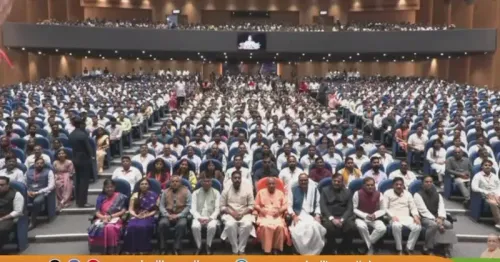
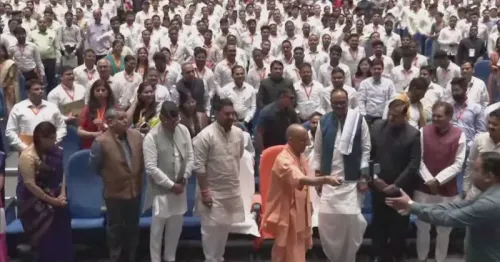
Chief Minister Yogi Adityanath distributed appointment letters to 1,146 Revenue Junior Assistants in Uttar Pradesh on Bhaiya Dooj, 11 November 2026, linking the hiring drive to youth welfare and the government's commitment to farmer-facing administration.
Key Takeaways
1,146 Revenue Junior Assistants in Uttar Pradesh received appointment letters at a state ceremony on 11 November 2026 .
Chief Minister Yogi Adityanath timed the distribution to coincide with Bhaiya Dooj , framing it as a festival gift to the state's youth.
Revenue Junior Assistants work directly on land records and farmer-related services, making these appointments consequential for Uttar Pradesh's agrarian population.
The drive is part of a broader vacancy-filling campaign across UP's revenue, police, education and health departments running since 2017 .
Strengthening field-level revenue offices is seen as central to the state's ongoing land-record digitisation push.
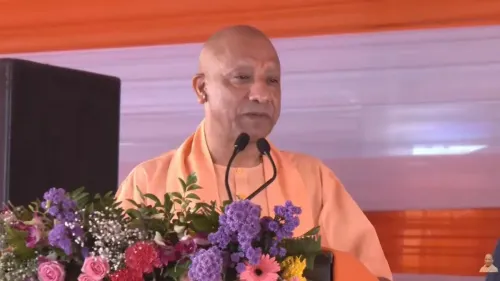
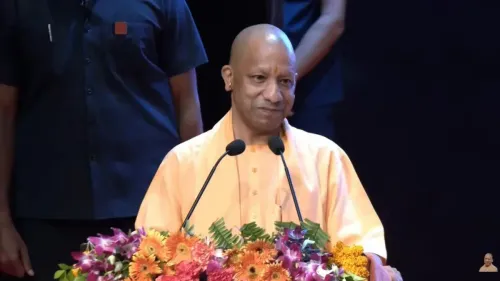
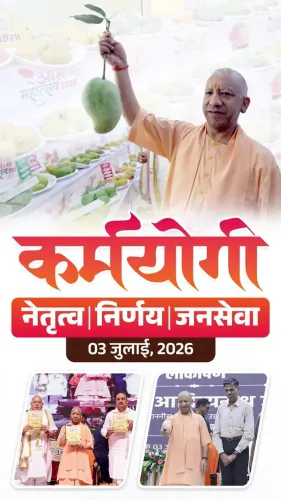
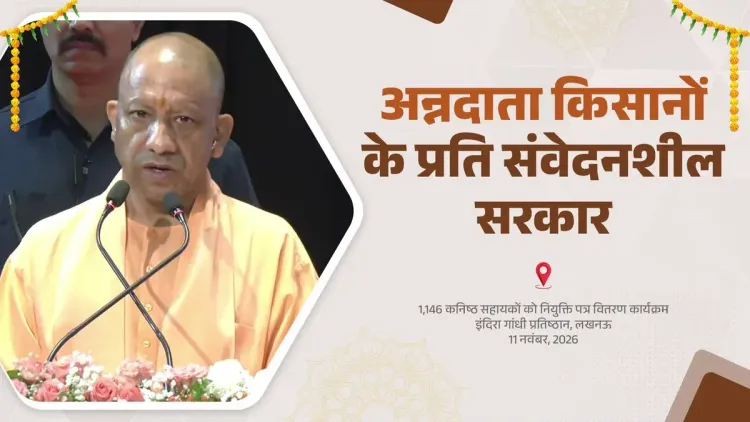
On the auspicious occasion of Bhaiya Dooj, Chief Minister Yogi Adityanath turned a Hindu festival of sibling bonds into a moment of governance — distributing appointment letters to 1,146 Revenue Junior Assistants at a ceremony on Wednesday, 11 November 2026, framing the event as both a gift to Uttar Pradesh's youth and an expression of the state government's solidarity with farmers.
Speaking at the ceremony, the Chief Minister's Office quoted him as saying: 'Aaj ka yeh samaroh yuvaon ko Bhaiya Dooj ka uphaar pradaan karne tatha annadata kisan ke prati sarkar ki samvedna vyakt karne ka avsar hai' — 'Today's ceremony is an opportunity to offer Bhaiya Dooj as a gift to the youth and to express the government's sensitivity towards farmer-providers.' The dual framing — jobs for youth, service for farmers — was deliberate.
Why Revenue posts matter to UP's farmers
These are not clerical positions in name only. Revenue Junior Assistants sit at the frontline of Uttar Pradesh's land-records machinery, processing everything from agricultural landholding updates to compensation cases filed by farming families. The Uttar Pradesh Revenue Department is the administrative interface between the state and its predominantly agrarian population, and understaffed offices have long meant delays in services that directly affect crop-loan eligibility and land-dispute resolution.
Filling 1,146 posts in one stroke injects capacity into those offices at the district and tehsil level — the exact tier where bureaucratic lag is felt most sharply by ordinary citizens.
Yogi's recruitment push since 2017
Since first taking office in 2017, Chief Minister Yogi Adityanath has made government vacancy-filling a signature governance pitch, running successive drives across the revenue, police, education and health departments. The argument is structural: a leaner, faster field administration reduces corruption opportunities and improves service delivery to rural districts where the state's political base is concentrated.
Wednesday's ceremony fits neatly into that arc — a visible, datable moment where a government job-letter changes a household's trajectory, delivered with the symbolic weight of a festival backdrop that resonates across caste and community lines in Uttar Pradesh.
With revenue-department modernisation and land-record digitisation still ongoing across the state, the next question is whether these fresh appointments accelerate the digital transition — or whether the pipeline of unfilled vacancies in other departments moves next.
Point of View
The Yogi administration deploys a well-tested political grammar — attaching governance deliverables to cultural moments that carry mass emotional resonance in Uttar Pradesh. Revenue posts are a smart vehicle for this: they are visible, numerous, and directly touch farmer livelihoods, the demographic the government has consistently sought to signal sensitivity towards. The move also advances a quieter structural goal: a staffed revenue apparatus is a prerequisite for land-record digitisation, which in turn underpins the state's larger agrarian-reform narrative heading into the next electoral cycle.
NationPress
11 Nov 2026
Frequently Asked Questions
What is a Revenue Junior Assistant in Uttar Pradesh?
A Revenue Junior Assistant is a frontline government employee in the Uttar Pradesh Revenue Department who handles land records, revenue collection and farmer-related administrative services at the district and tehsil level.
How many appointment letters did CM Yogi distribute on Bhaiya Dooj 2026?
Chief Minister Yogi Adityanath distributed appointment letters to 1,146 Revenue Junior Assistants at the ceremony held on 11 November 2026 .
Why did CM Yogi link the job distribution to Bhaiya Dooj?
The Chief Minister framed the appointments as a 'Bhaiya Dooj gift' to the youth of Uttar Pradesh, using the auspicious Hindu festival to give the recruitment drive a celebratory and culturally resonant context.
How does hiring Revenue Junior Assistants help UP farmers?
Revenue department staff process land-record updates, compensation claims and agricultural documentation that directly affect farmers' access to loans and legal protections — more staff means faster, less error-prone services.
Is this part of a larger Uttar Pradesh government recruitment drive?
Yes. Since 2017 , the Yogi Adityanath government has run successive recruitment campaigns across the revenue, police, education and health departments to fill long-standing vacancies and strengthen field-level administration.