Nadda visits Gangaramaya Temple, invokes Buddhist ties with Sri Lanka
Synopsis
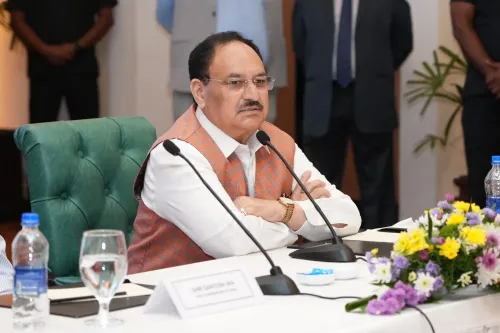
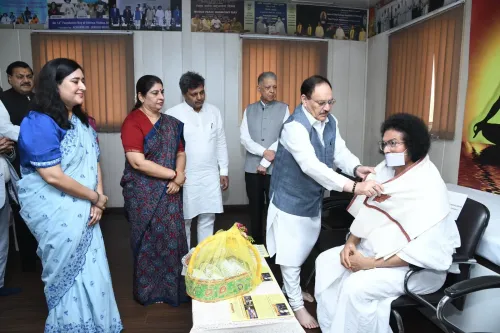
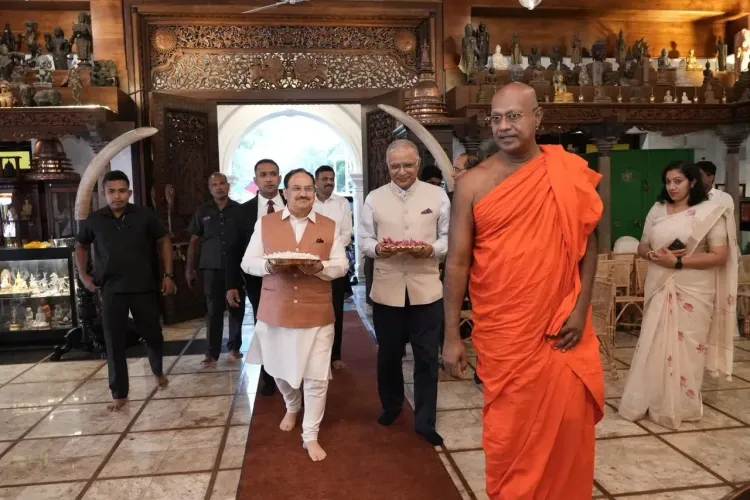
Union Health Minister and BJP president J. P. Nadda visited the historic Gangaramaya Temple in Colombo on November 11, 2026, invoking India and Sri Lanka's centuries-old Buddhist and civilisational bonds as an enduring bridge of friendship under India's Neighbourhood First cultural diplomacy.
Key Takeaways
Nadda visited the Gangaramaya Temple in Colombo, Sri Lanka on November 11, 2026 .
Nadda described India and Sri Lanka as 'bound by centuries-old civilisational, spiritual and cultural ties,' with Buddhism as an 'enduring bridge.' The Gangaramaya Temple is one of Colombo's most prominent Buddhist institutions and a site regularly visited by regional dignitaries.
High-level Indian temple visits in Colombo are a recurring element of India's cultural diplomacy under the Neighbourhood First policy.
As BJP national president , Nadda's visit also carries a party-to-party diplomatic dimension alongside his ministerial role.
At the heart of Colombo, Union Health Minister J. P. Nadda stepped into the storied Gangaramaya Temple on Wednesday, November 11, 2026 — and in doing so, offered a vivid reminder that the relationship between India and Sri Lanka runs far deeper than any bilateral treaty.
Nadda described the visit as a blessed moment, writing on X: 'India and Sri Lanka are bound by centuries-old civilisational, spiritual and cultural ties, with Buddhism serving as an enduring bridge of friendship and shared heritage between our two nations.' The imagery is deliberate — and loaded with diplomatic weight.
Gangaramaya: More than a temple
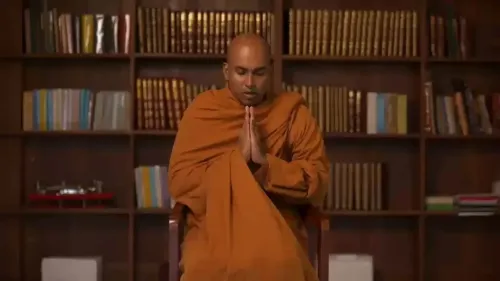
The Gangaramaya Temple is one of Colombo's most significant Buddhist institutions, drawing pilgrims, scholars and dignitaries alike. Its halls blend Sri Lankan, Thai, Indian and Chinese architectural styles — a living metaphor for the region's intertwined Buddhist civilisations. For an Indian minister to seek blessings here is not incidental; it is a carefully chosen symbol.
India has long used shared Buddhist heritage as a cornerstone of its cultural diplomacy with Sri Lanka, weaving it into what New Delhi frames as its Neighbourhood First policy. High-level temple visits from Indian officials in Colombo have become a recurring diplomatic gesture — one that speaks across governments, parties and even political tensions.
Buddhism as a living diplomatic bridge
The logic of this soft-power play is straightforward. Trade figures, infrastructure loans and security agreements matter — but civilisational solidarity cuts through in a way that balance sheets cannot. Buddhism, born in the Indian subcontinent and carried across the Palk Strait centuries ago, gives both nations a shared spiritual vocabulary that no geopolitical turbulence has fully erased.
Nadda invoked that vocabulary directly, praying that 'Lord Buddha's timeless teachings of peace, compassion and harmony continue to guide our shared journey towards peace, prosperity and well-being.' The trilateral arc — peace, prosperity, well-being — mirrors the language India uses across its development cooperation framework with South Asian neighbours.
As BJP national president, Nadda's presence in Colombo also carries a party-to-party dimension, reinforcing India's consistent cross-institutional engagement with Sri Lanka at a moment when the island nation navigates its own domestic economic and political rebalancing.
Shared prayers, perhaps. But in South Asia's complex neighbourhood calculus, every incense stick lit at Gangaramaya counts.
Point of View
' New Delhi signals continuity of engagement regardless of which government sits in Colombo. For Nadda personally, the visit layers cultural statesmanship onto his identity as a senior minister and party president, projecting civilisational solidarity at a moment when Sri Lanka's economic and political rebalancing makes Indian goodwill especially consequential.
NationPress
11 Nov 2026
Frequently Asked Questions
Why did J. P. Nadda visit Sri Lanka?
Nadda visited Sri Lanka and prayed at the Gangaramaya Temple in Colombo on November 11, 2026, as part of an engagement that highlighted India's centuries-old civilisational and Buddhist ties with the island nation.
What is the Gangaramaya Temple in Colombo?
The Gangaramaya Temple is one of Colombo's most historically significant Buddhist institutions, known for blending regional architectural styles and attracting pilgrims and dignitaries from across Asia.
What is India's Neighbourhood First policy?
India's Neighbourhood First policy prioritises deep diplomatic, economic and cultural engagement with its immediate neighbours, with shared Buddhist heritage forming a key pillar of outreach to countries like Sri Lanka, Nepal and Bhutan.
What is J. P. Nadda's current role in India?
J. P. Nadda is the Union Minister of Health and Family Welfare, Minister of Chemicals and Fertilizers, and the national president of the Bharatiya Janata Party (BJP).
How does Buddhism connect India and Sri Lanka?
Buddhism originated in the Indian subcontinent and spread to Sri Lanka centuries ago, creating shared pilgrimage sites, scriptures and cultural traditions that both nations regularly invoke as a foundation for bilateral friendship.