Shekhawat shares Sri Lankan monk's tribute to Modi on Abhidhamma Day
Synopsis
On Abhidhamma Day 2026, Union Culture Minister Gajendra Singh Shekhawat shared a Sri Lankan monk's appreciation for PM Modi's Buddhist heritage initiatives, highlighting India's relic-sharing diplomacy and the civilisational bonds between India and Sri Lanka.
Key Takeaways
Union Culture and Tourism Minister Gajendra Singh Shekhawat shared a message from Ven.
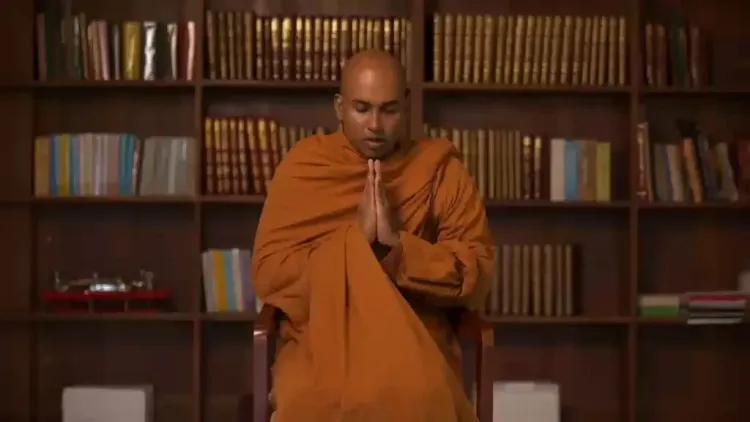
Borelle Seeladassana of the Sihanada International Meditation Community, Sri Lanka on Abhidhamma Day, 26 October 2026 .
The monk's message praised PM Modi's leadership in preserving and promoting Buddhism globally, focusing on spiritual diplomacy, relic sharing, and heritage preservation.
India launched the Buddhist Circuit under Swadesh Darshan in 2014-15 to develop pilgrimage tourism infrastructure at key Buddhist sites.
The International Buddhist Confederation , established in 2013 with government support, coordinates India's global Buddhist engagement.
Shekhawat invoked Modi's mantra 'Sabka Saath, Sabka Vikas' as the philosophical foundation for India's outreach to the global Buddhist community.
The post reinforces India's Neighbourhood First and Act East policy goals through the lens of shared civilisational and spiritual heritage with Sri Lanka .
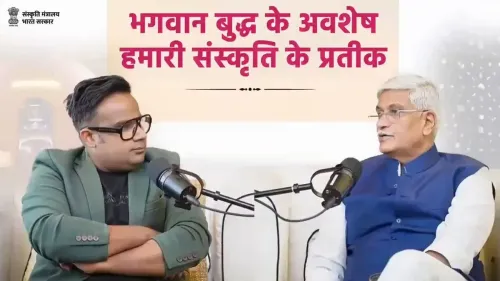
On Abhidhamma Day, 26 October 2026, Union Culture and Tourism Minister Gajendra Singh Shekhawat amplified a message from a Sri Lankan Buddhist monk praising Prime Minister Narendra Modi's efforts to preserve and promote Buddhism globally — a gesture that weaves together spiritual diplomacy, relic-sharing, and the deep civilisational bond between India and Sri Lanka.
A monk's message lands on Abhidhamma Day
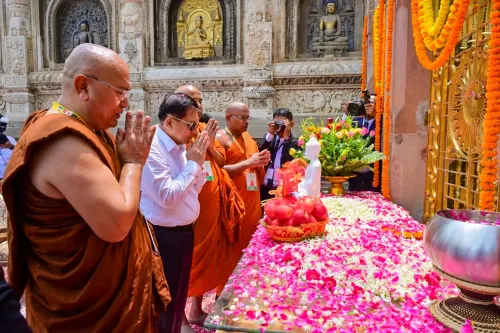
Ven. Borelle Seeladassana of the Sihanada International Meditation Community, Sri Lanka, sent the appreciation message that Shekhawat chose to share on this occasion. Abhidhamma Day — observed widely across Theravada Buddhist communities in Sri Lanka and Southeast Asia — marks the descent of the Buddha after preaching the Abhidhamma, making it one of the most sacred occasions in the Theravada calendar. Shekhawat described the moment as 'auspicious', framing the monk's tribute as emblematic of how India's Buddhist outreach resonates beyond its own borders.
The minister's post highlighted three specific pillars the monk's message reportedly addressed: spiritual diplomacy, the sharing of sacred relics, and the preservation of Buddhist heritage. Together, they map almost precisely onto the policy architecture New Delhi has built since 2013, when the International Buddhist Confederation was established with government support to coordinate global Buddhist engagement.
India's Buddhist soft-power playbook
The policy lineage here runs deep. India launched the Buddhist Circuit under the Swadesh Darshan scheme in 2014-15, developing infrastructure at pilgrimage sites tied to the Buddha's life — from Bodh Gaya to Sarnath to Kushinagar. Alongside domestic tourism development, the Ministry of Culture and the Ministry of External Affairs have periodically organised expositions of sacred Buddhist relics in Sri Lanka and other countries as acts of cultural diplomacy, an approach that positions India not just as a neighbour but as the spiritual homeland of Buddhism itself.
For Sri Lanka, the resonance runs even older. Sites like Anuradhapura carry shared heritage, and the tradition of relic veneration connects both nations across centuries. Shekhawat's post explicitly celebrated 'the deep civilisational and spiritual bonds between India and Sri Lanka, united by the timeless wisdom of Buddha Dhamma' — language that echoes India's Neighbourhood First policy clothed in spiritual idiom.
'Sabka Saath, Sabka Vikas' on the world stage
Shekhawat closed his post with Modi's signature governing mantra — 'Sabka Saath, Sabka Vikas' (With Everyone, Development for Everyone) — extending it outward as the philosophical basis for India's engagement with the global Buddhist community. It is a deliberate framing: domestic inclusivity repackaged as international solidarity, presenting India's cultural diplomacy as a natural extension of the same values that govern its development agenda at home.
As India continues to deepen ties with Theravada-majority nations across South and Southeast Asia, Abhidhamma Day has become a recurring diplomatic moment — and the Culture Ministry's active stewardship of that calendar signals that Buddhist soft power remains a live instrument in New Delhi's foreign-policy toolkit.
Point of View
The Culture Ministry signals that this is not just heritage policy but active foreign-policy cultivation, aimed at Theravada-majority neighbours where religious credibility translates into bilateral goodwill. The invocation of 'Sabka Saath, Sabka Vikas' in an international spiritual context is a deliberate rhetorical move, projecting domestic inclusivity as a universal value rather than a purely electoral slogan. Watch for whether this moment precedes a concrete deliverable — a relic exposition or a joint heritage project — that would give this diplomatic warmth tangible diplomatic weight.
NationPress
26 Oct 2026
Frequently Asked Questions
What is Abhidhamma Day and why is it significant?
Abhidhamma Day is a Theravada Buddhist observance marking the descent of the Buddha after he preached the Abhidhamma in the heavenly realm. It is widely celebrated in Sri Lanka and Southeast Asian Buddhist nations and is considered one of the most sacred occasions in the Theravada calendar.
What is India's Buddhist Circuit under Swadesh Darshan?
India launched the Buddhist Circuit under the Swadesh Darshan scheme in 2014-15 to develop tourism and pilgrimage infrastructure at sites linked to the Buddha's life, including Bodh Gaya , Sarnath , and Kushinagar , boosting both religious tourism and cultural diplomacy.
What is the International Buddhist Confederation?
The International Buddhist Confederation (IBC) was established in 2013 with Indian government support to coordinate global Buddhist engagement, heritage preservation, and cross-country dialogue, positioning New Delhi as a central hub for international Buddhist affairs.
How does India use Buddhist relic sharing in diplomacy?
India's Ministry of Culture and Ministry of External Affairs have periodically organised expositions of sacred Buddhist relics in Sri Lanka and other countries, using shared religious heritage as a diplomatic bridge to strengthen bilateral ties with Theravada-majority nations.
Who is Ven. Borelle Seeladassana?
Ven. Borelle Seeladassana is a Sri Lankan Buddhist monk associated with the Sihanada International Meditation Community in Sri Lanka , involved in Buddhist outreach and international dialogue between India and the Sri Lankan Buddhist community.