Buddhist diplomacy: Piprahwa relics anchor India's outreach to Myanmar, Asia
Synopsis
Myanmar's President began his India visit not with politics but with prayers under the Bodhi Tree and a stop at the Piprahwa relics exposition — a sequencing that doubles as a blueprint. India's civilisational claim as the birthplace of Buddha Dhamma, paired with the Piprahwa legacy, is being reframed as durable strategic capital across Theravada Asia.
Key Takeaways
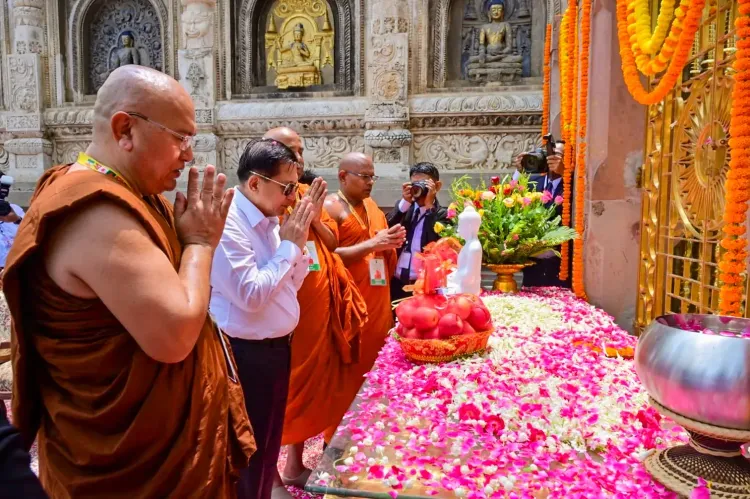
Myanmar President U Min Aung Hlaing began his India visit with prayers at the Mahabodhi Temple , Bodh Gaya , and a visit to the Burmese Monastery .
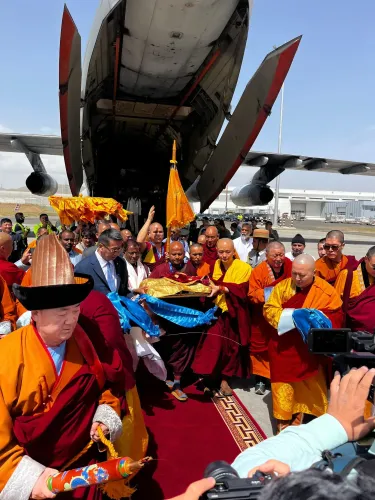
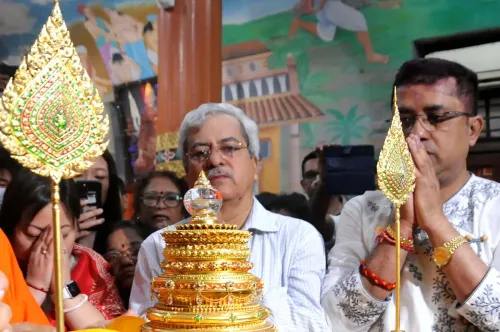
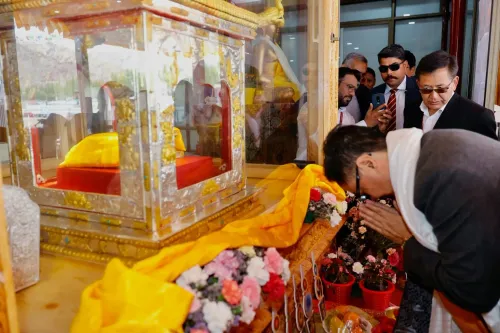
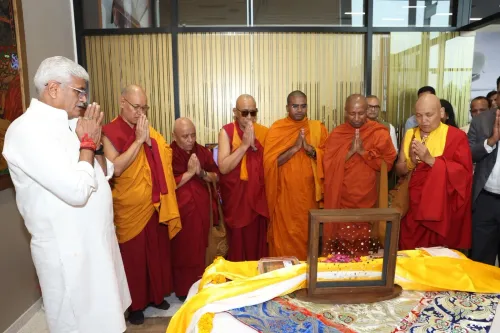
He participated in the Piprahwa relics exposition inaugurated in New Delhi .
The Piprahwa relics were first excavated by William Claxton Peppé in 1898 ; later work by K.
Srivastava reinforced their authenticity.
Portions of Piprahwa relics were historically gifted to Burma, now Myanmar, a stronghold of Theravada Buddhism.
PM Narendra Modi's line — 'India has given Buddha to the world, not war' — frames the diplomacy.
Target nations include Sri Lanka , Thailand , Cambodia , Laos , Mongolia , Japan and Vietnam .
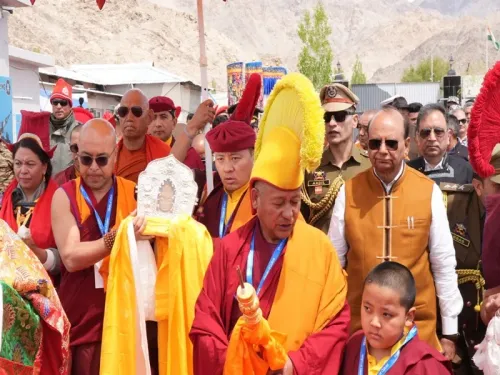
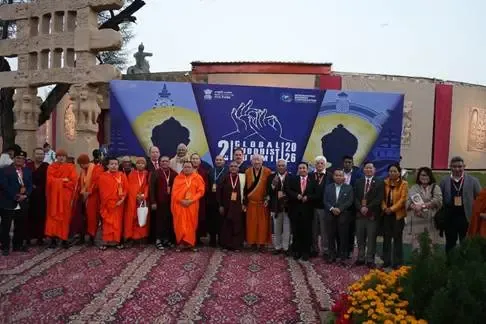
India's exposition of the sacred relics of the Buddha has emerged as a cornerstone of a wider civilisational diplomacy, with the recent visit of Myanmar President U Min Aung Hlaing underscoring how relic veneration, pilgrimage and statecraft increasingly converge. The visit, anchored by prayers at the Mahabodhi Temple in Bodh Gaya and participation in the Piprahwa relics exposition in New Delhi, offers what analysts describe as a working template for India's engagement with the Buddhist world.
A civilisational, not ceremonial, act
For millions of Buddhists worldwide, relics are not archaeological curiosities but living embodiments of the Buddha's presence, teachings and compassion. Their public exposition, observers argue, inspires devotion while reinforcing a shared moral vocabulary of peace, wisdom and ethical living — values India has positioned at the heart of its outreach.
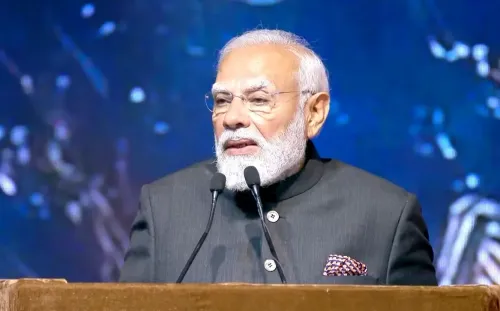
Prime Minister Narendra Modi's framing that 'India has given Buddha to the world, not war' has come to encapsulate this approach, rooted in dialogue and coexistence. At a moment marked by global conflict, social fragmentation and rising extremism, the message carried by the relics has acquired sharper relevance.
Why Myanmar matters
Myanmar occupies a special place in India's Buddhist diplomacy. President U Min Aung Hlaing began his India visit not with political engagements but with meditation under the sacred Bodhi Tree, followed by a visit to the Burmese Monastery in Bodh Gaya — a gesture that underlined the enduring spiritual ties between the two nations.
Historically, portions of the Piprahwa relics were distributed to Buddhist countries including Burma, now Myanmar, where they became objects of national devotion. Myanmar today remains one of the strongest custodians of the Theravada tradition that originated in India.
The Piprahwa significance
Among archaeological discoveries linked to Buddhism, few rival the relics unearthed at the Piprahwa Stupa. Excavations led by William Claxton Peppé in 1898 revealed reliquary caskets containing bone fragments, ashes, crystals, pearls and ornaments associated with the Buddha. Later excavations by K. M. Srivastava further strengthened the evidence that Piprahwa preserved one of the earliest relic deposits connected with the historical Buddha.
For Buddhist communities, these relics offer a direct link to the earliest history of the faith — and a reminder that while Buddhism became a shared heritage of Asia, its origins remain firmly rooted in Indian soil.
India's deeper strength: the Dhamma itself
India's enduring strength, commentators note, lies less in possessing relics and more in being the birthplace of Buddha Dhamma. Centres such as Nalanda Mahavihara, Vikramashila University and Takshashila transmitted philosophy, ethics, language, art and architecture across mountains, deserts and oceans.
This is why, experts argue, every relic exposition should be paired with Dhamma discourses, scholarly exchanges, publications, university collaborations and cultural programmes that translate the philosophical foundations of Buddhism for contemporary audiences. Relics inspire devotion; teachings create transformation.
Towards an institutionalised Buddhist diplomacy
For countries including Myanmar, Sri Lanka, Thailand, Cambodia, Laos, Mongolia, Japan and Vietnam, engagement with India through Buddhist heritage creates a foundation of trust that extends beyond conventional diplomacy. The recommendation from strategic affairs voices is clear: move beyond episodic relic expositions toward a sustained strategy.
Indian missions abroad should regularly host Dhamma talks, academic seminars, monastic exchanges, youth interactions, cultural festivals and heritage exhibitions through the year. Universities, monasteries, think tanks, private foundations and civil society groups must become active participants alongside government bodies, ensuring continuity and innovation.
If pursued with sensitivity, scholarship and reverence, Buddhist diplomacy can deepen long-term partnerships and carry forward a message of peace that remains as resonant today as it was 25 centuries ago.
(The author is a former diplomat and strategic affairs expert. Views expressed are personal.)
Point of View
The earliest relic deposits and the great monastic universities in one civilisational arc. Yet the gap between this inheritance and India's institutional follow-through remains wide; relic expositions still feel episodic against China's sustained, well-funded outreach to Theravada Asia. The Myanmar visit shows the template works — what is missing is permanence, scholarship infrastructure and missions abroad that treat Dhamma engagement as core diplomatic work, not ceremonial garnish.
NationPress
22 Sept 2026
Frequently Asked Questions
What are the Piprahwa relics and why are they significant?
The Piprahwa relics are bone fragments, ashes, crystals, pearls and ornaments associated with the Buddha, first excavated by William Claxton Peppé in 1898 at the Piprahwa Stupa. They are considered one of the earliest relic deposits connected with the historical Buddha and carry direct civilisational links to Indian soil.
Why did Myanmar's President visit Bodh Gaya during his India trip?
President U Min Aung Hlaing began his India visit with prayers and meditation under the sacred Bodhi Tree at the Mahabodhi Temple and a stop at the Burmese Monastery before political engagements. The sequence underlined Myanmar's deep spiritual ties to the land where the Buddha attained enlightenment.
How is India using Buddhist heritage as a diplomatic tool?
India is combining relic expositions, pilgrimage circuit development, international Buddhist conferences and renewed engagement with Buddhist-majority nations to build trust beyond conventional diplomacy. The approach is framed around PM Modi's line that India has given the world Buddha, not war.
Which countries are central to India's Buddhist outreach?
Myanmar, Sri Lanka, Thailand, Cambodia, Laos, Mongolia, Japan and Vietnam are central to India's Buddhist engagement strategy. These nations share strong Theravada or Mahayana traditions whose roots trace back to Indian monastic centres.
What more does India need to do to institutionalise Buddhist diplomacy?
Analysts argue India should move beyond episodic events to a year-round programme of Dhamma talks, academic seminars, monastic exchanges and heritage exhibitions hosted by its missions abroad. Universities, think tanks, monasteries and civil society groups must be drawn in to ensure continuity and scholarly depth.