Ladakh relic exposition 2026: India's Buddhist soft power on display
Synopsis
India turned a religious observance into a geopolitical statement. By bringing the Piprahwa relics of the Buddha from New Delhi to Ladakh for a 14-day exposition timed to the 2569th Vesak, the Centre signalled — through monasteries, not missiles — its claim to moral leadership in a contested Himalayan belt.
Key Takeaways
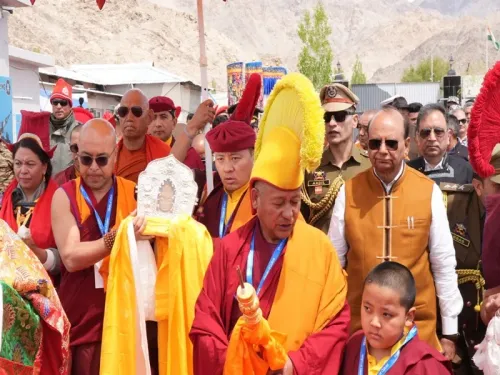
The Sacred Exposition of the Holy Relics of Tathagata Buddha was held across Leh and Zanskar from 1–14 May 2026 .
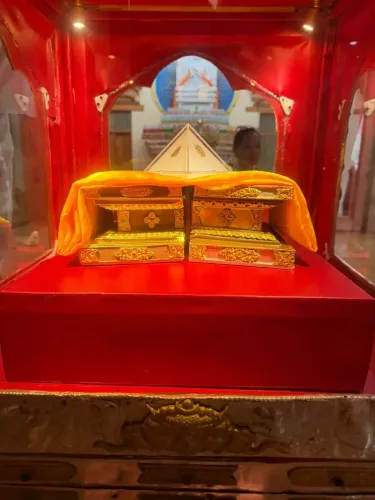
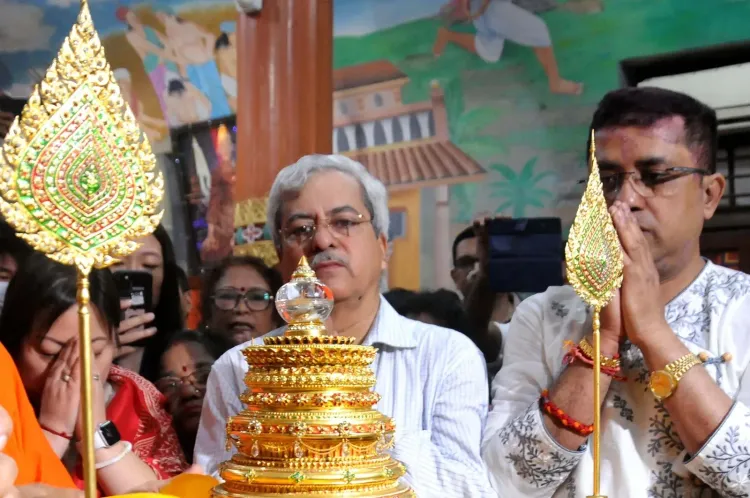
The event coincided with the 2569th Vesak Buddha Purnima and featured a public display of the Piprahwa relics from the National Museum, New Delhi .
Eight institutions collaborated, including the Ministry of Culture , Archaeological Survey of India , and the International Buddhist Confederation .
A Centre for Global India Insights (CGII) report described the event as a convergence of spirituality and statecraft.
The exposition reinforced India's positioning as custodian of Buddhist heritage, with strategic relevance across Asia and the Himalayan region .
India's Sacred Exposition of the Holy Relics of Tathagata Buddha, held across Leh and Zanskar from 1–14 May 2026, has emerged as a landmark exercise in cultural diplomacy, blending faith, heritage, and statecraft into a single civilisational statement. According to a report by the Centre for Global India Insights (CGII), the event — timed to coincide with the 2569th Vesak Buddha Purnima — reinforced India's self-positioning as the foremost custodian of Buddhist heritage on the global stage.
What the exposition involved
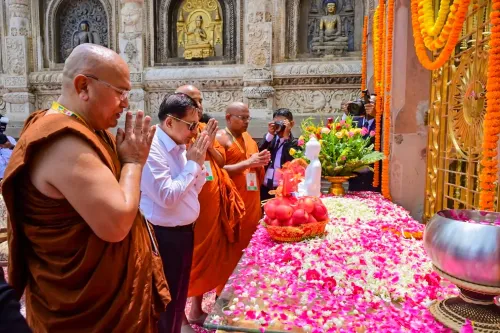
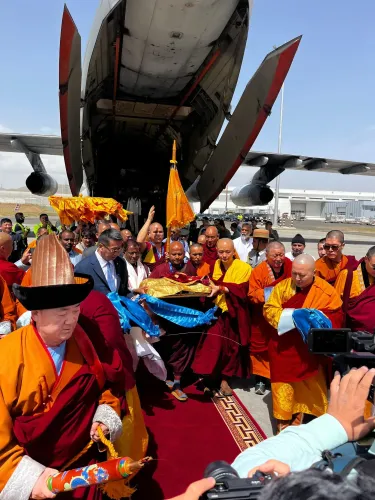
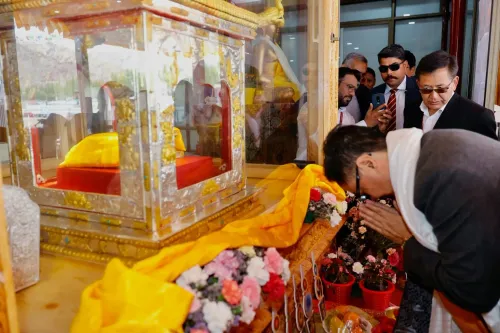
The event brought the sacred Piprahwa relics associated with Lord Buddha — ordinarily preserved at the National Museum in New Delhi — to Ladakh, offering devotees, monks, scholars, tourists, and international observers a rare opportunity for veneration. The exposition was organised through the collaborative efforts of the Ministry of Culture, the UT Ladakh Administration, the International Buddhist Confederation, the National Museum of India, the Archaeological Survey of India, the Ladakh Buddhist Association, the Ladakh Gonpa Association, and several other institutions.
India's soft power calculus
The CGII report characterised the exposition as a convergence of spirituality and statecraft. According to the report, the sacred relics functioned as 'a bridge between India's ancient history and contemporary diplomacy, showcasing values of peace, compassion, and coexistence to the world.' The initiative underscored Buddhism's enduring role as a key pillar of India's soft power strategy, particularly across Asia and the Himalayan region.
Notably, Buddha Purnima marks the birth, enlightenment, and Mahaparinirvana of Gautama Buddha and is regarded as the holiest observance for Buddhists worldwide. In 2026, Ladakh — described in the CGII report as a 'living land of Dhamma' — became the focal point of that observance, drawing attention to its monasteries, traditions, and trans-Himalayan cultural exchanges.
The Himalayan dimension
The CGII report specifically highlighted the geopolitical subtext of choosing Ladakh as the venue. 'The Ladakh exposition added a unique Himalayan dimension to this diplomacy. It highlighted India's cultural links with Tibetan Buddhism and underscored the importance of preserving Buddhist traditions in the Himalayan belt,' the report noted. At a time of intensifying geopolitical competition across Asia, analysts argue such initiatives allow India to project moral and cultural leadership grounded in peace and dialogue.
Broader significance
This is not India's first use of Buddhist heritage as a diplomatic instrument, but the 2026 exposition is notable for its scale and institutional depth — spanning central ministries, archaeological bodies, and local Buddhist organisations simultaneously. The event also reinforced Ladakh's significance as a living centre of Himalayan Buddhism, a framing that carries strategic weight given the region's proximity to contested borders. The Centre is expected to build on this template for future outreach across Buddhist-majority nations in Southeast and East Asia.
Point of View
But the 2026 Ladakh exposition is notable for what it does not say aloud: the venue choice is inseparable from the strategic context of a contested Himalayan frontier. Projecting cultural custodianship over Tibetan Buddhism in Ladakh is a soft-power move with hard-power implications, and Beijing will have read it that way. The CGII report frames this as civilisational outreach, but the institutional machinery deployed — central ministries, archaeological bodies, the International Buddhist Confederation — suggests a more deliberate geopolitical choreography. Whether this translates into durable influence in Buddhist-majority Southeast and East Asian nations, or remains a well-produced domestic signal, will depend on whether India follows the spectacle with sustained engagement.
NationPress
25 Sept 2026
Frequently Asked Questions
What was the Sacred Exposition of the Holy Relics of Tathagata Buddha in Ladakh?
It was a 14-day religious and cultural event held across Leh and Zanskar from 1–14 May 2026, during which the Piprahwa relics of Lord Buddha were brought from the National Museum in New Delhi to Ladakh for public veneration. The event coincided with the 2569th Vesak Buddha Purnima and was organised by eight central and local institutions.
Why did India hold the relic exposition in Ladakh specifically?
Ladakh was chosen for its deep historical and spiritual ties to Himalayan Buddhism, including its monasteries and trans-Himalayan cultural exchanges. Analysts note the venue also carries strategic significance given Ladakh's proximity to contested borders and India's interest in projecting cultural leadership in the Himalayan belt.
Which organisations were involved in organising the exposition?
Eight institutions collaborated, including the Ministry of Culture, the UT Ladakh Administration, the International Buddhist Confederation, the National Museum of India, the Archaeological Survey of India, the Ladakh Buddhist Association, and the Ladakh Gonpa Association.
What is the significance of the Piprahwa relics?
The Piprahwa relics are sacred objects associated with Lord Buddha, ordinarily preserved at the National Museum in New Delhi. Their public display in Ladakh during Buddha Purnima 2026 was described by the CGII report as unprecedented in scale and symbolic of India's role as custodian of Buddhist heritage.
How does this exposition fit into India's broader diplomatic strategy?
According to the Centre for Global India Insights, the event exemplifies India's growing use of Buddhist heritage as an instrument of cultural diplomacy and global outreach, particularly in Asia and the Himalayan region. It positions India as a moral and cultural leader rooted in the values of peace, compassion, and dialogue.