CM Yogi hails ₹10,000 Cr Container Manufacturing Scheme
Synopsis
The Union Cabinet approved the ₹10,000 crore Container Manufacturing Promotion Scheme (CMPS) through FY 2039-40, aiming to make India a global container manufacturing hub. UP Chief Minister Yogi Adityanath welcomed the decision as a landmark step for Atmanirbhar Bharat, citing employment generation and supply-chain resilience.
Key Takeaways
The Union Cabinet chaired by PM Narendra Modi approved the Container Manufacturing Promotion Scheme (CMPS) on 28 October 2026 .
The scheme carries a total outlay of ₹10,000 crore and runs through financial year 2039-40 .
Its stated goals include developing a world-class manufacturing ecosystem, reducing container import dependence, and strengthening supply chains.
India aims to emerge as a major global container manufacturing and export hub under the scheme.
UP Chief Minister Yogi Adityanath publicly welcomed the decision, linking it to Atmanirbhar Bharat and highlighting industrial growth, employment, and economic empowerment.
India just placed a serious bet on becoming a global container-manufacturing powerhouse. The Union Cabinet, chaired by Prime Minister Narendra Modi, on Wednesday, 28 October 2026, approved the Container Manufacturing Promotion Scheme (CMPS) — a ₹10,000 crore initiative designed to run through financial year 2039-40 — and Uttar Pradesh Chief Minister Yogi Adityanath was among the first to publicly welcome the decision.
In a post on X, CM Yogi described the Cabinet approval as a move that 'will give new strength to the resolve of an Atmanirbhar Bharat (self-reliant India).' He framed the scheme as a decisive push toward building a world-class manufacturing ecosystem inside India, reducing import dependence, and strengthening the country's supply chains.
What the Container Manufacturing Promotion Scheme actually does
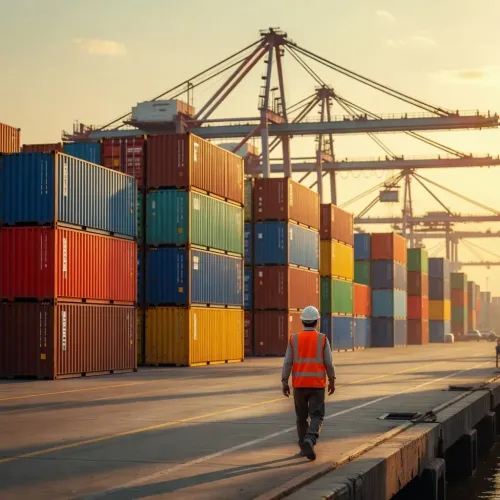
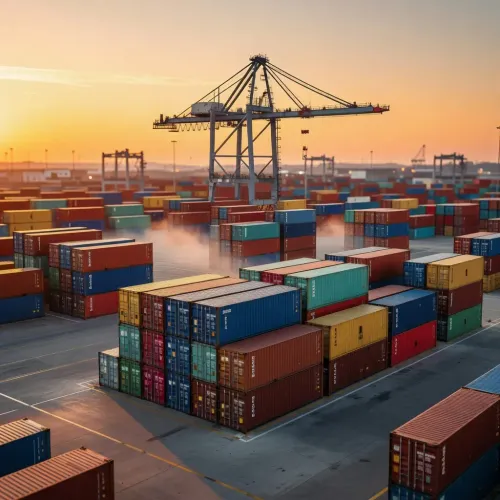
Shipping containers are the unglamorous but indispensable backbone of global trade — and India has historically imported the vast majority of them, with China dominating global container production. The CMPS is structured as a long-horizon incentive framework, stretching over roughly 13 years to give domestic manufacturers the runway to build capacity, attract investment, and achieve scale. The scheme targets the twin goals of cutting import bills and positioning India as a credible exporter of containers on the global stage.
CM Yogi specifically highlighted three pillars he sees in the policy: industrial development, employment generation, and economic empowerment — language that maps squarely onto the BJP's broader Viksit Bharat (Developed India) framing ahead of the country's push toward a larger share of global manufacturing.
Why a 13-year horizon signals real intent
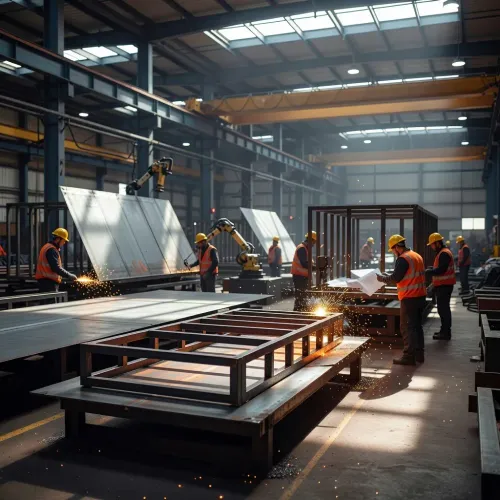
Short-term production-linked incentive windows have drawn criticism in some sectors for not giving manufacturers sufficient time to recoup capital expenditure in heavy industry. A scheme pegged to FY 2039-40 signals a different calculus — one that acknowledges container manufacturing requires large upfront investments in steel processing, fabrication capacity, and port-proximate logistics infrastructure. The long tail also gives supply-chain planners confidence to commit to domestic sourcing contracts rather than defaulting to established Chinese suppliers.
For a state like Uttar Pradesh — which has aggressively courted logistics and industrial investment through its own policy frameworks — a national scheme that energises the container and freight ecosystem carries direct economic relevance. CM Yogi's public endorsement is as much a signal to UP's investor community as it is political affirmation of a central government decision.
The Atmanirbhar Bharat thread running through the Cabinet move
Since its launch in 2020, the Atmanirbhar Bharat programme has spawned incentive schemes across semiconductors, pharmaceuticals, textiles, and electronics. Container manufacturing represents a newer frontier — one exposed sharply during the global supply-chain crisis of the early 2020s, when container shortages and freight-rate spikes hammered Indian exporters who had no domestic alternative. The CMPS is, in part, a delayed policy response to that vulnerability.
If the scheme delivers on its stated ambition, India could emerge as both a buyer and a builder of the steel boxes that carry the world's goods — turning a chronic import dependency into an export opportunity worth billions of dollars annually.
Point of View
High-outlay incentive schemes to attack structural import dependencies exposed by global supply-chain disruptions. Container manufacturing is a capital-intensive, logistics-intensive sector where China's dominance is near-total — making it a strategically attractive target for import substitution. CM Yogi's swift endorsement underscores how UP's own industrial investment pitch is increasingly tied to national manufacturing schemes, giving state leadership political and economic interest in the Centre's delivery. The 13-year window is a meaningful design choice: it signals that New Delhi has absorbed the lesson that heavy-industry incentives require patient capital and long commitment horizons to move the needle.
NationPress
28 Oct 2026
Frequently Asked Questions
What is the Container Manufacturing Promotion Scheme (CMPS)?
The CMPS is a Union Cabinet-approved scheme with an outlay of ₹10,000 crore, designed to promote domestic container manufacturing in India through financial year 2039-40, reduce import dependence, and position India as a global container export hub.
When was the CMPS approved?
The Union Cabinet approved the Container Manufacturing Promotion Scheme on 28 October 2026, under the chairmanship of Prime Minister Narendra Modi.
Why does India need a container manufacturing scheme?
India has historically imported most of its shipping containers, primarily from China. The scheme aims to build domestic manufacturing capacity, cut import bills, and strengthen supply chains after global freight disruptions exposed this vulnerability.
What did CM Yogi Adityanath say about the CMPS?
CM Yogi welcomed the approval on X, calling it a step that gives 'new strength to the resolve of an Atmanirbhar Bharat' and praising its focus on industrial development, employment generation, and economic empowerment.
How long will the CMPS run?
The scheme is structured to run through financial year 2039-40, giving it approximately a 13-year horizon to allow manufacturers to build capacity and achieve scale.