BRICS Industry Meet: Piyush Goyal calls for stronger manufacturing ties
Synopsis
At the BRICS Industry Ministers' Meeting in Jaipur, Commerce Minister Piyush Goyal pushed for manufacturing resilience, MSME empowerment, and clean energy cooperation — and secured a Joint Declaration reaffirming the bloc's commitment to the PartNIR framework. With India holding the BRICS Chairship in 2026, the Jaipur meet sets the industrial agenda for the bloc's most consequential year in recent memory.
Key Takeaways
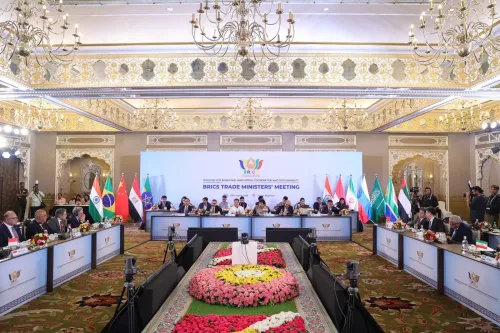
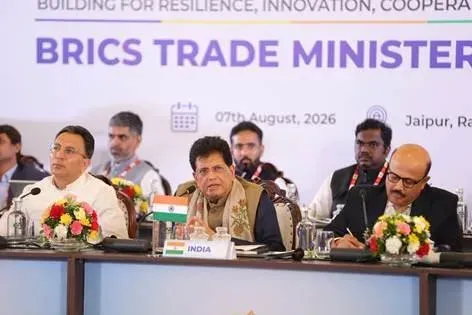
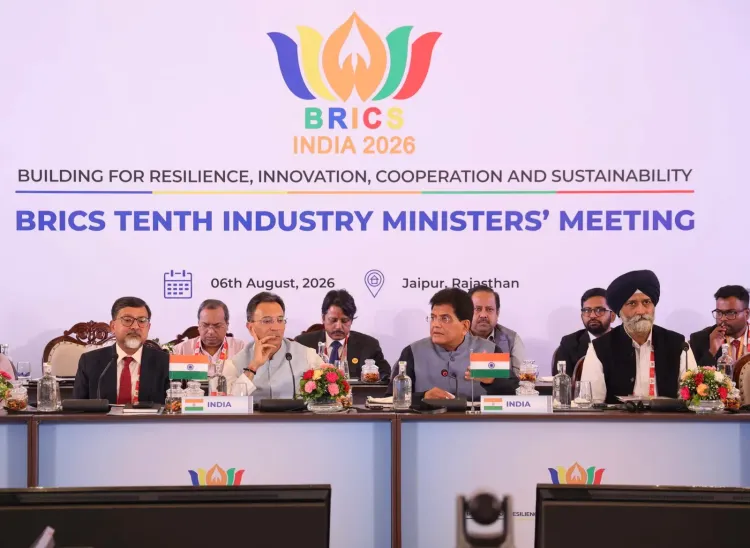
Commerce Minister Piyush Goyal addressed the BRICS Industry Ministers' Meeting in Jaipur on 6 August under India's BRICS 2026 Chairship .
Goyal called for stronger manufacturing competitiveness , deeper technological collaboration , and resilient value chains across BRICS nations.
India's stated priorities include strengthening MSMEs , fostering startup innovation , expanding clean energy cooperation , and building technology-enabled logistics ecosystems .
Member nations adopted a Joint Declaration reaffirming commitment to the BRICS Partnership on New Industrial Revolution (PartNIR) .
India's engagement is framed around Prime Minister Narendra Modi's vision of translating dialogue into tangible outcomes for shared growth.
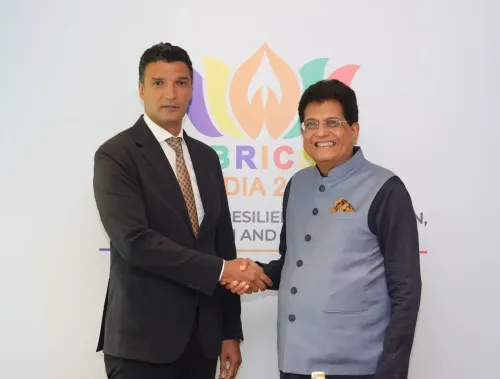
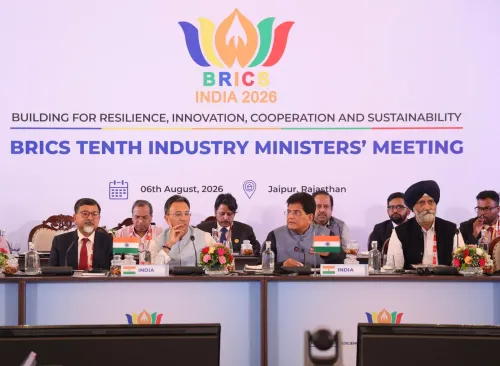
Union Commerce and Industry Minister Piyush Goyal on Thursday, 6 August called on BRICS nations to seize a unique opportunity to strengthen manufacturing competitiveness, deepen technological collaboration, build resilient value chains, and advance sustainable industrial growth. Goyal made the remarks while addressing the BRICS Industry Ministers' Meeting in Jaipur, held under India's BRICS 2026 Chairship.
Key Themes of the Ministerial Discussion
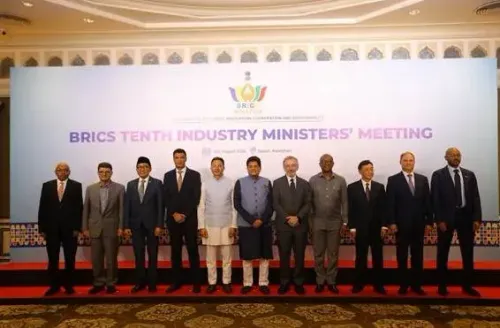
The meeting centred on the future of industrial cooperation and economic collaboration among BRICS member nations. Goyal said discussions ranged from manufacturing resilience to cross-border technology partnerships, reflecting the bloc's evolving agenda under the expanded BRICS framework. The gathering brought together industry ministers from member countries to align priorities for the year ahead.
India's Priorities on the Table
Goyal outlined four pillars that India placed at the heart of its engagement: strengthening micro, small and medium enterprises (MSMEs), fostering startup innovation, expanding clean energy cooperation, and building technology-enabled logistics ecosystems. He argued these priorities are essential to driving sustainable industrial development across the bloc.
Notably, India's emphasis on MSMEs signals a deliberate push to ensure that industrial cooperation benefits smaller enterprises — not just large state-backed manufacturers — within the expanded BRICS membership.
Joint Declaration Adopted
A significant outcome of the meeting was the adoption of a Joint Declaration, which reaffirmed member countries' shared commitment to advancing practical cooperation under the BRICS Partnership on New Industrial Revolution (PartNIR). The declaration also underscored resolve to strengthen collaboration across industrial innovation, clean energy, logistics, and resilient manufacturing.
The PartNIR framework, originally launched to align BRICS economies around the fourth industrial revolution, has gained renewed relevance as member states seek alternatives to Western-dominated supply chains.
Modi's Vision and India's Broader Commitment
Goyal said India's engagement is guided by Prime Minister Narendra Modi's vision of strengthening partnerships across the expanded BRICS family. He stressed the importance of translating dialogue into meaningful outcomes for shared growth and prosperity — a formulation that signals India intends to hold the bloc accountable for converting declarations into on-the-ground industrial results.
With India holding the BRICS Chairship in 2026, the Jaipur meeting marks one of the key ministerial touchpoints before the year's summit-level engagements. Further sectoral consultations are expected in the months ahead.
Point of View
But the harder question is whether PartNIR produces verifiable industrial outcomes — a record that has been mixed since the framework's inception. India's emphasis on MSMEs and logistics ecosystems is strategically astute: it broadens the coalition of domestic beneficiaries and positions New Delhi as a champion of inclusive industrialisation within the bloc. However, with BRICS now an expanded grouping that includes economies with divergent interests, converting ministerial consensus into coordinated supply-chain action will be the real test of India's 2026 Chairship. The Jaipur declaration is a starting point, not a finish line.
NationPress
21 Sept 2026
Frequently Asked Questions
What was the BRICS Industry Ministers' Meeting in Jaipur about?
The meeting, held on 6 August 2026 under India's BRICS 2026 Chairship, focused on the future of industrial cooperation and economic collaboration among BRICS member nations. Key themes included manufacturing competitiveness, clean energy, logistics, and MSME development.
What is the BRICS Partnership on New Industrial Revolution (PartNIR)?
PartNIR is a BRICS framework designed to align member economies around the opportunities and challenges of the fourth industrial revolution, including digitalisation, clean energy, and advanced manufacturing. The Joint Declaration adopted at the Jaipur meeting reaffirmed member countries' commitment to advancing cooperation under this framework.
What are India's priorities under its BRICS 2026 Chairship?
India has highlighted four priorities: strengthening MSMEs, fostering startup innovation, expanding clean energy cooperation, and building technology-enabled logistics ecosystems. These were presented by Commerce Minister Piyush Goyal as central to sustainable industrial development across the bloc.
What was the key outcome of the Jaipur ministerial meeting?
The key outcome was the adoption of a Joint Declaration by BRICS industry ministers, reaffirming shared commitment to the PartNIR framework and pledging deeper collaboration in industrial innovation, clean energy, logistics, and resilient manufacturing.
Why does India's BRICS 2026 Chairship matter?
As chair, India sets the agenda for the bloc's ministerial and summit-level engagements throughout 2026. The Jaipur industry ministers' meeting is one of the key touchpoints, and India is using the platform to push priorities aligned with its domestic industrial and clean energy goals, while seeking to translate BRICS dialogue into concrete outcomes.