Maharashtra's 2026-27 Budget: Rs 7.69 Lakh Crore and Farm Loan Waiver
Synopsis
Maharashtra's Chief Minister Devendra Fadnavis has unveiled the state's ambitious budget for 2026-27, featuring a staggering outlay of Rs 7.69 lakh crore and a significant crop loan waiver for farmers, among other initiatives aimed at economic growth.
Key Takeaways
Total Budget: Rs 7.69 lakh crore for 2026-27 Crop Loan Waiver: Up to Rs 2 lakh for farmers Fiscal Deficit: Rs 1,50,491 crore Revenue Deficit: Rs 40,552 crore Infrastructure Goals: 1,200 km metro rail by 2047
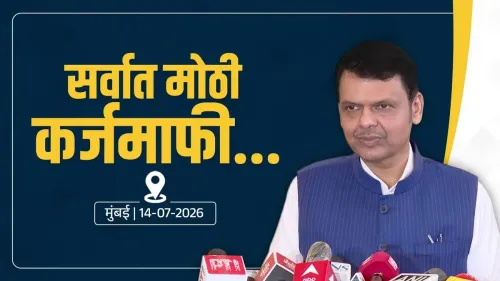
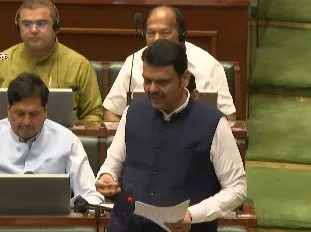
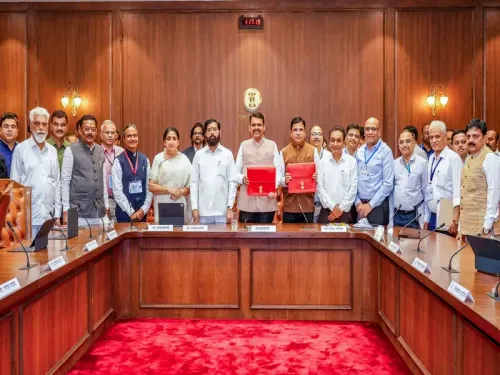
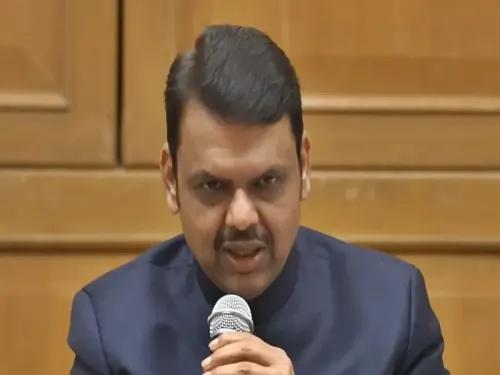
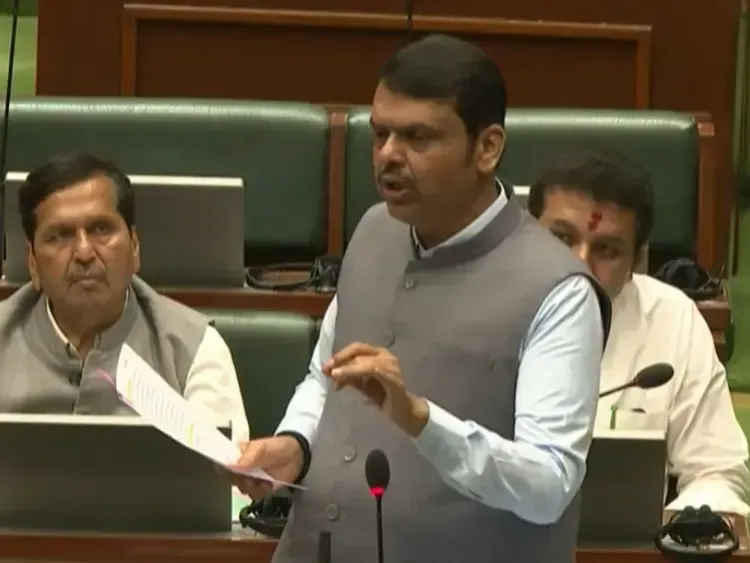
Mumbai, March 6 (NationPress) On Friday, Maharashtra's Chief Minister Devendra Fadnavis unveiled the state budget for 2026-27, featuring a remarkable outlay of Rs 7,69,467 crore during the assembly session.
He announced a crop loan waiver of up to Rs 2 lakh for farmers and introduced several initiatives aimed at enhancing agriculture, infrastructure, and social welfare.
The budget forecasts a revenue deficit of Rs 40,552 crore and a fiscal deficit of Rs 1,50,491 crore. The state government anticipates revenue receipts of Rs 6,16,099 crore against an expenditure of Rs 6,56,651 crore for the upcoming financial year.
Fadnavis highlighted that the administration has successfully maintained the revenue deficit below 1 percent of Gross State Domestic Product (GSDP) and the fiscal deficit below 3 percent of GSDP.
According to revised estimates for 2025-26, revenue receipts are projected at Rs 6,01,789 crore, exceeding the previous budget estimates of Rs 5,60,964 crore. Meanwhile, revenue expenditure for this year is expected to be Rs 7,55,920 crore, surpassing the budget estimate of Rs 7,00,020 crore.
During his 1-hour-24-minute budget address, the Chief Minister laid out a vision for “Viksit Maharashtra 2047,” emphasizing agriculture, healthcare, sustainable development, and effective governance.
The state aspires to reach a 1 trillion dollar economy by 2030 and a 5 trillion dollar economy by 2047.
A key feature of the budget is the Punyashlok Ahilyabai Holkar Farmers’ Loan Waiver Scheme, which will forgive crop loans of up to Rs 2 lakh per farmer, applicable to loans outstanding as of September 3, 2025.
The government also allocated Rs 20,000 crore to supply free electricity to farmers using water pumps of up to 7.5 HP.
Moreover, a pilot initiative utilizing artificial intelligence will be launched in 75 villages to provide farmers with real-time insights on weather, crop trends, and soil health to improve productivity.
Regarding infrastructure, the government aims to transform Maharashtra into a “seamless multimodal hub.” Plans include developing 1,200 km of metro rail and over 6,000 km of expressways by 2047. There are also proposals for dedicated funding and expedited execution for the Mumbai-Pune high-speed rail (bullet train) corridor.
To alleviate congestion in Mumbai, the Sewri-Worli connector is expected to be completed by September 2026, and South Mumbai will connect to the Samruddhi Expressway by 2028.
Additionally, the government intends to construct underground tunnels in Mumbai and Pune to mitigate traffic problems.
To bolster the startup ecosystem, the Chief Minister announced the establishment of a Startup and Innovation Centre on 130 acres in Wadala.
A new commissionerate will also be introduced to provide comprehensive support to micro, small, and medium enterprises (MSMEs). The Mumbai Metropolitan Region, Pune, and Nagpur will be developed into significant “growth hubs” with a combined investment of Rs 5,000 crore over the next five years.
In terms of social welfare, Fadnavis confirmed that the flagship Ladki Bahin Yojana will proceed with necessary funding, although a verification process has been initiated to ensure fiscal responsibility and target genuine beneficiaries.
Additionally, the government has allocated Rs 33,410 crore to the Pradhan Mantri Awas Yojana-Gramin for rural housing, which will now mandate rooftop solar installations.
Finally, a new film city is set to be constructed at Ramtek in the Vidarbha region to decentralize the state's entertainment sector.
Point of View
The government's plans reflect a balanced approach to development while maintaining fiscal discipline.
NationPress
12 Oct 2026
Frequently Asked Questions
What is the total budget for Maharashtra in 2026-27?
The total budget for Maharashtra in 2026-27 is Rs 7.69 lakh crore.
How much is the crop loan waiver for farmers?
The crop loan waiver for farmers is up to Rs 2 lakh.
What are the aims of the 'Viksit Maharashtra 2047' initiative?
'Viksit Maharashtra 2047' aims for sustainable development in agriculture, healthcare, and governance, targeting a one trillion dollar economy by 2030.
What infrastructure developments are planned?
Plans include developing 1,200 km of metro rail and over 6,000 km of expressways by 2047.
What is the Punyashlok Ahilyabai Holkar Farmers’ Loan Waiver Scheme?
This scheme waives crop loans of up to Rs 2 lakh per farmer, applicable to loans outstanding as of September 3, 2025.