Maharashtra eyes 2.8% fiscal cap despite ₹36,585 crore farm loan waiver

Synopsis
Maharashtra's ₹36,585 crore farm loan waiver is a political win and a fiscal gamble. The state insists it can stay within a 2.8% deficit cap even as welfare outlays balloon — but economists warn of crowding out capital spending, and the RBI is uneasy about repeat waivers eroding credit culture.
Key Takeaways
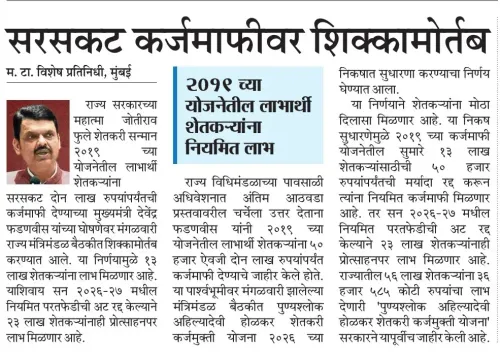
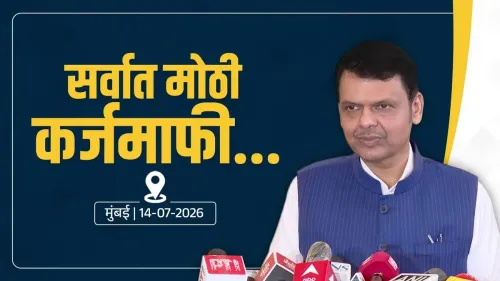
Maharashtra approved the ₹36,585 crore Punyashlok Ahilyadevi Holkar Farmers' Loan Waiver Scheme .
The state targets a fiscal deficit of 2.8% of GSDP ( ₹1,50,491 crore ), down from 3.0% , within the 15th Finance Commission's 3% cap.
Revenue deficit is pegged at ₹40,552 crore ( 0.7% of GSDP ) as waivers count as revenue expenditure.
Banks are reimbursed for default loans up to ₹2 lakh , converting NPAs into cash.
The RBI has cautioned on moral hazard; the scheme offers ₹50,000 to farmers who repay on time.
Other welfare load includes the Ladki Bahin Yojana at ₹26,500 crore .
The Maharashtra government's approval of the ₹36,585 crore Punyashlok Ahilyadevi Holkar Farmers' Loan Waiver Scheme has triggered a sharp debate over its twin impact on the state's fiscal health and the banking system. The scheme delivers urgent relief to distressed farmers but layers fresh structural strain on a budget already stretched by welfare commitments.
Announced from Mumbai, the waiver bridges short-term rural distress with long-term questions on credit culture, capital spending, and borrowing discipline.
The fiscal balancing act
The immediate challenge is absorbing a ₹36,585 crore cash outflow without breaching statutory fiscal limits. According to state finance department sources, despite this cost and other welfare outlays such as the Ladki Bahin Yojana at ₹26,500 crore, the Budget targets a fiscal deficit of 2.8 per cent of GSDP, or ₹1,50,491 crore.
That is technically a marginal improvement on the previous year's revised estimate of 3.0 per cent, keeping the state within the 3 per cent cap recommended by the 15th Finance Commission.
Revenue deficit risk
While the headline fiscal deficit stays capped, the waiver directly widens the revenue deficit, projected at ₹40,552 crore, or 0.7 per cent of GSDP. Because loan waivers are classified as revenue expenditure, the government is effectively deploying borrowed funds for operational relief rather than capital investment, sources said.
Economists warn of a 'crowding out' effect — heavy welfare allocations squeezing future capital spending on rural infrastructure such as irrigation, cold storage networks, and market connectivity.
What it means for banks
For commercial, regional, rural, and cooperative banks, the near-term impact is positive. The state reimburses banks for default loans up to ₹2 lakh, mechanically converting overdue non-performing assets into liquid cash and cleaning up balance sheets, banking experts said.
The Reserve Bank of India (RBI) has, however, flagged caution on long-term credit culture. Repeated waivers, critics argue, risk creating moral hazard — encouraging even farmers with repayment capacity to default in anticipation of future write-offs. Historically, banks have turned risk-averse in lending to the farm sector after large waivers.
The compliance incentive
To counter the moral hazard concern, the scheme builds in an incentive of ₹50,000 for farmers who repay loans on time. This carrot for non-defaulters aims to preserve discipline within the credit system, a cooperation department officer said.
What comes next
Observers note that while the package offers a vital lifeline against rural bankruptcy following crop damage, lasting relief requires structural investment in climate-resilient agriculture, irrigation, and price security mechanisms. The execution test will be whether Maharashtra can hold its 2.8 per cent deficit line while delivering on the waiver without choking capital expenditure in subsequent budgets.
Point of View
But classifying a ₹36,585 crore waiver as revenue expenditure means the state is borrowing to fund relief, not infrastructure. The RBI's discomfort is well-founded: every waiver round in India has historically dented credit discipline, and the ₹50,000 good-behaviour bonus is a thin firewall against that. The deeper question mainstream coverage misses is what gets cut — irrigation, cold storage, and market linkages are the silent casualties when welfare crowds out capex.
NationPress
26 Sept 2026
Frequently Asked Questions
What is the Punyashlok Ahilyadevi Holkar Farmers' Loan Waiver Scheme?
It is a ₹36,585 crore farm loan waiver approved by the Maharashtra government to relieve agricultural distress. The state reimburses commercial, regional, rural, and cooperative banks for default loans up to ₹2 lakh per farmer.
How will the waiver affect Maharashtra's fiscal deficit?
The state is targeting a fiscal deficit of 2.8% of GSDP, or ₹1,50,491 crore, marginally better than the previous year's revised 3.0%. It remains within the 15th Finance Commission's 3% cap, but the revenue deficit widens to ₹40,552 crore as waivers are classified as revenue expenditure.
Why has the RBI raised concerns about the loan waiver?
The RBI has cautioned that repeated waivers can distort credit culture and create moral hazard, encouraging even repayment-capable farmers to default. Historically, large waivers have made banks more risk-averse in farm lending.
What incentive does the scheme offer to farmers who repay on time?
Farmers who regularly repay their loans on time will receive an incentive of ₹50,000 under the scheme. The provision aims to reward compliance and offset the moral hazard concerns flagged by the RBI.
What other welfare commitments is Maharashtra balancing?
Alongside the ₹36,585 crore waiver, Maharashtra is funding the Ladki Bahin Yojana at ₹26,500 crore. Economists warn that these combined outlays could crowd out capital expenditure on irrigation, cold storage, and market connectivity.