Maharashtra Cabinet Approves Blanket Farm Loan Waiver
Synopsis
The Chief Minister's Office of Maharashtra announced on 15 July 2026 that the state cabinet has approved a blanket farm loan waiver, tagging CM Devendra Fadnavis. The sweeping measure targets agrarian debt relief and follows Maharashtra's history of periodic loan waiver interventions for farmers.
Key Takeaways
The Maharashtra Cabinet approved a blanket farm loan waiver on 15 July 2026 , as announced by the Chief Minister's Office .
Chief Minister Devendra Fadnavis was directly tagged in the official CMO post marking the cabinet decision.
The Marathi term sarsakat indicates the waiver is intended to be sweeping or across-the-board in scope.
Maharashtra previously announced a farm loan waiver in 2017 covering accounts up to Rs 1.5 lakh .
Primary beneficiaries are expected to include small farmers and borrowers from cooperative banks .
Eligibility norms, total fiscal outlay, and disbursement timelines are yet to be formally notified.
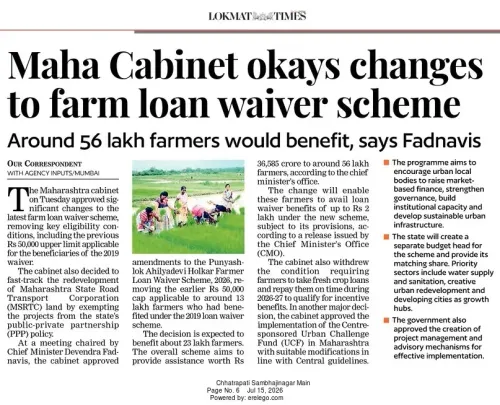
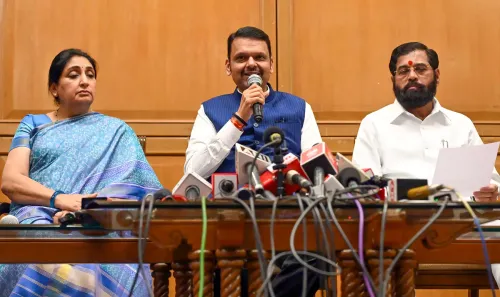
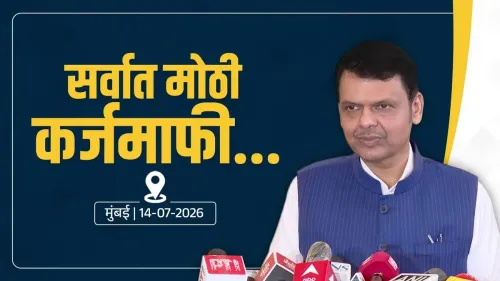
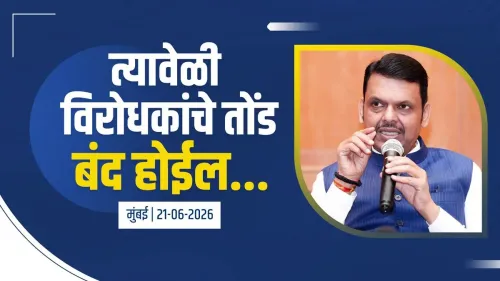
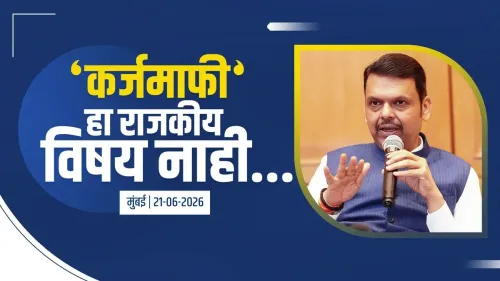
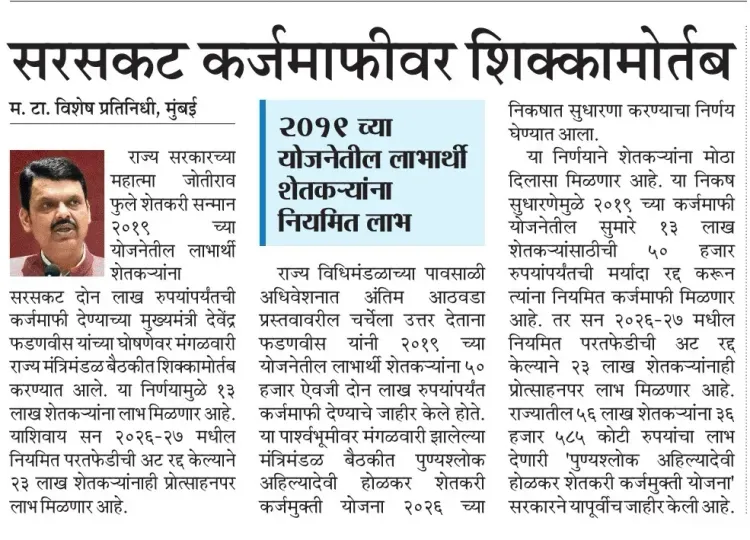
The Chief Minister's Office of Maharashtra announced on Wednesday, 15 July 2026 that the Maharashtra Cabinet has given its stamp of approval to a blanket farm loan waiver, signalling a significant intervention in the state's agrarian economy. The post on X, attributed to the CMO's official handle, tagged Chief Minister Devendra Fadnavis and flagged the decision as a cabinet-level resolution.
Context
The post reads: 'सरसकट कर्जमाफीवर शिक्कामोर्तब' — translated as 'Blanket loan waiver gets the stamp of approval' — with a direct reference to Devendra Fadnavis and the hashtag #CabinetDecision. The term sarsakat (सरसकट) in Marathi denotes a sweeping or across-the-board measure, indicating that the waiver is not restricted to a narrow category of borrowers.
The announcement comes amid recurring agrarian stress in Maharashtra, a state where farming communities across regions such as Vidarbha, Marathwada, and the northern districts have long grappled with debt burdens linked to crop failures, erratic monsoons, and volatile commodity prices.
Policy Backdrop
Maharashtra has a documented history of deploying farm loan waivers as a crisis-response instrument. In 2017, the state government announced a waiver covering small and marginal farmers up to Rs 1.5 lakh per account, a measure that drew both praise for its immediate relief and scrutiny over fiscal sustainability and implementation gaps.
Indian state governments have repeatedly turned to targeted or blanket waivers to address short-term agrarian distress caused by monsoon failures, price volatility, and rising input costs. Maharashtra has remained among the states that periodically revisit such relief packages as part of their agricultural credit policy toolkit. The Maharashtra Cabinet, as the state's highest executive body, holds the authority to approve such financial relief measures before they are formally notified.
Stakeholders and Impact
Small farmers and borrowers from cooperative banks stand as the primary beneficiaries of any blanket waiver scheme. For cooperative banks, which form the backbone of rural credit delivery in Maharashtra, such decisions carry significant balance-sheet implications, as waived amounts are typically compensated by the state government over a phased schedule.
Agricultural labour, input suppliers, and rural households with indirect dependence on farm incomes are also affected by the broader economic ripple of debt-relief announcements. The scale of fiscal impact will depend on the eligibility criteria and the total loan portfolio covered — details that are yet to be formally notified.
What's Next
The formal government resolution is expected to spell out eligibility norms, the total fiscal outlay, and the phased disbursement schedule for lenders. Observers will watch closely for the definition of 'blanket' coverage — specifically whether the waiver applies uniformly across loan sizes and categories of farmers, or carries sub-limits similar to the 2017 precedent.
The political and fiscal contours of this decision are likely to shape the state's budgetary outlook and set a reference point for agricultural credit policy discussions across other Indian states facing similar rural distress conditions.
Point of View
Though blanket schemes carry heavier fiscal costs. This move fits a broader national pattern where state governments compete to signal farmer-friendly credentials, often pushing the burden onto cooperative bank balance sheets and future budgets. The real test will be in the implementation details: how swiftly the government resolution is notified and whether disbursements reach farmers before the next cropping cycle.
NationPress
13 Oct 2026
Frequently Asked Questions
What is the Maharashtra farm loan waiver announced in July 2026?
The Maharashtra Cabinet approved a blanket farm loan waiver on 15 July 2026, as announced by the Chief Minister's Office. The decision, tagged to CM Devendra Fadnavis, is described as a sweeping or across-the-board relief measure for farmers, though specific eligibility criteria and fiscal outlay are yet to be formally notified.
Who announced the Maharashtra farm loan waiver?
The announcement was made by the official Chief Minister's Office of Maharashtra on its X account, tagging Chief Minister Devendra Fadnavis and citing it as a cabinet decision.
What does 'sarsakat karz mafi' mean?
'Sarsakat karz mafi' (सरसकट कर्जमाफी) is a Marathi phrase meaning 'blanket loan waiver' — a sweeping debt-relief measure that applies broadly rather than to a narrowly defined category of farmers.
Has Maharashtra done a farm loan waiver before?
Yes. In 2017, the Maharashtra government announced a farm loan waiver covering small and marginal farmers up to Rs 1.5 lakh per account. The 2026 cabinet decision appears to be a fresh, broader intervention along similar lines.
Who benefits from the Maharashtra farm loan waiver?
Small farmers and borrowers from cooperative banks are the primary expected beneficiaries. The exact eligibility norms will be determined once the government formally notifies the scheme.