Jaishankar Co-Chairs India-GCC Troika Meet, FTA Talks Launched
Synopsis
External Affairs Minister Dr. S. Jaishankar co-chaired the India-GCC Troika Ministerial at UNGA81 in New York, reviewing the 2024-28 Joint Action Plan and welcoming the formal launch of India-GCC Free Trade Agreement negotiations, while reiterating India's commitment to maritime security in the Gulf.
Key Takeaways
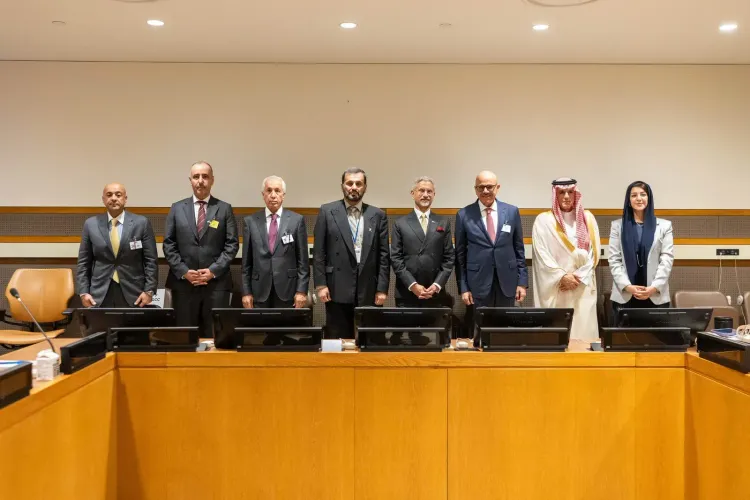
Jaishankar co-chaired the India-GCC Troika Ministerial Meeting on the sidelines of UNGA81 in New York on 26 September 2026 .
India and the GCC formally launched Free Trade Agreement negotiations , a goal that has been sought since a dormant Framework Agreement was signed in 2004 .
Ministers reviewed progress on the India-GCC Joint Action Plan 2024–28 , covering trade, energy, food security, health, and people-to-people ties.
Over eight million Indian nationals reside in GCC countries; Jaishankar thanked GCC leaderships for their support to the Indian community.
India reiterated its commitment to freedom of navigation and safety of commercial shipping in the Gulf region.
The FTA launch follows India's bilateral CEPA with the UAE signed in February 2022 , reflecting a tiered engagement strategy with the Gulf bloc.
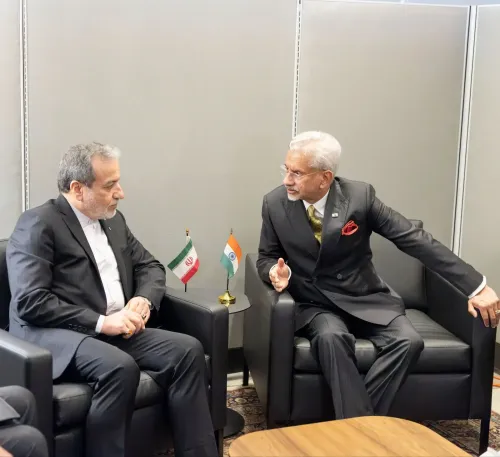
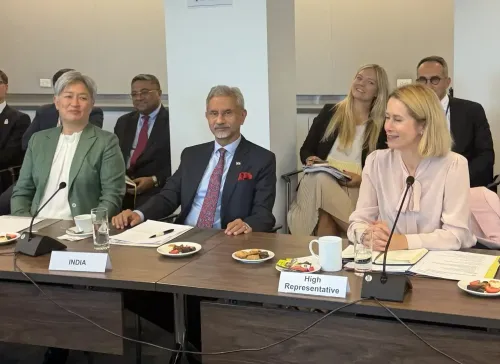
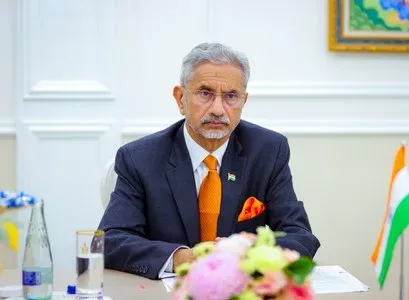
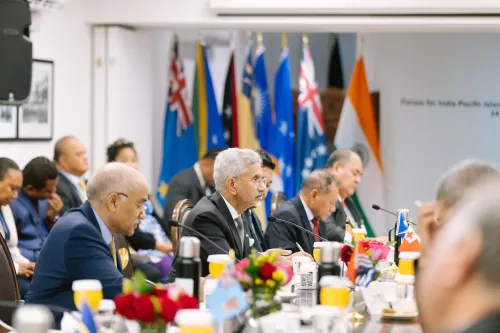
At the United Nations General Assembly in New York, Union External Affairs Minister Dr. S. Jaishankar co-chaired the India-Gulf Cooperation Council Troika Ministerial Meeting on Saturday, 26 September 2026 — and walked out with something India has long sought: the formal launch of India-GCC Free Trade Agreement negotiations.
What the Troika Meeting Produced
The meeting, held on the sidelines of UNGA81, brought together India and the GCC Troika — the rotating presidency grouping of the six-member Gulf Cooperation Council, comprising Bahrain, Kuwait, Oman, Qatar, Saudi Arabia and the United Arab Emirates. Ministers reviewed the progress of the India-GCC Joint Action Plan 2024–28, the five-year cooperation framework that formalised a wide-ranging agenda covering trade, energy, security, and people-to-people ties.
The headline outcome was unambiguous: the launch of India-GCC FTA negotiations. Jaishankar welcomed the development on X, flagging areas of focus — 'trade, investment, energy, food security, health, new technologies, culture and people-to-people exchanges.' That list is not aspirational boilerplate. It maps directly onto the architecture of the Joint Action Plan.
A Long Road to the Negotiating Table
India and the GCC have circled a free trade deal for over two decades. A Framework Agreement on Economic Cooperation was signed as far back as 2004, but stalled without producing a binding pact. The momentum shifted in February 2022, when India concluded a Comprehensive Economic Partnership Agreement with the UAE — the GCC's largest economy — in a bilateral fast-track. That deal demonstrated what was possible and sharpened appetite on both sides for a broader multilateral arrangement.
The 2024–28 Joint Action Plan institutionalised the revival, and the Troika Ministerial in New York now adds formal FTA negotiations to the agenda. The sequencing matters: bilateral CEPA first, then bloc-wide FTA — a deliberate, tiered strategy.
Eight Million Indians and the Navigation Warning
Jaishankar also 'thanked GCC leaderships for the support extended to the Indian community' — a diplomatic acknowledgment that carries real weight. Over eight million Indian nationals live and work across the six GCC states, making the diaspora one of the largest and most economically significant in the world. Remittances from the Gulf form a structural pillar of India's foreign exchange inflows.
The minister also 'reiterated India's strong commitment to freedom of navigation and safety of seafarers and commercial shipping.' In the context of the Gulf — where the Strait of Hormuz channels a fifth of global oil trade — that is not ceremonial language. It aligns with India's consistent maritime security messaging in the region and signals that geopolitical stability in Gulf waterways remains a non-negotiable Indian interest.
What Comes Next for the FTA
The formal launch of negotiations is a starting gun, not a finish line. GCC bloc negotiations are notoriously complex — member states have individual trade profiles and sensitivities, and India's own defensive interests in sectors like petrochemicals and metals will need careful handling. The first real test will be the pace and depth of the negotiating rounds, and whether the political momentum generated at New York translates into technical progress. The next annual ministerial review of the Joint Action Plan will be the first hard checkpoint.
For now, India has taken its Gulf partnership from a web of bilateral arrangements to the threshold of a bloc-level trade architecture. That shift, years in the making, formally began in New York, September 2026.
Point of View
An ambition that had languished since 2004. Jaishankar's explicit mention of food security and new technologies alongside energy signals India is positioning the Gulf not merely as an oil supplier but as a partner in its broader economic security architecture. The freedom-of-navigation reiteration is a calibrated signal, consistent with India's Indo-Pacific messaging but delivered directly in the Gulf's diplomatic living room. The real test is whether technical negotiating rounds can match the political momentum generated in New York.
NationPress
26 Sept 2026
Frequently Asked Questions
What is the India-GCC FTA and why does it matter?
The India-GCC Free Trade Agreement is a proposed deal between India and the six Gulf Cooperation Council states — Bahrain, Kuwait, Oman, Qatar, Saudi Arabia and the UAE. Negotiations were formally launched in September 2026. It matters because the GCC is one of India's largest trading regions, a key energy supplier, and home to over eight million Indian workers whose remittances are vital to India's economy.
What is the India-GCC Joint Action Plan 2024-28?
The India-GCC Joint Action Plan 2024-28 is a five-year cooperation framework that sets out priority areas including trade, energy, security, health, and people-to-people exchanges. It was agreed to institutionalise and accelerate the partnership after years of relatively slow progress.
What is the India-GCC Troika Ministerial?
The Troika Ministerial is a meeting between India's External Affairs Minister and the GCC Troika — the grouping that includes the current, incoming, and outgoing GCC presidencies. It serves as a high-level platform to review and advance India-GCC cooperation.
Why did Jaishankar mention freedom of navigation at a Gulf meeting?
The Gulf is home to the Strait of Hormuz, through which a significant share of global oil trade passes. India has consistently advocated for freedom of navigation as a principle of its maritime security policy, and reiterating it at the India-GCC Troika underscores that regional shipping stability is a direct Indian strategic interest.
What was India's previous trade agreement with the Gulf?
India signed a Comprehensive Economic Partnership Agreement with the UAE — the GCC's largest economy — in February 2022. That bilateral deal is widely seen as having re-energised discussions for a broader India-GCC bloc-level free trade agreement.