Maharashtra launches ₹36,585 crore farm loan waiver for 56 lakh families
Synopsis
Maharashtra has rolled out one of its biggest-ever farm debt relief programmes — a ₹36,585 crore loan waiver covering 56 lakh families, with Aadhaar-linked DBT disbursements and a 31 July deadline for cooperative bank accounts. The scale and the digital delivery architecture mark a significant shift from past waiver schemes that were plagued by implementation gaps.
Key Takeaways
Maharashtra launched the ₹36,585 crore Punyashlok Ahilyadevi Holkar Farmer Loan Waiver Scheme 2026 on 22 July 2026 .
The scheme offers relief of up to ₹2 lakh to approximately 56 lakh eligible farmer families.
53 banks — including 30 DCCBs and 12 nationalised banks — have uploaded farmer loan data to a MahaIT -developed portal.
Relief will be disbursed via Direct Benefit Transfer (DBT) after mandatory Aadhaar authentication on the AgriStack platform.
DCCB disbursements are targeted for completion by 31 July 2026 ; commercial bank disbursements follow thereafter.
A first-phase representative list of 532 beneficiaries across seven districts has been published.
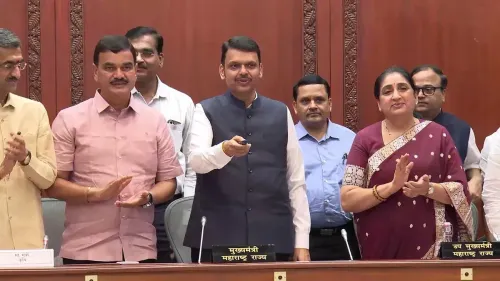
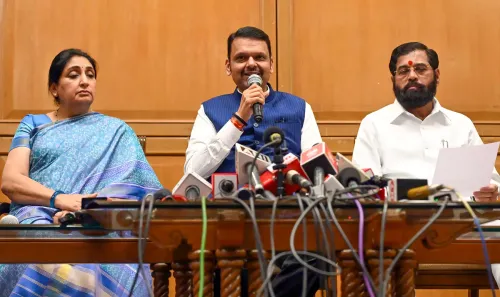
The Maharashtra government on 22 July 2026 officially launched the ₹36,585 crore 'Punyashlok Ahilyadevi Holkar Farmer Loan Waiver Scheme 2026', extending debt relief of up to ₹2 lakh to approximately 56 lakh eligible farmer families across the state. The scheme, one of the largest farm-relief initiatives in Maharashtra's recent history, was unveiled at a state-level press conference in Mumbai by Minister for Co-operation Babasaheb Patil.
Scheme Background and Cabinet Approval
The loan waiver was formally approved during a Cabinet meeting on 2 June 2026, with eligibility criteria subsequently revised through a Government Resolution (GR) issued on 15 July 2026. The initiative is being implemented under the leadership of Chief Minister Devendra Fadnavis, Deputy Chief Minister Eknath Shinde, and Deputy Chief Minister Sunetra Ajit Pawar.
Minister Patil noted that the representative beneficiary list was released to coincide with the birthday of Chief Minister Fadnavis and the birth anniversary of the late Deputy Chief Minister Ajit Pawar. In its first phase, a representative list covering 532 eligible beneficiaries across seven districts has been published.
Banking Infrastructure and Eligibility Process
To operationalise the scheme, 53 banks — comprising 30 District Central Cooperative Banks (DCCBs), 12 nationalised banks, and several private banks — uploaded farmer loan account details onto a dedicated portal developed by MahaIT. All DCCB loan accounts were audited by Co-operation Department officials before the final eligible list was prepared through digital analysis.
The scheme excludes a defined set of applicants: former and sitting public representatives, office bearers of local self-government bodies, government and semi-government employees, taxpayers with non-agricultural income, and office bearers or employees of cooperative institutions such as DCCBs, urban cooperative banks, sugar factories, spinning mills, dairy unions, and agricultural produce market committees.
How Farmers Will Receive Relief
Eligible farmers will receive SMS notifications on their registered mobile numbers for Aadhaar authentication. Beneficiary lists will also be accessible at local Gram Panchayats, Primary Agricultural Credit Societies (PACS), and respective bank branches. Each beneficiary will be assigned a unique identification number, and authentication can be completed using either the Aadhaar number or this ID.
The service is available across approximately 32,000 Aaple Sarkar Seva Kendras statewide. Prior registration on the AgriStack platform is mandatory. Upon successful Aadhaar authentication, the relief amount will be directly deposited into beneficiaries' loan accounts via Direct Benefit Transfer (DBT).
Timeline and Implementation
The process for eligible beneficiaries across all DCCBs is scheduled for completion by 31 July 2026, after which disbursements for commercial bank accounts will commence. Minister Patil commended Co-operation Department Secretary Pravin Darade, Co-operation Commissioner Deepak Taware, and the broader department machinery for district-level coordination that enabled the scheme's swift rollout.
The minister emphasised that the scheme goes beyond debt relief, aiming to reduce financial strain on farmers and empower them to resume agricultural activity. With disbursements tied to Aadhaar-verified DBT, the state government says it intends to ensure direct, leakage-free delivery to beneficiaries.
Point of View
585 crore waiver is politically significant — released on the Chief Minister's birthday and tied to a late Deputy CM's birth anniversary — but the scheme's real test lies in execution. Past state farm waivers in India have repeatedly stumbled on identification errors, exclusion of genuine beneficiaries, and delayed bank-level processing. The Aadhaar-DBT architecture and AgriStack integration are credible safeguards, but the mandatory AgriStack pre-registration requirement could inadvertently lock out digitally marginalised farmers. With a 31 July DCCB deadline, the clock is ticking — and how the state handles the commercial bank tranche will reveal whether this is a durable policy or a well-timed electoral signal.
NationPress
21 Oct 2026
Frequently Asked Questions
What is the Punyashlok Ahilyadevi Holkar Farmer Loan Waiver Scheme 2026?
It is a ₹36,585 crore farm debt relief scheme launched by the Maharashtra government on 22 July 2026, offering loan waivers of up to ₹2 lakh to approximately 56 lakh eligible farmer families across the state. The scheme covers both cooperative and commercial bank loan accounts.
Who is eligible for the Maharashtra farm loan waiver?
Eligible beneficiaries are farmer families with qualifying agricultural loan accounts across DCCBs and commercial banks. The scheme excludes public representatives, government employees, non-agricultural income taxpayers, and office bearers of cooperative institutions such as sugar factories, urban cooperative banks, and dairy unions.
How will farmers receive the loan waiver amount?
Relief will be credited directly into beneficiaries' loan accounts via Direct Benefit Transfer (DBT) after successful Aadhaar authentication. Farmers must be pre-registered on the AgriStack platform and can complete authentication at approximately 32,000 Aaple Sarkar Seva Kendras, Gram Panchayats, PACS offices, or bank branches.
When will the Maharashtra farm loan waiver disbursements be completed?
The process for all District Central Cooperative Bank (DCCB) accounts is targeted for completion by 31 July 2026. Disbursements for commercial bank accounts will commence after that deadline is met.
Which banks are participating in the Maharashtra loan waiver scheme?
A total of 53 banks are involved, including 30 District Central Cooperative Banks (DCCBs), 12 nationalised banks, and several private banks. All participating banks have uploaded farmer loan account data to a portal developed by MahaIT for digital processing and verification.