FDA approves Hibsago for chronic hepatitis B, first antisense oligonucleotide therapy

Synopsis
For the first time, the FDA has approved a hepatitis B treatment — GSK's Hibsago — that could let some patients stop all antiviral therapy and still maintain control of the virus. In two trials, 19% of recipients were virus-free at 24 weeks after stopping all treatment. It's a paradigm shift in a disease area where lifelong daily medication has been the norm.
Key Takeaways
The FDA approved Hibsago (bepirovirsen) by GSK plc on 21 October 2026 for chronic hepatitis B in adults without cirrhosis.
It is the first FDA-approved antisense oligonucleotide for hepatitis B, targeting the virus's genetic replication machinery.
In two clinical trials, 24% of Hibsago recipients qualified to stop existing antivirals; 19% maintained viral control 24 weeks after ending all treatment.
The drug carries a boxed warning for serious liver reactions and reduced platelet counts; regular blood monitoring is required.
A companion diagnostic by Roche was simultaneously authorised to identify eligible patients.
No timeline has been announced for commercial availability outside the United States, including in India .
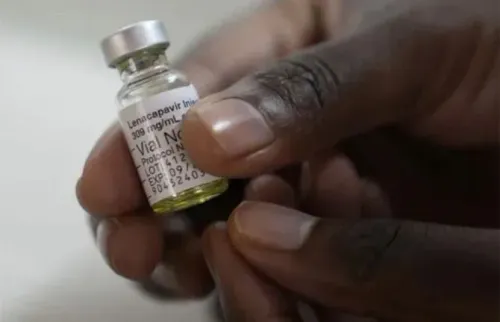
The US Food and Drug Administration (FDA) on Tuesday, 21 October 2026, approved Hibsago (bepirovirsen), a first-of-its-kind injectable treatment for chronic hepatitis B virus (HBV) infection, opening the possibility for certain patients to stop all antiviral medication while maintaining viral control. Developed by GSK plc, Hibsago is the first FDA-approved antisense oligonucleotide for hepatitis B — a significant milestone in a disease area where patients have historically faced decades of daily medication.
What Hibsago Is and How It Works
Hibsago belongs to a class of medicines called antisense oligonucleotides, which are designed to interfere with the genetic instructions that allow the hepatitis B virus to reproduce and produce viral proteins. Unlike conventional antivirals that suppress the virus only while being taken, this mechanism targets the virus's ability to sustain itself at a molecular level.
The approval applies to adults with chronic hepatitis B without cirrhosis who have already undergone antiviral therapy for at least six months and have achieved suppressed HBV levels in the blood. Patients must also have hepatitis B surface antigen (HBsAg) levels of 3,000 international units per millilitre or less, confirmed via an FDA-authorised diagnostic test — a companion test developed by Roche and simultaneously authorised by the agency.
What the Clinical Trials Found
The FDA evaluated Hibsago across two clinical trials comparing the drug against a placebo. Patients received injections under the skin for up to 24 weeks while continuing existing antiviral medication, followed by at least another 24 weeks on standard antivirals after the final Hibsago dose.
Across both trials, 24 per cent of Hibsago recipients met the criteria required to discontinue their existing antiviral medication, compared with none in the placebo groups. Among those who stopped all hepatitis B treatment, 19 per cent continued to demonstrate viral control at the 24-week post-treatment mark, with hepatitis B surface antigen no longer detectable in their blood.
The findings indicate that a meaningful proportion of eligible patients may achieve sustained control without ongoing therapy, though the majority of trial participants did not reach this outcome — a nuance the FDA underscored in its assessment.
Safety Risks and Monitoring Requirements
The FDA emphasised that Hibsago carries significant safety risks. Its prescribing information includes a boxed warning — the agency's most serious advisory — covering serious liver reactions and reduced platelet counts, which can raise the risk of potentially life-threatening bleeding. Additional warnings concern worsening kidney function, serious inflammatory reactions including vasculitis, and complications from improper administration.
Patients on Hibsago will require regular blood tests and close medical monitoring before and throughout the course of treatment. The most commonly reported side effects, beyond laboratory abnormalities, included injection-site reactions, fever, fatigue, and headache.
Regulatory Designations and Significance
Hibsago received Fast Track, Breakthrough Therapy, and Priority Review designations from the FDA, reflecting the agency's view that the drug addresses a significant unmet medical need. Wendy Carter, acting director of the FDA's Office of Infectious Diseases, described the approval as 'an important advance for people living with this serious disease.'
'For many people living with chronic hepatitis B, treatment can mean taking antiviral medication for years to keep the virus suppressed,' Carter said. 'Hibsago provides a new treatment approach that gives some patients the possibility of maintaining control of the virus after all chronic HBV treatment has ended.'
What This Means for India and Asia
Chronic hepatitis B remains a major public health burden across Asia, including India, where millions live with the infection and face elevated long-term risks of cirrhosis and liver cancer. The FDA approval covers the United States; the agency's announcement did not specify a timeline for commercial availability in India or other markets. Regulatory submissions to bodies such as India's Central Drugs Standard Control Organisation (CDSCO) would be a separate process. Access, pricing, and inclusion in public health programmes will be critical factors determining how broadly this advance reaches patients in the region.
Point of View
But the real-world impact will hinge on two variables the FDA announcement leaves open: price and access. A 19% sustained response rate is a meaningful proof of concept, not a cure — and for the vast majority of patients in India and Asia who carry the heaviest hepatitis B burden, 'FDA-approved' means little without an accelerated regulatory pathway and an affordable access plan. The breakthrough therapy designation signals urgency within the US system; it does not automatically translate to availability in markets where the disease is most prevalent.
NationPress
21 Oct 2026
Frequently Asked Questions
What is Hibsago and who has approved it?
Hibsago (bepirovirsen) is a new injectable treatment for chronic hepatitis B developed by GSK, approved by the US Food and Drug Administration (FDA) on 21 October 2026. It is the first antisense oligonucleotide therapy approved for hepatitis B, designed to interfere with the virus's genetic replication process.
Who is eligible for Hibsago treatment?
The approval covers adults with chronic hepatitis B who do not have cirrhosis, have been on antiviral therapy for at least six months, have suppressed HBV levels in the blood, and have hepatitis B surface antigen levels of 3,000 international units per millilitre or less as confirmed by an authorised diagnostic test.
How effective is Hibsago based on clinical trial data?
In two clinical trials, 24% of Hibsago recipients met the criteria to stop existing antiviral medication, compared with none in placebo groups. Of those who discontinued all treatment, 19% maintained viral control — with hepatitis B surface antigen undetectable — at 24 weeks after stopping all therapy.
What are the safety risks associated with Hibsago?
Hibsago carries a boxed warning — the FDA's most serious safety label — for serious liver reactions and reduced platelet counts that can increase the risk of life-threatening bleeding. Additional risks include worsening kidney function, serious inflammatory reactions such as vasculitis, and injection-site complications. Regular blood tests and medical monitoring are required throughout treatment.
Will Hibsago be available in India?
The FDA approval covers the United States only. No timeline has been announced for availability in India or other markets. A separate regulatory submission to India's Central Drugs Standard Control Organisation (CDSCO) would be required before the drug can be approved or marketed in India.