Is This the First Fingerstick Test to Improve Hepatitis B Diagnosis Access?
Synopsis
A groundbreaking trial in Australia has unveiled a fingerstick test for hepatitis B that rivals traditional lab tests in accuracy. This innovation could revolutionize testing access in remote areas, potentially saving millions of lives. Learn about the implications of this test on global health and the fight against hepatitis B.
Key Takeaways
Innovative fingerstick test for hepatitis B DNA matches lab accuracy.
Results delivered in under an hour , enhancing patient access.
Test can be administered in decentralized clinics .
Potential to support global health initiatives to eliminate hepatitis B.
Addresses healthcare access issues in remote regions .
New Delhi, Feb 5 (NationPress) An unprecedented trial conducted in Australia has revealed that a straightforward fingerstick test for detecting hepatitis B DNA matches the accuracy of traditional laboratory testing, thus enhancing access in remote and resource-constrained regions.
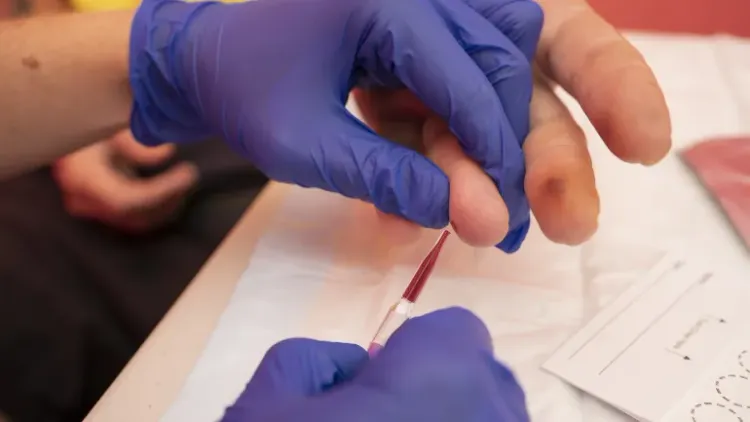
As reported in the Journal of Clinical Microbiology, this point-of-care test can provide results in under an hour and can be administered in decentralized health clinics, as stated by Xinhua news agency.
The fingerstick test is set to mitigate delays typically associated with laboratory testing, according to a statement from the Kirby Institute at the University of New South Wales in Australia.
Professor Gail Matthews, who spearheaded the research at the Kirby Institute, commented, "Our trial's findings indicate that the fingerstick point-of-care test is remarkably precise, closely aligning with the accuracy of conventional testing methods."
Matthews further emphasized that this breakthrough could significantly "broaden access to testing and treatment on a global scale," particularly in regions where testing facilities are scarce.
Hepatitis B, an infectious disease targeting the liver, impacts around 254 million individuals worldwide and results in over 1 million fatalities each year, according to global data.
Despite being preventable through vaccination, merely 8 percent of those afflicted with chronic hepatitis B receive treatment, as per the World Health Organization (WHO).
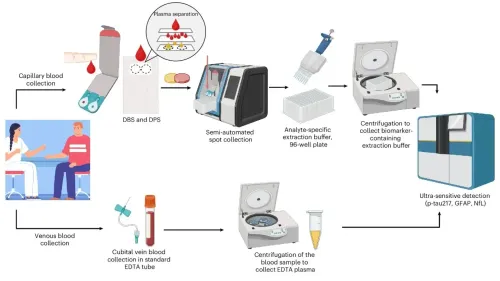
Currently, testing for hepatitis B DNA, essential for both diagnosis and monitoring, necessitates the collection of a venous blood sample to be analyzed in centralized laboratories. This often requires patients to travel significant distances for testing, followed by extended waiting periods for results. Such delays, along with multiple clinic visits, can impede timely treatment and care.
In stark contrast, the innovative point-of-care test can be performed in smaller health clinics using a fingerstick blood sample, which can be administered by a wider range of healthcare professionals, delivering results within 60 minutes.
This method has proven effective for numerous infectious diseases, including hepatitis C, but its effectiveness for hepatitis B DNA testing via fingerstick blood has remained unknown until now.
According to the researchers, this novel test could bolster global initiatives aimed at achieving the WHO's goal of eradicating hepatitis B as a public health threat by 2030.
Point of View
I believe this development marks a significant leap in accessible healthcare. The ability to conduct accurate hepatitis B tests in remote regions represents a proactive step towards addressing a pressing global health issue. It is crucial that advancements in medical technology continue to prioritize accessibility, especially for vulnerable populations.
NationPress
27 Sept 2026
Frequently Asked Questions
What is the significance of the fingerstick test?
The fingerstick test offers a quick and accurate alternative to traditional lab testing for hepatitis B DNA, enhancing access to diagnosis and treatment, particularly in remote areas.
How does this test compare to traditional methods?
The fingerstick test has been found to be as accurate as standard laboratory tests, providing results within an hour and eliminating delays associated with centralized testing.
Who conducted the trial?
The trial was conducted by researchers at the Kirby Institute, part of the University of New South Wales in Australia.
What are the global implications of this test?
This test could significantly broaden access to hepatitis B testing and treatment worldwide, especially in areas where healthcare resources are limited.
How many people are affected by hepatitis B globally?
Approximately 254 million people worldwide are living with hepatitis B, highlighting the urgent need for accessible testing and treatment options.