CM Fadnavis Launches ₹5,029 Cr Farmer Loan Waiver in Maharashtra
Synopsis
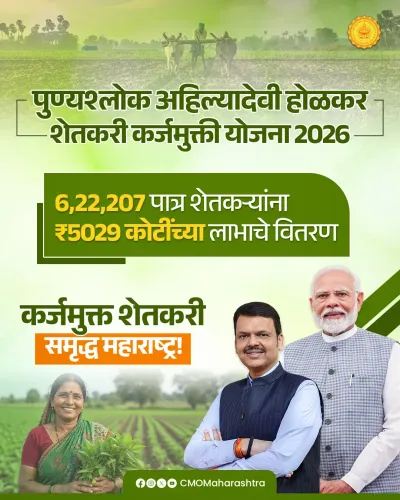
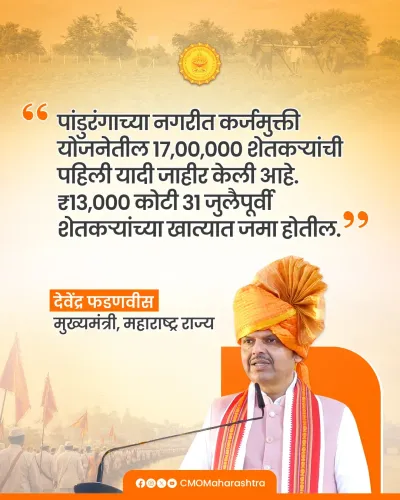
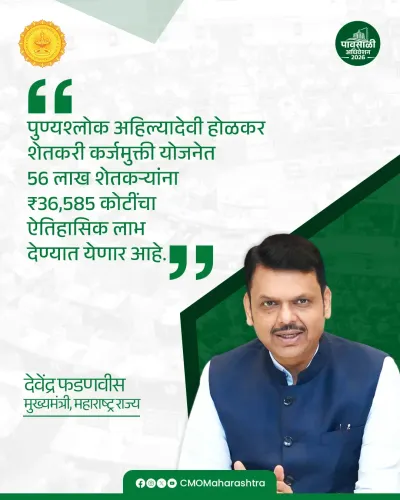
Chief Minister Devendra Fadnavis launched the Punyashlok Ahilyadevi Holkar Shetkari Karjmukti Yojana 2026 in Mumbai on 7 August, transferring ₹5,029 crore directly to 6,22,207 Aadhaar-verified farmers across Maharashtra in the scheme's first phase.
Key Takeaways
₹5,029 crore transferred online to 6,22,207 eligible farmers in the first phase of the Punyashlok Ahilyadevi Holkar Shetkari Karjmukti Yojana 2026.
Amravati division received the largest share — ₹1,372.17 crore for 1,58,146 farmers.
The scheme is fully digital: beneficiaries need only register on AgriStack at an Aaple Sarkar Seva Kendra using their unique reference number and complete Aadhaar verification.
Banks have been directed to immediately extend fresh kharif crop loans to all waiver beneficiaries.
District-level grievances will be resolved by a dedicated cabinet sub-committee as flagged by guardian ministers.
The scheme is named after Punyashlok Ahilyadevi Holkar , the 18th-century Maratha ruler celebrated for her agrarian administration.
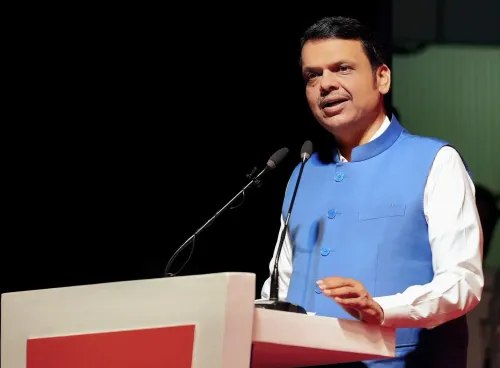
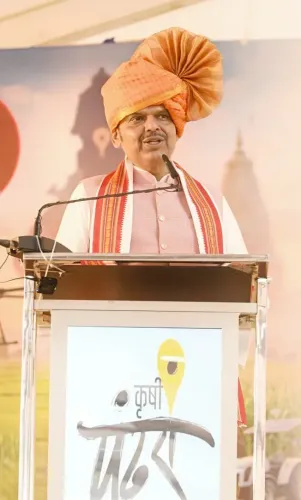
Over 6.22 lakh farmers in Maharashtra woke up to financial relief on Friday, 7 August 2026, as Chief Minister Devendra Fadnavis personally triggered the online transfer of ₹5,029 crore directly into debt-laden farm accounts — the first tranche of the state's ambitious Punyashlok Ahilyadevi Holkar Shetkari Karjmukti Yojana 2026. The launch, held at Sahyadri Guest House, Mumbai, signals Maharashtra's largest digital farm-debt relief push in recent memory.
₹5,029 crore transferred in a single click
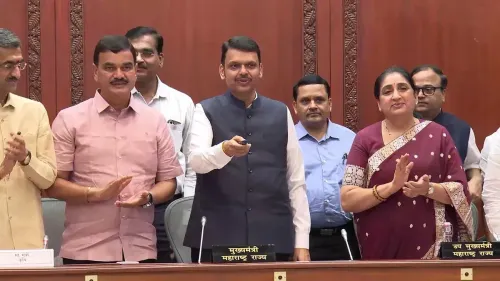
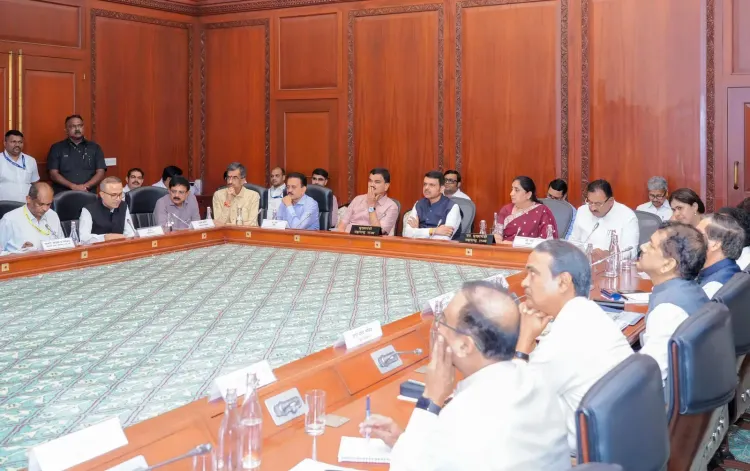
The review meeting, chaired by CM Fadnavis and attended by Deputy Chief Minister Sunetra Ajit Pawar and a full cabinet bench, culminated in a live online disbursement. Farmers who had completed Aadhaar authentication saw the waiver amount credited directly to their loan accounts — no branch visit, no paperwork queue. 'The amount has been deposited directly into the loan accounts of farmers who completed Aadhaar verification in the first phase,' Fadnavis said, underlining the scheme's fully digital spine.
The state has simultaneously directed all banks to immediately extend fresh kharif crop loans to beneficiaries, so that cleared farmers can re-enter the credit system in time for the sowing season. The intent is explicit: debt relief is not the finish line — a new cycle of productive lending is.
Division-by-division: who got what
Amravati division leads the first-phase count with 1,58,146 farmers receiving ₹1,372.17 crore, reflecting the region's historically high agrarian stress. Nashik division follows with 1,40,089 farmers and ₹1,209.39 crore; Chhatrapati Sambhajinagar division accounts for 1,30,934 farmers and ₹932.61 crore.
Pune division sees 1,04,061 farmers benefit to the tune of ₹860.97 crore, while Nagpur division covers 70,290 farmers with ₹544.71 crore. The relatively smaller Konkan division — Maharashtra's coastal belt with a different agrarian profile — records 18,687 farmers and ₹108.86 crore.
How a farmer enrolls — and what happens next
The scheme runs entirely through a MahaIT-developed portal. Banks have uploaded eligible beneficiary lists, which are also displayed at gram panchayat offices, cooperative service societies, and bank branches. Each eligible farmer receives a unique reference number; they must take that number to the nearest Aaple Sarkar Seva Kendra, register on AgriStack, and complete Aadhaar verification. That is the entire process — by design, frictionless.
Fadnavis directed guardian ministers of each district to flag any pending grievances or implementation bottlenecks to a dedicated cabinet sub-committee, which will take binding decisions. Ministers Girish Mahajan, Sanjay Sawkare, Pankaja Munde, Shambhuraj Desai, Dattatray Bharane, Babasaheb Patil, and State Minister Meghna Bordikar were present at the launch.
A scheme named for a legacy of farmer welfare
The scheme draws its name from Punyashlok Ahilyadevi Holkar, the 18th-century Maratha ruler celebrated for her agrarian administration and public works across the Deccan. Naming Maharashtra's flagship debt-relief programme after her is a deliberate political and cultural signal — connecting the Mahayuti government's rural agenda to a figure revered across caste and regional lines in the state.
Maharashtra has a long history of farm loan waivers — a similar large-scale exercise was carried out in 2017 — but this iteration's fully online architecture, Aadhaar-linked direct credit, and simultaneous fresh-lending directive represent a structural step up. The real test arrives in the phases ahead: whether banks comply swiftly with kharif loan orders, and whether the cabinet sub-committee resolves district-level disputes before the sowing window closes.
Point of View
The fully online, Aadhaar-linked disbursal is a departure from past waiver exercises that were plagued by manual verification delays and exclusion errors. The simultaneous directive to banks on fresh kharif lending is the critical variable: if compliance is patchy, the waiver risks being a one-time relief rather than a reset of the farm-credit cycle. The cabinet sub-committee mechanism for district grievances is a useful pressure valve, but its effectiveness will depend entirely on how swiftly it convenes and acts before the sowing season peaks.
NationPress
22 Sept 2026
Frequently Asked Questions
What is the Punyashlok Ahilyadevi Holkar Shetkari Karjmukti Yojana 2026?
It is Maharashtra's state government scheme that waives eligible farmers' outstanding crop loans and credits the waiver amount directly to their bank accounts online, without requiring farmers to file a separate application.
How much money was disbursed in the first phase of the Maharashtra farm loan waiver?
₹5,029 crore was transferred directly to the loan accounts of 6,22,207 Aadhaar-verified farmers across all six divisions of Maharashtra in the first phase launched on 7 August 2026 .
How does a farmer check if they are eligible and complete verification?
Eligible farmers are assigned a unique reference number; their names appear on lists at gram panchayat offices, cooperative societies, and bank branches, as well as on the MahaIT portal. They must take this number to an Aaple Sarkar Seva Kendra, register on AgriStack, and complete Aadhaar authentication to receive the benefit.
Which division received the most money under the first phase?
Amravati division received the largest allocation — ₹1,372.17 crore credited to 1,58,146 farmers — reflecting the region's high level of agrarian distress.
Will farmers be able to take new loans after the waiver?
Yes. The Maharashtra government has directed all banks to immediately extend fresh kharif crop loans to farmers whose debt has been waived, so they have working capital for the current agricultural season.