CM Fadnavis Launches Ahilyadevi Holkar Farmer Loan Waiver Scheme
Synopsis
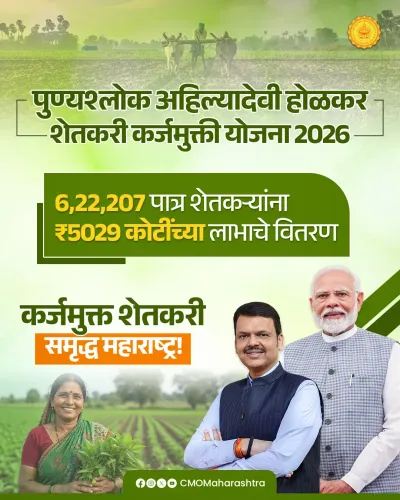
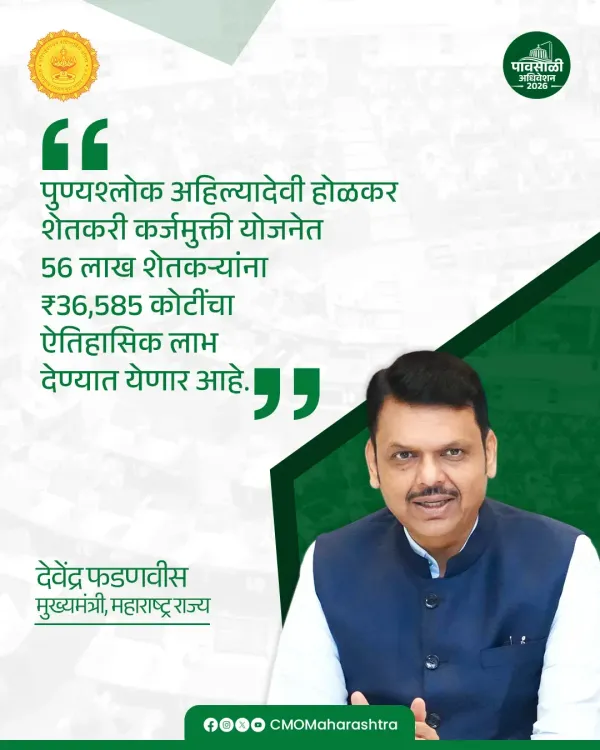
The Chief Minister's Office of Maharashtra announced the Punyashlok Ahilyadevi Holkar Shetkari Karjmukti Yojana on 10 July 2026, promising significant loan relief for farmers. Named after the revered 18th-century Holkar ruler, the scheme continues Maharashtra's long-standing policy of targeted agrarian debt waivers under CM Devendra Fadnavis.
Key Takeaways
The Chief Minister's Office of Maharashtra officially announced the Punyashlok Ahilyadevi Holkar Shetkari Karjmukti Yojana on 10 July 2026 .
The scheme is named after Ahilyadevi Holkar , the 18th-century Holkar dynasty ruler celebrated for public welfare and administrative reforms.
Chief Minister Devendra Fadnavis was directly tagged in the announcement, indicating his personal association with the scheme.
Maharashtra previously implemented a Rs 34,000 crore farmer loan waiver in 2017 covering crop loans up to Rs 1.5 lakh for small and marginal farmers.
Specific details including the total financial outlay, eligibility norms, and disbursement schedule are yet to be announced through a formal government resolution.
Small and marginal farmers across Maharashtra 's rural districts are the primary intended beneficiaries.
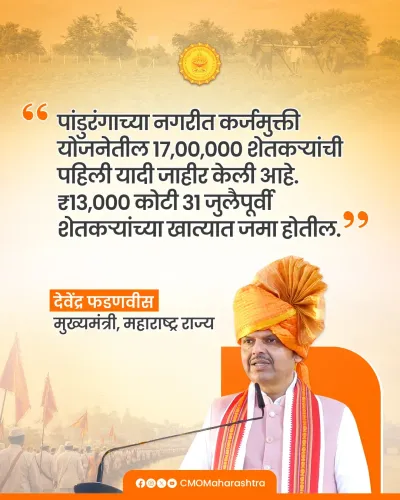
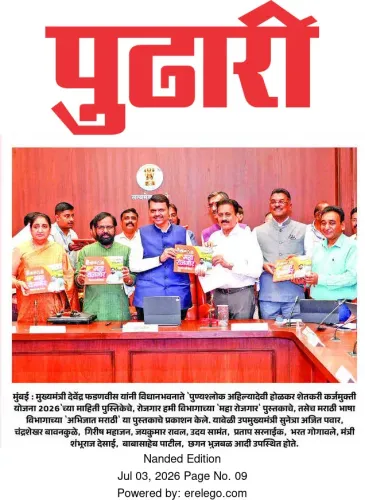
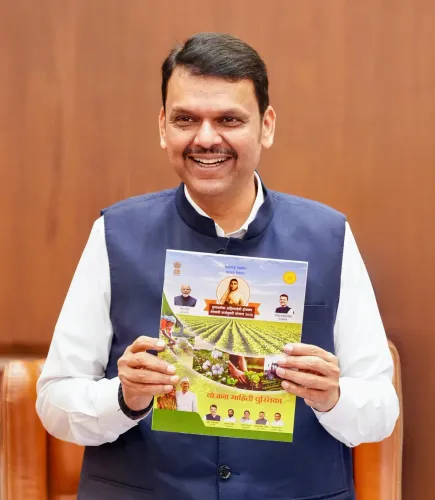
The Chief Minister's Office of Maharashtra announced on Friday, 10 July 2026 that the Punyashlok Ahilyadevi Holkar Shetkari Karjmukti Yojana — a farmer loan waiver scheme — will bring significant relief to the state's farming community, tagging Chief Minister Devendra Fadnavis in the official post.
Context
The CMO's post, written in Marathi, states: 'Punyashlok Ahilyadevi Holkar Shetkari Karjmukti Yojanemuḷe shetkaryanna miḷnar motha dilasa' — meaning, 'Farmers will receive great relief through the Punyashlok Ahilyadevi Holkar Farmer Loan Waiver Scheme.' The scheme is named after Ahilyadevi Holkar, the celebrated 18th-century ruler of the Holkar dynasty, widely revered across Maharashtra and Madhya Pradesh for her administrative acumen and commitment to public welfare. The naming signals the government's intent to frame this initiative within a legacy of benevolent governance.
Policy Backdrop
Farmer loan waivers have been a recurring instrument of agrarian relief in Maharashtra, a state where smallholder agriculture remains vulnerable to monsoon variability, market price swings, and mounting indebtedness. In 2017, the Maharashtra government had announced a loan waiver of approximately Rs 34,000 crore, covering crop loans up to Rs 1.5 lakh for small and marginal farmers — one of the largest such exercises in the state's history. Subsequent administrations continued disbursements under related programmes, reflecting the structural and recurring nature of agrarian distress in the state.
Devendra Fadnavis, a senior BJP leader who previously served as Chief Minister between 2014 and 2019, returned to the office and has been associated with multiple farmer-support initiatives. The Punyashlok Ahilyadevi Holkar Shetkari Karjmukti Yojana represents the current administration's fresh policy thrust in this domain. Specific details including the total financial outlay, eligibility criteria, and disbursement timeline are expected to be formalised through a government resolution.
Stakeholders and Impact
The primary beneficiaries of the scheme are expected to be small and marginal farmers across Maharashtra's rural districts — households that depend almost entirely on agricultural income and are disproportionately exposed to debt cycles. Maharashtra is among India's most agriculturally significant states, with a large rural population engaged in crops ranging from cotton and sugarcane to pulses and horticulture. Loan waiver schemes, when implemented effectively, provide immediate balance-sheet relief and can restore farmers' access to institutional credit.
Rural households, cooperative banks, and district-level credit institutions are all stakeholders in the scheme's rollout. The announcement is also likely to resonate with farmer unions and agrarian advocacy groups that have long demanded structural debt relief measures from the state government.
What's Next
Attention will now turn to the government resolution that is expected to specify the scheme's eligibility norms, the total financial corpus, and a clear disbursement schedule. The Maharashtra Legislative Assembly session and the next state budget will be closely watched for formal allocations linked to the scheme. Implementation capacity — particularly the speed and transparency of loan waiver credit transfers to individual farmer accounts — will determine whether the announcement translates into tangible relief on the ground.
Point of View
The Fadnavis administration is making a deliberate cultural and symbolic choice, invoking a figure revered across Maharashtra's rural heartland to lend the initiative historical legitimacy. The announcement follows a broader national trend of state governments using targeted debt relief to address structural agricultural distress rather than systemic reforms in credit access or crop insurance. The scheme's real test will lie in implementation: past Maharashtra waivers have faced criticism over delays, exclusions, and administrative bottlenecks that diluted their intended impact.
NationPress
9 Oct 2026
Frequently Asked Questions
What is the Punyashlok Ahilyadevi Holkar Shetkari Karjmukti Yojana?
The Punyashlok Ahilyadevi Holkar Shetkari Karjmukti Yojana is a farmer loan waiver scheme announced by the Maharashtra government on 10 July 2026, aimed at providing significant debt relief to farmers across the state. It is named after Ahilyadevi Holkar, the celebrated 18th-century Holkar dynasty ruler known for her welfare-oriented governance.
Who announced the Ahilyadevi Holkar farmer loan waiver scheme in Maharashtra?
The scheme was announced by the Chief Minister's Office of Maharashtra, with Chief Minister Devendra Fadnavis tagged in the official post, indicating his direct association with the initiative.
Who are the beneficiaries of the Maharashtra Karjmukti Yojana 2026?
The scheme is intended to benefit farmers in Maharashtra, particularly small and marginal farmers who are burdened by agricultural debt. Detailed eligibility criteria are expected to be released through a formal government resolution.
How does this scheme compare to Maharashtra's 2017 farm loan waiver?
Maharashtra's 2017 farmer loan waiver covered crop loans up to Rs 1.5 lakh for small and marginal farmers with a total outlay of approximately Rs 34,000 crore. The Punyashlok Ahilyadevi Holkar Shetkari Karjmukti Yojana is a new initiative; its financial corpus and scope have not yet been officially specified.
When will Maharashtra farmers receive relief under the Karjmukti Yojana?
A specific disbursement timeline has not yet been announced. The government is expected to issue a resolution detailing the eligibility norms, total outlay, and payment schedule in the coming weeks.