CM Fadnavis Raises Farm Loan Waiver Limit to Rs 2 Lakh
Synopsis
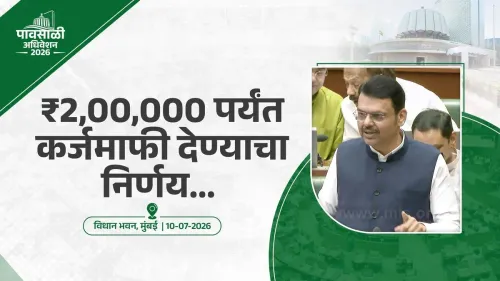
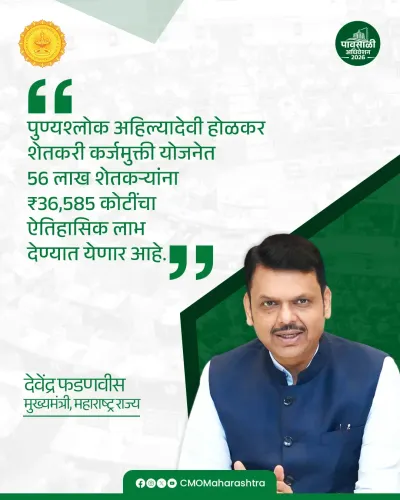
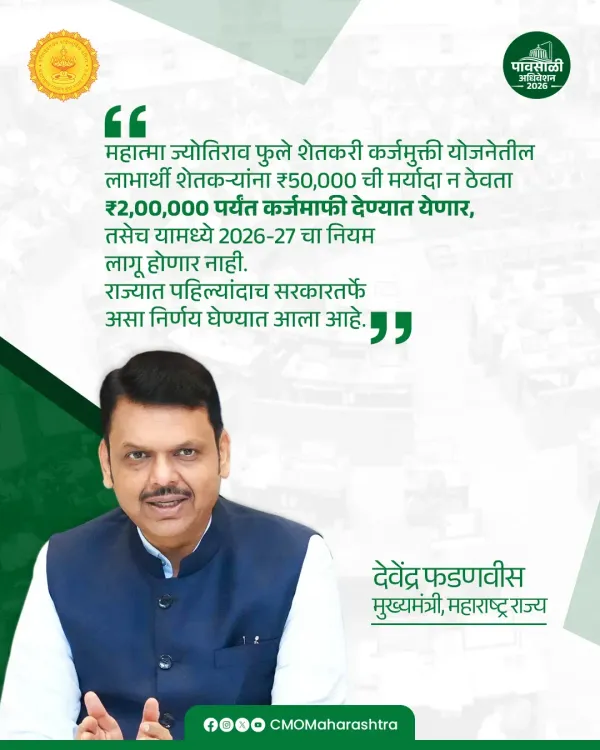
The Chief Minister's Office of Maharashtra announced on 10 July 2026 that beneficiaries of the Mahatma Jyotirao Phule Shetkari Karjmukti Yojana will now receive farm loan waivers of up to Rs 2,00,000, raising the relief ceiling for small and marginal farmers across the state.
Key Takeaways
The Mahatma Jyotirao Phule Shetkari Karjmukti Yojana will now provide loan waivers of up to Rs 2,00,000 per eligible farmer.
The announcement was made by the Chief Minister's Office of Maharashtra on 10 July 2026 , with the post tagged to CM Devendra Fadnavis .
The revised ceiling is higher than the earlier Rs 1.5 lakh limit introduced under a 2017 Maharashtra farm debt relief scheme.
The primary beneficiaries are small and marginal farmers already enrolled in the scheme.
Implementation details including eligibility verification and disbursement timelines are yet to be formally announced.
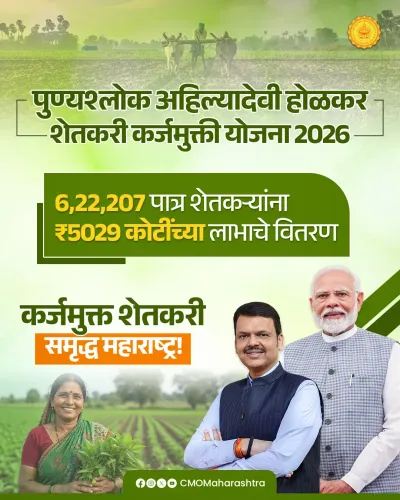
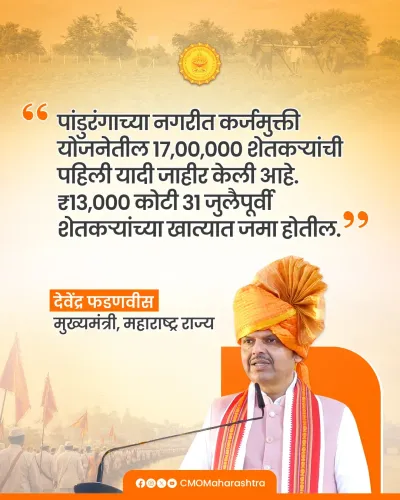
The Chief Minister's Office of Maharashtra announced on Friday, 10 July 2026 that eligible farmers under the Mahatma Jyotirao Phule Shetkari Karjmukti Yojana will now receive loan waivers of up to Rs 2,00,000, marking a significant enhancement to the state's flagship agricultural debt relief programme. The announcement, tagged to Chief Minister Devendra Fadnavis, signals a revision of the scheme's relief ceiling for beneficiary farmers across Maharashtra.
Context
The post states in Marathi: 'Mahatma Jyotirao Phule Shetkari Karjmukti Yojananetil labhaarthi shetkaryanna aata milnar Rs 2,00,000 paryant karjmafi' — meaning, 'Beneficiary farmers under the Mahatma Jyotirao Phule Shetkari Karjmukti Yojana will now receive loan waivers of up to Rs 2,00,000.' The scheme is named after Mahatma Jyotirao Phule, the 19th-century social reformer and peasant-rights advocate, lending the programme both symbolic weight and historical continuity in Maharashtra's agrarian politics.
Policy Backdrop
Maharashtra introduced an earlier iteration of farm debt relief in 2017, which provided waivers of up to Rs 1.5 lakh for small and marginal farmers. The revised ceiling of Rs 2,00,000 under the current announcement represents a meaningful increase over that earlier threshold, extending the financial cushion available to enrolled beneficiaries. Indian state governments have periodically revised agricultural debt waiver programmes in response to rural indebtedness, agrarian distress, and shifting fiscal priorities — Maharashtra has been among the more active states in this regard alongside Uttar Pradesh, Telangana, and Punjab.
Stakeholders and Impact
The primary beneficiaries of the enhanced waiver are small and marginal farmers who are already enrolled under the Mahatma Jyotirao Phule Shetkari Karjmukti Yojana. For these households, a ceiling of Rs 2 lakh can cover a substantial portion of short-term crop loans, potentially reducing the debt burden that drives agrarian distress in the state. Chief Minister Devendra Fadnavis, who has been associated with multiple agricultural policy announcements in Maharashtra, is the political face of this revision, and the tagging of his handle in the official post underscores direct ownership of the decision.
What's Next
Attention will now shift to the state government's budget allocations and the implementation guidelines required to operationalise the enhanced ceiling — including eligibility verification processes and disbursement timelines for existing beneficiaries. The scale of fiscal outgo will depend on the number of enrolled farmers and the average outstanding loan amounts across districts. How swiftly the revised limit is reflected in bank-level settlements will determine whether the announcement translates into tangible relief before the current kharif season concludes.
Point of View
Particularly ahead of or during monsoon seasons when rural distress is most visible. Chief Minister Fadnavis's direct association with the announcement signals that the ruling dispensation intends to own the agrarian welfare narrative ahead of any forthcoming electoral or budgetary cycle. The scheme's invocation of Mahatma Jyotirao Phule — a figure with deep resonance among OBC and farming communities in Maharashtra — also carries deliberate symbolic messaging. The real test, however, will be implementation speed and the breadth of actual disbursements, areas where past Maharashtra waiver schemes have faced criticism for delays and exclusions.
NationPress
9 Oct 2026
Frequently Asked Questions
What is the Mahatma Jyotirao Phule Shetkari Karjmukti Yojana?
The Mahatma Jyotirao Phule Shetkari Karjmukti Yojana is a Maharashtra government scheme that provides targeted farm loan waivers to eligible small and marginal farmers, named after the 19th-century social reformer and peasant-rights advocate Mahatma Jyotirao Phule.
How much loan waiver will Maharashtra farmers get under the new announcement?
Eligible beneficiaries under the Mahatma Jyotirao Phule Shetkari Karjmukti Yojana will now receive loan waivers of up to Rs 2,00,000 as per the announcement made on 10 July 2026.
Who announced the Rs 2 lakh farm loan waiver in Maharashtra?
The announcement was made by the Chief Minister's Office of Maharashtra and is tagged to Chief Minister Devendra Fadnavis.
How does the new Rs 2 lakh waiver compare to earlier Maharashtra farm relief?
Maharashtra's earlier farm debt relief scheme introduced in 2017 provided waivers of up to Rs 1.5 lakh; the new ceiling of Rs 2,00,000 represents an increase over that earlier limit.
Which farmers are eligible for the Maharashtra KarjMukti Yojana waiver?
The scheme targets small and marginal farmers who are already enrolled as beneficiaries under the Mahatma Jyotirao Phule Shetkari Karjmukti Yojana; specific eligibility criteria and disbursement timelines are subject to implementation guidelines.