CM Fadnavis launches farmer loan waiver scheme booklet in Mumbai
Synopsis
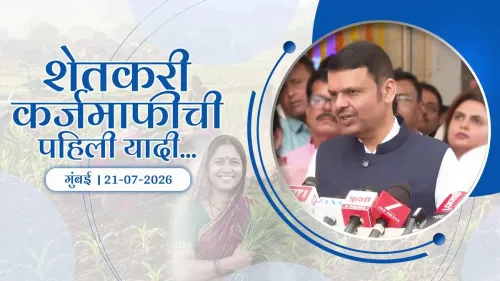
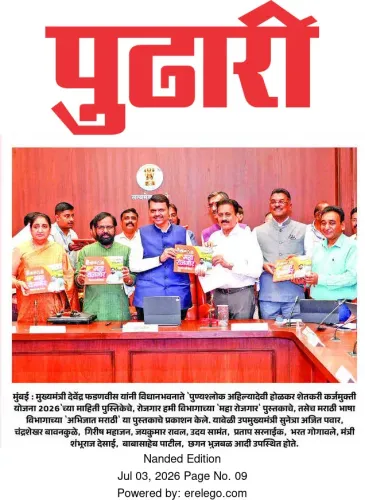
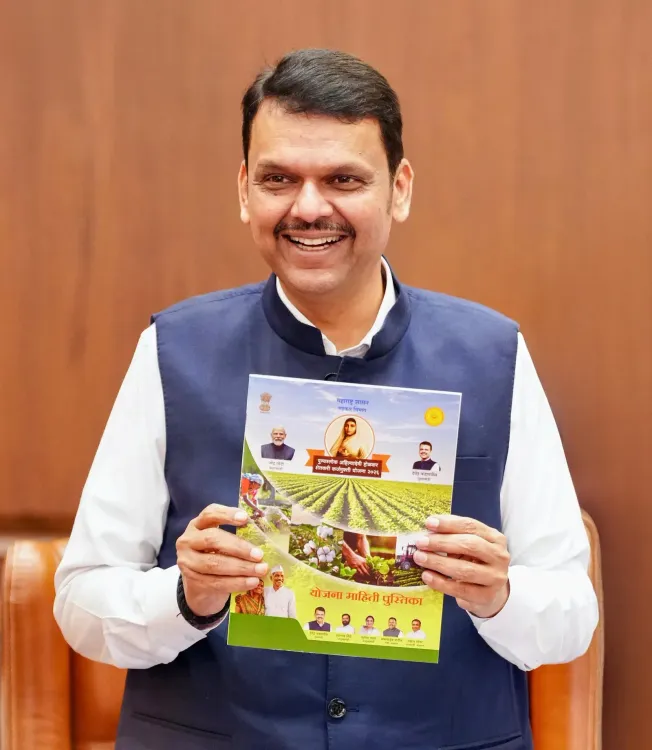
Chief Minister Devendra Fadnavis launched the information booklet for Maharashtra's 'Punyashlok Ahilyadevi Holkar Shetkari Karjmukti Yojana 2026' farmer loan waiver scheme at Vidhan Bhavan, Mumbai on 2 July 2026, alongside 'Maha Rojgar' and 'Abhijat Marathi' publications, with the full cabinet in attendance.
Key Takeaways
Chief Minister Devendra Fadnavis released three publications at Vidhan Bhavan, Mumbai on 2 July 2026 .
The booklet for the Punyashlok Ahilyadevi Holkar Shetkari Karjmukti Yojana 2026 — a farmer loan waiver scheme — was among the publications launched.
The Employment Guarantee Department's 'Maha Rojgar' book and the Marathi Language Department's 'Abhijat Marathi' book were also released at the same event.
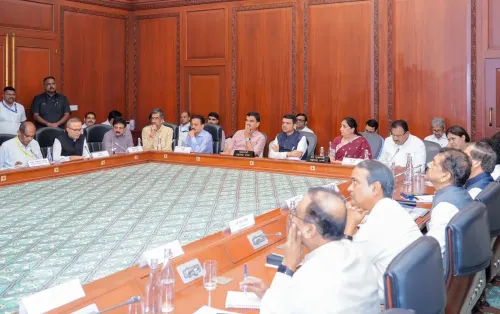
Deputy Chief Minister Sunetra Ajit Pawar and at least nine cabinet ministers attended the event.
Maharashtra has a precedent of farmer debt relief, including a 2017 waiver covering loans up to Rs 1.5 lakh .
District-level rollout details and budgetary allocations for the 2026 scheme are expected in forthcoming assembly sessions.
The Chief Minister's Office of Maharashtra announced on Thursday, 2 July 2026 that Chief Minister Devendra Fadnavis launched three official publications at Vidhan Bhavan, Mumbai, including the information booklet for the 'Punyashlok Ahilyadevi Holkar Shetkari Karjmukti Yojana 2026' — a farmer loan waiver scheme named after the revered 18th-century Maratha queen and administrator Ahilyadevi Holkar.
The event also saw the release of the Employment Guarantee Department's 'Maha Rojgar' book and the Marathi Language Department's 'Abhijat Marathi' publication. Deputy Chief Minister Sunetra Ajit Pawar and a full complement of cabinet ministers — including Chandrashekar Bawankule, Girish Mahajan, Jaykumar Rawal, Uday Samant, Pratap Sarnaik, Bharat Gogawale, Shambhuraj Desai, Babasaheb Patil, and Chhagan Bhujbal — were present alongside other cabinet members and senior officials.
Context
The booklet release signals the Maharashtra government's intent to formally communicate the contours of the 2026 farmer loan waiver scheme to the public and administrative machinery. Named after Punyashlok Ahilyadevi Holkar — a title meaning 'one whose name is uttered in reverence' — the scheme carries strong symbolic weight for Maharashtra's agrarian communities. Book launches at the state legislature are commonly used by successive administrations to signal scheme readiness ahead of ground-level implementation.
Policy Backdrop
Maharashtra has a recurring history of farm debt relief packages; a major waiver in 2017 covered crop loans up to Rs 1.5 lakh per farmer. The current Mahayuti coalition government, led by Chief Minister Fadnavis since late 2023, has positioned agricultural welfare as a central policy pillar. The simultaneous release of the 'Maha Rojgar' book underscores the state's parallel push on rural employment, building on the Mahatma Gandhi National Rural Employment Guarantee framework that has been supplemented by state-funded schemes since 2006.
The 'Abhijat Marathi' publication reflects a sustained effort by the Maharashtra government to promote the Marathi language, including advocacy for classical language status recognition at the national level — a cause that successive state administrations have championed.
Stakeholders and Impact
The primary beneficiaries of the loan waiver scheme, if implemented as signalled, would be Maharashtra's farming households, who have faced persistent agrarian distress linked to erratic monsoons and input cost pressures. Rural employment beneficiaries and Marathi cultural organisations stand to gain from the other two publications. The presence of a broad cross-section of the cabinet at a single event reinforces the coalition government's unified messaging on welfare delivery ahead of the upcoming legislative sessions.
What's Next
Attention will now shift to budgetary allocations and district-level rollout guidelines for the Punyashlok Ahilyadevi Holkar Shetkari Karjmukti Yojana 2026, expected to be detailed in forthcoming monsoon or winter assembly sessions. Further government notifications on the 'Abhijat Marathi' classical language initiative are also anticipated. The 'Maha Rojgar' framework's operational guidelines will determine how quickly rural employment benefits reach households on the ground.
Point of View
A rural employment publication, and a Marathi language volume in a single high-visibility cabinet event is a deliberate signal of coalition cohesion and welfare intent ahead of legislative scrutiny. For the Mahayuti government, anchoring the scheme to the legacy of Ahilyadevi Holkar — a figure revered across caste lines in Maharashtra — adds cultural legitimacy to what is fundamentally a fiscal intervention. This mirrors a broader pattern in Indian state politics where debt relief packages are announced with symbolic branding to maximise electoral resonance. The true test will be whether district-level implementation guidelines follow swiftly, or whether the booklet release remains a communication exercise without commensurate budgetary follow-through.
NationPress
1 Oct 2026
Frequently Asked Questions
What is the Punyashlok Ahilyadevi Holkar Shetkari Karjmukti Yojana 2026?
It is a farmer loan waiver scheme announced by the Maharashtra government in 2026, named after the 18th-century Maratha queen and administrator Ahilyadevi Holkar. The information booklet for the scheme was released by Chief Minister Devendra Fadnavis at Vidhan Bhavan, Mumbai on 2 July 2026.
Who launched the Maharashtra farmer loan waiver scheme booklet in 2026?
Chief Minister Devendra Fadnavis launched the booklet at Vidhan Bhavan, Mumbai on 2 July 2026, with Deputy Chief Minister Sunetra Ajit Pawar and multiple cabinet ministers present.
What is the Maha Rojgar book released by the Maharashtra government?
The 'Maha Rojgar' book is a publication by Maharashtra's Employment Guarantee Department, released alongside the farmer loan waiver booklet and the 'Abhijat Marathi' volume on 2 July 2026 at Vidhan Bhavan.
What is the Abhijat Marathi book about?
'Abhijat Marathi' is a publication by Maharashtra's Marathi Language Department, released on 2 July 2026, reflecting the state government's ongoing efforts to promote and preserve the Marathi language, including advocacy for its classical language status.
Has Maharashtra done a farmer loan waiver before?
Yes. Maharashtra implemented a major farmer loan waiver in 2017 that covered crop loans up to Rs 1.5 lakh per farmer. The state has a recurring history of such agricultural debt relief packages to address agrarian distress.