CM Fadnavis Reviews Farmer Loan Waiver Scheme at Mumbai Meet
Synopsis
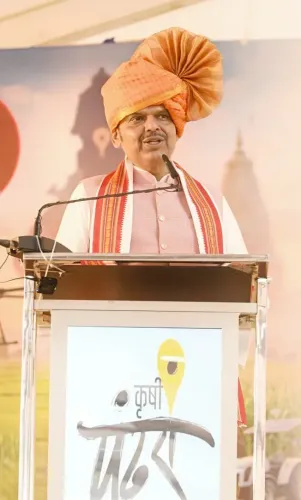
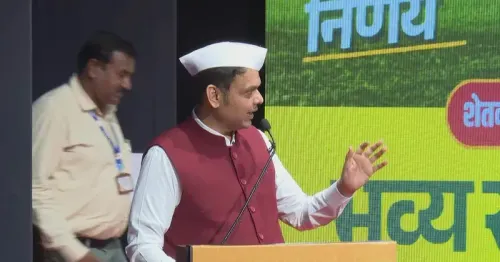
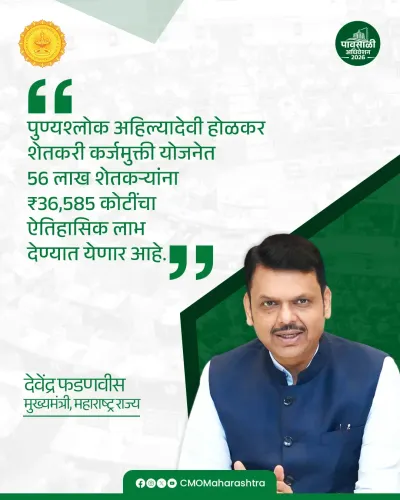
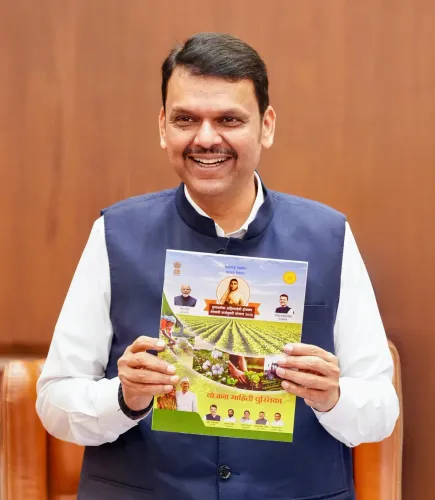
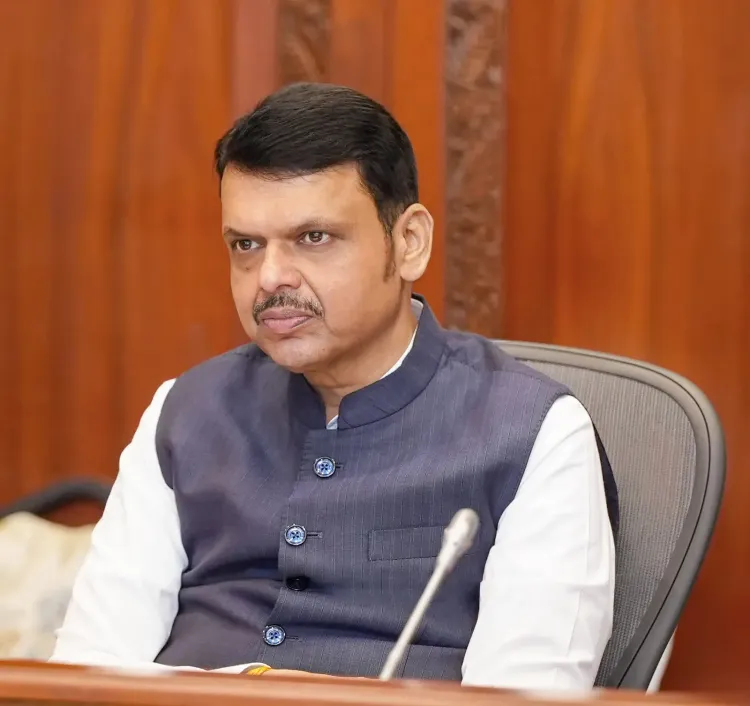
Chief Minister Devendra Fadnavis convened a high-attendance cabinet review of the 'Punyashlok Ahilyadevi Holkar Shetkari Karjmukti Yojana 2026' at Sahyadri Guest House, Mumbai, on 7 August 2026, with Deputy CM Sunetra Ajit Pawar and six senior ministers present, signalling imminent rollout of Maharashtra's latest farmer loan waiver scheme.
Key Takeaways
CM Devendra Fadnavis chaired the review meeting on 7 August 2026 at Sahyadri Guest House, Mumbai .
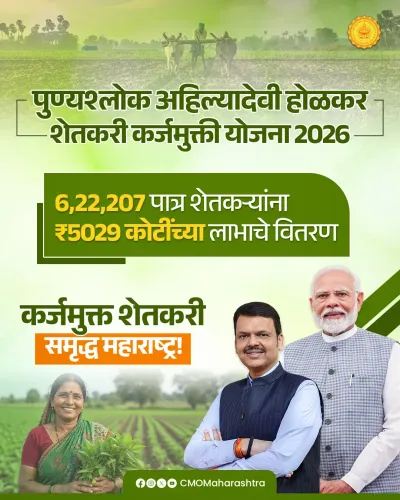
The scheme is named 'Punyashlok Ahilyadevi Holkar Shetkari Karjmukti Yojana 2026' , a state-level farmer loan waiver initiative.
Deputy CM Sunetra Ajit Pawar and six cabinet ministers — including Pankaja Munde , Girish Mahajan , and Shambhuraj Desai — attended alongside district Guardian Ministers.
Maharashtra has a precedent of periodic farmer debt relief, with a major waiver scheme last implemented in 2017 .
Formal scheme guidelines, beneficiary lists, and budget provisions are expected to follow the review.
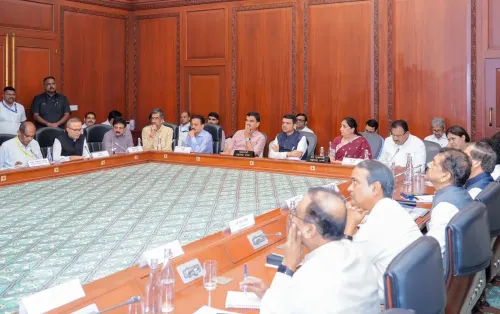
A high-powered cabinet assembled at Sahyadri Guest House, Mumbai, on 7 August 2026 as Chief Minister Devendra Fadnavis chaired a review meeting on the 'Punyashlok Ahilyadevi Holkar Shetkari Karjmukti Yojana 2026' — Maharashtra's latest state-level farmer loan waiver scheme, named after the revered 18th-century ruler of Malwa. The gathering pulled together nearly the entire Maharashtra cabinet, signalling the political weight the ruling alliance is placing on agricultural debt relief ahead of what promises to be a closely watched implementation phase.
Who Was in the Room — and Why It Matters
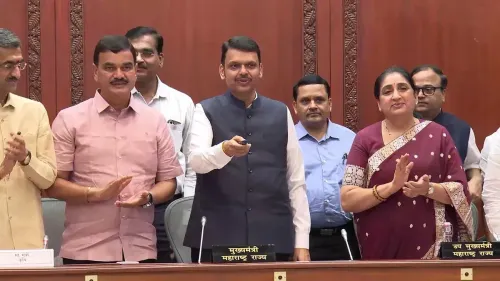
Deputy Chief Minister Sunetra Ajit Pawar anchored the NCP's presence, joined by a cross-section of senior ministers: Girish Mahajan, Sanjay Sawkare, Pankaja Munde, Shambhuraj Desai, Dattatray Bharane, and Babasaheb Patil. Minister of State Meghna Bordikar and Guardian Ministers from multiple districts rounded out the room alongside senior officials. The breadth of representation — spanning the Mahayuti coalition's three partners — underscores that this scheme is a shared political priority, not a single-party project.
Ahilyadevi Holkar's Name — and What It Signals
Naming the scheme after Punyashlok Ahilyadevi Holkar, the 18th-century Maratha queen celebrated for her administration of Malwa and her welfare-oriented rule, is a deliberate act of political branding. It frames debt relief not as a fiscal concession but as a continuation of a governance tradition rooted in Maharashtra's cultural memory. Maharashtra governments have periodically turned to such schemes — a major loan waiver was implemented in 2017 — and the 2026 edition follows that well-worn arc of state-level responses to agrarian distress.
What Comes Next for Maharashtra's Farmers
Review meetings of this scale typically precede the release of formal scheme guidelines, beneficiary eligibility criteria, and budget allocations. The presence of district Guardian Ministers suggests the state is moving toward ground-level rollout coordination. For Maharashtra's farming communities — long burdened by debt, erratic monsoons, and input cost pressures — the critical questions now are the eligibility ceiling, the total outlay, and the timeline for credit to actually reach accounts. Those details remain to be officially announced.
Point of View
A state where agrarian distress has historically swung elections. Naming the scheme after Ahilyadevi Holkar adds a cultural legitimacy layer that goes beyond economics, tapping into Maratha identity politics. The review-before-rollout sequencing mirrors the 2017 waiver process, suggesting the government is managing both fiscal and optics risk carefully. The real test will come when eligibility criteria are published — that is where past schemes have faced the sharpest farmer pushback.
NationPress
22 Sept 2026
Frequently Asked Questions
What is the Punyashlok Ahilyadevi Holkar Shetkari Karjmukti Yojana 2026?
It is a Maharashtra state government scheme for farmer loan waivers, named after the 18th-century ruler Ahilyadevi Holkar. CM Devendra Fadnavis chaired a review meeting on the scheme on 7 August 2026.
Who attended the farmer loan waiver review meeting on 7 August 2026?
CM Devendra Fadnavis chaired the meeting. Deputy CM Sunetra Ajit Pawar, Ministers Girish Mahajan, Sanjay Sawkare, Pankaja Munde, Shambhuraj Desai, Dattatray Bharane, Babasaheb Patil, MoS Meghna Bordikar, and district Guardian Ministers were present.
Where was the Maharashtra farmer scheme review meeting held?
The meeting was held at Sahyadri Guest House in Mumbai on 7 August 2026 at 2:05 PM.
Has Maharashtra announced a farmer loan waiver before?
Yes. Maharashtra implemented a major farmer loan waiver scheme in 2017. The 2026 scheme follows a recurring pattern of state-level debt relief responses to agrarian distress.
When will the Karjmukti Yojana 2026 scheme details be released?
Formal scheme guidelines, beneficiary eligibility criteria, and budget provisions are expected to be announced after the review process concludes. No official date has been confirmed yet.