Dr. Jitendra Singh Raises MoES and IMD in Lok Sabha
Synopsis
Union Minister Dr. Jitendra Singh signalled parliamentary engagement on the Ministry of Earth Sciences and IMD via a 22 July 2026 post on X, as Lok Sabha scrutinises India's weather forecasting and climate services infrastructure during the monsoon season.
Key Takeaways
Jitendra Singh posted on X on 22 July 2026 referencing #MoES , #IMD , and #LokSabha .
The India Meteorological Department , founded in 1875 , operates under the Ministry of Earth Sciences .
IMD modernisation has been ongoing since Phase-I (2007) and Phase-II (2012) , upgrading radar and forecasting systems.
The National Monsoon Mission (2012) uses dynamical models to improve seasonal monsoon prediction.
Key stakeholders include farmers and disaster management agencies dependent on accurate IMD data.
Parliamentary oversight of earth sciences is intensifying during the 2026 monsoon season .
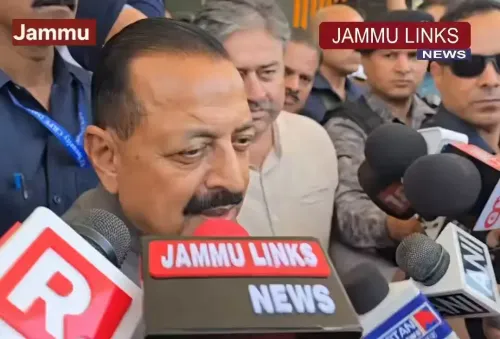
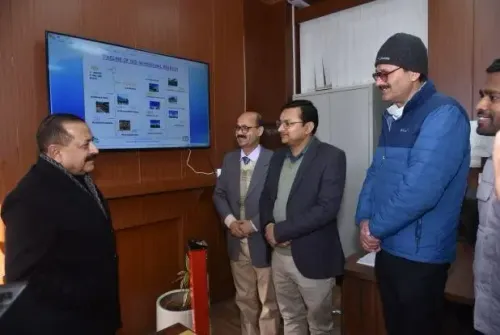
Union Minister of State (Independent Charge) for Science and Technology and Earth Sciences Dr. Jitendra Singh took to X on Wednesday, 22 July 2026 to flag matters related to the Ministry of Earth Sciences (MoES) and the India Meteorological Department (IMD) in the context of Lok Sabha proceedings, signalling parliamentary attention on India's weather and climate services infrastructure.
Context
The post, carrying the hashtags #MoES, #IMD, and #LokSabha, was shared during what is typically an active parliamentary session period in July, when ministries face scrutiny on monsoon preparedness and disaster early-warning systems. While the post itself does not elaborate further, the combination of tags points to a ministerial engagement — likely a question-answer session or a statement on the floor of the lower house.
The India Meteorological Department, established in 1875, functions under the Ministry of Earth Sciences and serves as India's primary national weather forecasting and climate services agency. Its performance during the monsoon season is a perennial subject of parliamentary inquiry, particularly as extreme weather events grow in frequency and severity.
Policy Backdrop
The IMD modernisation programme has been a long-running government priority. Phase-I was approved in 2007 and Phase-II in 2012, aimed at upgrading the observational network, radar coverage, and numerical weather prediction capabilities. Alongside this, the National Monsoon Mission, launched in 2012, has sought to improve seasonal and extended-range monsoon forecasts using dynamical models, benefiting agriculture and disaster management planning.
Parliamentary oversight of earth sciences has grown steadily, with successive administrations integrating scientific agencies more closely with legislative accountability mechanisms — especially on climate services and disaster early-warning infrastructure. MoES and IMD data are routinely cited during budget sessions and supplementary demand discussions in Lok Sabha.
Stakeholders and Impact
The constituencies most directly affected by the quality of IMD services include farmers across India's agricultural belt, who depend on accurate monsoon forecasts for sowing and harvesting decisions, and disaster management agencies at the state and national level that rely on early-warning data for cyclone, flood, and heatwave responses.
Parliamentary discussions on MoES functioning also carry implications for funding allocations — any supplementary grants for observational infrastructure or new forecasting technology would be shaped by the kind of legislative attention Dr. Jitendra Singh is directing through such posts.
What's Next
Attention will now turn to the specifics of any Lok Sabha question-answer exchange or ministerial statement linked to this engagement, including whether new targets for IMD radar expansion or forecast accuracy benchmarks are announced. Observers will also watch for supplementary budget provisions for MoES schemes in the coming months.
With the 2026 monsoon season underway, the performance of IMD's forecasting systems will remain under close parliamentary and public scrutiny, making this ministerial signal an important marker of the government's accountability posture on earth sciences.
Point of View
IMD, and Lok Sabha is a deliberate signal of ministerial accountability during a high-stakes monsoon session. It fits a broader pattern of the current administration using social media to amplify parliamentary engagement on scientific governance — turning routine question hours into visible policy moments. For the earth sciences portfolio, this kind of visibility matters: IMD's credibility is tested every monsoon, and ministerial ownership of that scrutiny can translate into stronger budget advocacy. The post, minimal as it is, marks the ministry as an active participant in the legislative session rather than a passive subject of it.
NationPress
21 Oct 2026
Frequently Asked Questions
What is the Ministry of Earth Sciences responsible for in India?
The Ministry of Earth Sciences oversees meteorology, oceanography, seismology, and atmospheric sciences in India, and administers key agencies including the India Meteorological Department, which provides weather forecasts and climate services.
What did Dr. Jitendra Singh post about IMD and Lok Sabha?
On 22 July 2026, Dr. Jitendra Singh posted on X with the hashtags #MoES, #IMD, and #LokSabha, signalling ministerial engagement with parliamentary proceedings related to India's earth sciences and weather forecasting agencies.
What is the IMD modernisation programme?
The IMD modernisation programme was a government initiative with Phase-I approved in 2007 and Phase-II in 2012, aimed at upgrading India's weather observational network, radar systems, and numerical weather prediction capabilities.
Why is IMD discussed in Lok Sabha during the monsoon session?
IMD's forecasting accuracy directly affects farmers, disaster management agencies, and public safety, making its performance a regular subject of parliamentary questions — especially during the monsoon season when extreme weather events are most frequent.
What is the National Monsoon Mission?
The National Monsoon Mission, launched in 2012 under the Ministry of Earth Sciences, aims to improve seasonal and extended-range monsoon forecasts using dynamical models, helping agriculture and disaster preparedness planning across India.