Jitendra Singh to Inaugurate New Regional Met Centre in Jammu
Synopsis
Union Science and Technology Minister Dr. Jitendra Singh will declare a new Regional Meteorological Centre at Jammu on June 5, strengthening IMD's forecasting and early-warning network across the Jammu and Kashmir union territory and the wider western Himalayan belt.
Key Takeaways
Jitendra Singh to declare a new Regional Meteorological Centre at Jammu on June 5.
The centre will operate under the India Meteorological Department and Ministry of Earth Sciences.
It is expected to improve zonal forecasts and severe-weather warnings for the union territory.
Key beneficiaries include farmers, disaster management agencies, aviation and pilgrimage logistics.
The step aligns with IMD's long-running modernisation programme since the 11th Five Year Plan.
Watch for parallel radar upgrades and additional RMC announcements in the Himalayan belt.
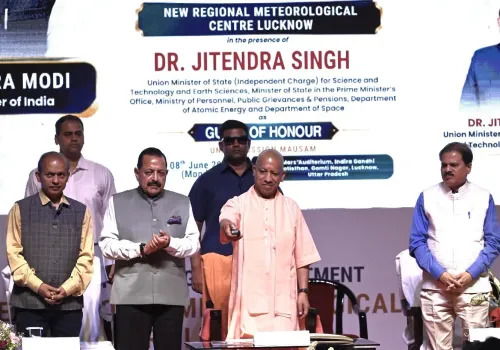
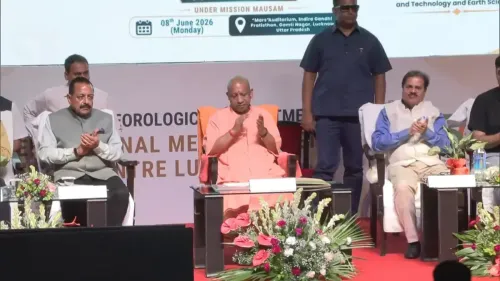
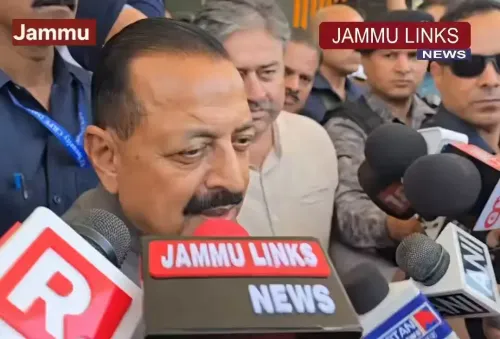
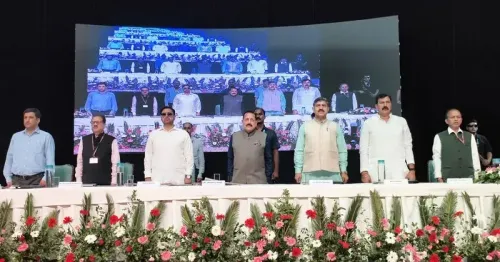
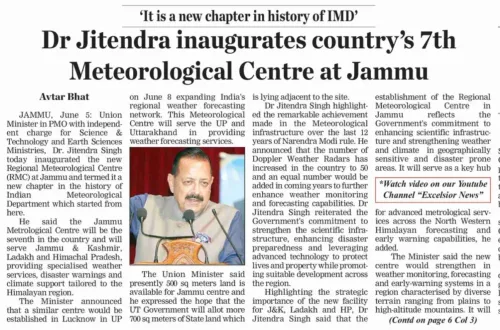
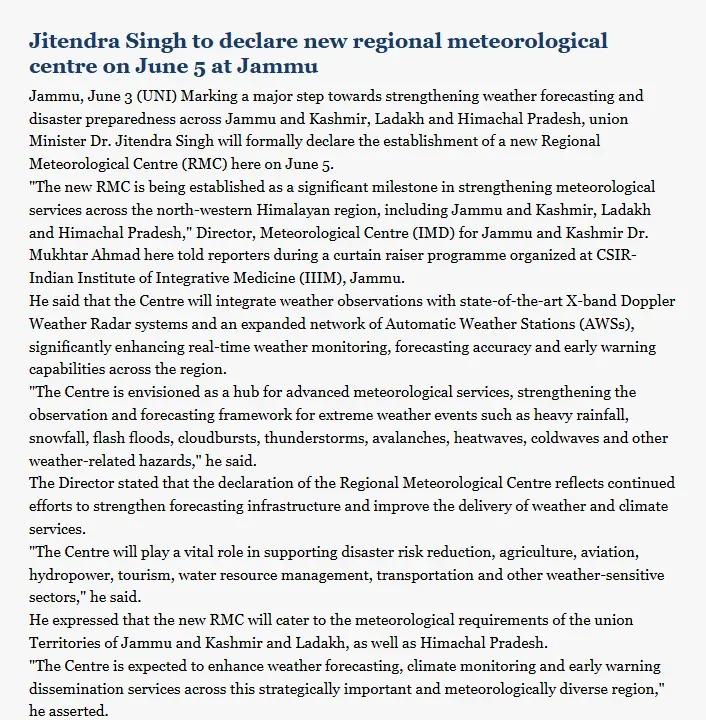
Union Science and Technology Minister Dr. Jitendra Singh is scheduled to formally declare a new Regional Meteorological Centre at Jammu on June 5, in a move aimed at strengthening weather forecasting and early-warning services across the Jammu and Kashmir union territory. The minister, who also holds the Earth Sciences portfolio, announced the development through a social-media post flagging the upcoming launch.
In the post, Dr. Singh said he would 'declare new regional meteorological centre on June 5 at Jammu', tagging the India Meteorological Department (IMD) and the Ministry of Earth Sciences (MoES). The announcement was accompanied by an image and a link to a wire-service report on the planned inauguration.
Context
The new facility will function as a Regional Meteorological Centre (RMC) for the Jammu region, joining the network of RMCs that IMD operates across the country to handle zonal forecasting, severe-weather bulletins and observational data integration. Until now, meteorological services in the union territory have been coordinated largely through the meteorological centre at Srinagar and IMD headquarters in New Delhi.
Dr. Jitendra Singh, who represents the Udhampur Lok Sabha constituency, has overseen successive expansions of MoES infrastructure since taking charge of the ministry, with a recurring emphasis on Himalayan-state observation networks.
Policy backdrop
India's regional meteorological architecture has been progressively expanded since the IMD modernisation programme was approved under the 11th Five Year Plan (2007-2012), which authorised a nationwide upgrade of observational and forecasting capacity. Subsequent phases have focused on doppler weather radars, automatic weather stations and high-resolution numerical weather prediction.
The Jammu centre fits into a broader push to decentralise forecasting in topographically complex terrain, where coarse national models struggle to capture rapid weather changes in valleys and high-altitude zones. Officials have repeatedly cited cloudbursts, flash floods and avalanches in the western Himalayas as key drivers for finer-grained regional services.
Stakeholders and impact
The centre is expected to directly benefit farmers in Jammu, Kathua, Samba, Rajouri and Reasi districts, who depend on monsoon and pre-monsoon forecasts for kharif sowing decisions. Disaster management agencies in the union territory will be primary consumers of severe-weather warnings, particularly during the cloudburst-prone summer months and the snow-affected winter window.
Aviation operations at Jammu airport, the Shri Mata Vaishno Devi pilgrimage circuit and the seasonal Amarnath Yatra are also likely to gain from localised nowcasts. The tourism sector across the Pir Panjal and Chenab valley belts, which has expanded in recent years, stands to benefit from sharper short-range forecasts.
What's next
Attention will turn to the operational launch timeline once the declaration is made, including staffing, the deployment of any new radar or upper-air observation systems, and the centre's coordination protocol with the existing IMD office at Srinagar. Parallel announcements on additional RMCs or radar upgrades elsewhere in the Himalayan belt will indicate whether the Jammu centre is a standalone step or part of a wider regional rollout.
For the union territory, the inauguration marks another addition to the slate of central scientific and disaster-management institutions set up since 2019, and signals continued central focus on climate resilience and early-warning capacity in India's mountain states.
Point of View
Where national models alone cannot capture localised hazards. It also continues the post-2019 pattern of locating central scientific and administrative institutions inside the Jammu and Kashmir union territory. For Dr. Jitendra Singh, whose constituency lies in the region, it doubles as a constituency-relevant deliverable from the Earth Sciences portfolio. The real test will be operational depth — radar coverage, staffing and integration with disaster agencies — rather than the inauguration itself.
NationPress
21 Oct 2026
Frequently Asked Questions
When will the new Regional Meteorological Centre at Jammu be inaugurated?
Union Science and Technology Minister Dr. Jitendra Singh is scheduled to declare the new Regional Meteorological Centre at Jammu on June 5, as announced in his social-media post.
Which ministry will operate the Jammu meteorological centre?
The centre will function under the India Meteorological Department, which falls under the Union Ministry of Earth Sciences headed by Dr. Jitendra Singh.
Why is a separate Regional Meteorological Centre needed for Jammu?
A dedicated RMC allows finer-resolution forecasts and faster severe-weather warnings for the Jammu region's complex Himalayan terrain, which is prone to cloudbursts, flash floods and avalanches.
Who will benefit from the new Jammu meteorological centre?
Farmers, disaster management agencies, aviation operators, and pilgrimage and tourism circuits including the Shri Mata Vaishno Devi and Amarnath Yatra routes are expected to be primary beneficiaries.
How does this fit into India's wider weather modernisation push?
It builds on the IMD modernisation programme approved under the 11th Five Year Plan, which has progressively expanded radars, automatic weather stations and regional forecasting capacity across India.