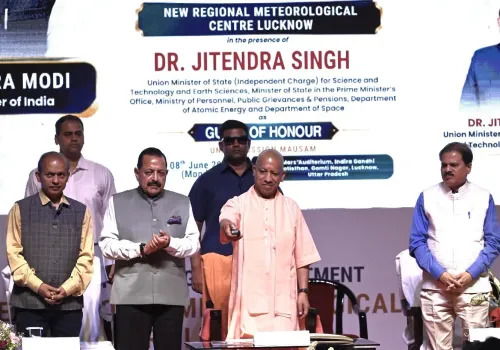
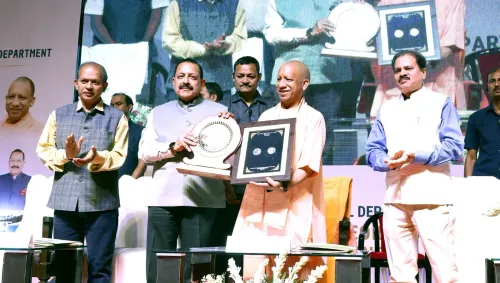
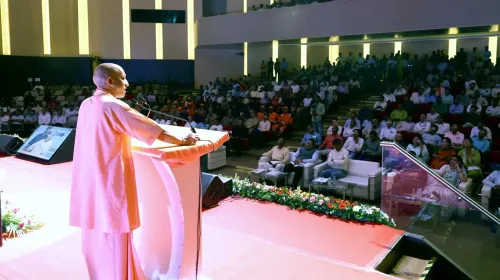
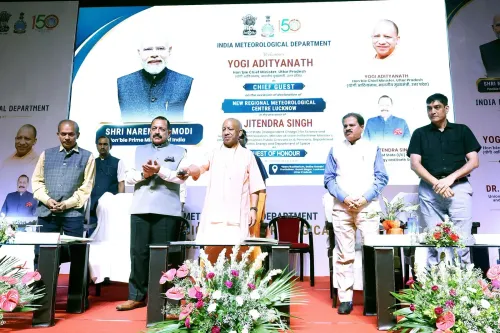
Dr. Jitendra Singh launches Regional Met Centre in Lucknow
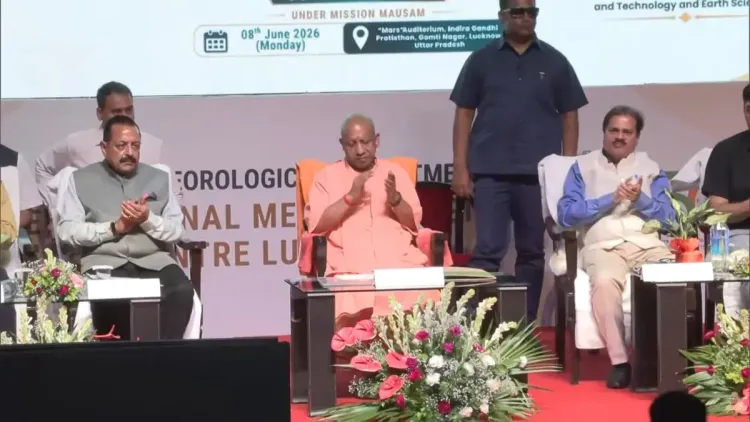
Synopsis
Union Minister Dr. Jitendra Singh on June 8, 2026 hailed the inauguration of a new Regional Meteorological Centre in Lucknow by UP CM Yogi Adityanath, saying the state-of-the-art facility will strengthen district-level forecasting, early warnings and disaster preparedness across Uttar Pradesh.
Key Takeaways
Jitendra Singh publicly thanked UP CM Yogi Adityanath for inaugurating the Regional Meteorological Centre (RMC) in Lucknow on June 8, 2026 .
Director General of Meteorology Dr.
Mrutyunjay Mohapatra and senior officials were present at the inauguration ceremony.
The new centre will deliver district-level weather forecasts, timely alerts and specialised services for farmers , disaster agencies and the public across Uttar Pradesh .
The facility is part of a long-running IMD decentralisation drive that includes earlier RMCs at Nagpur and Guwahati , rooted in the 2006 IMD modernisation plan .
The Lucknow RMC's first major operational test will be the upcoming monsoon season , when demand for granular, real-time forecasts is highest.
India's meteorological expansion aligns with its commitments under the Sendai Framework for Disaster Risk Reduction .
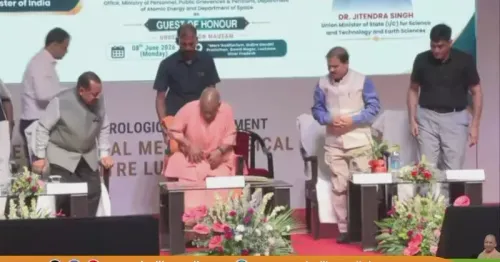
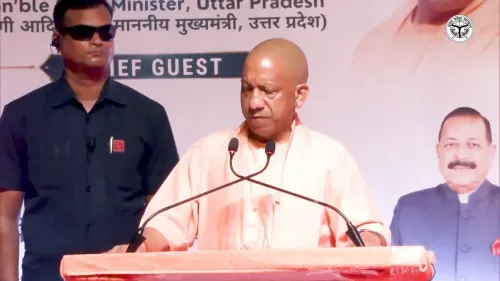
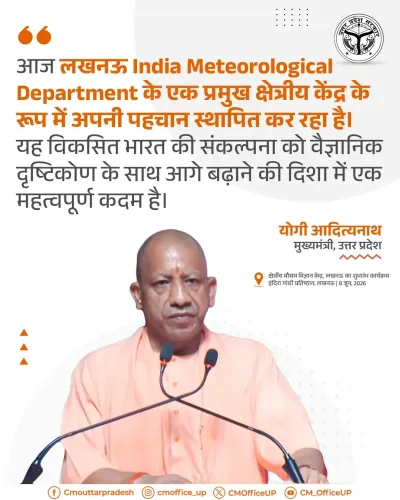
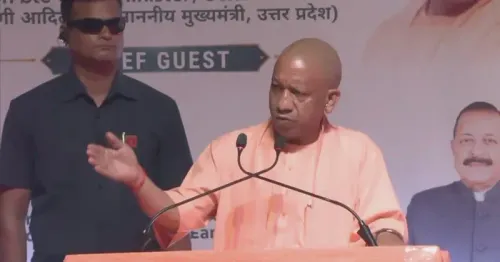
Union Science and Technology Minister Dr. Jitendra Singh on Monday, June 8, 2026 thanked Uttar Pradesh Chief Minister Yogi Adityanath for inaugurating the new Regional Meteorological Centre (RMC) in Lucknow, calling it a milestone in expanding India's weather forecasting and disaster-preparedness infrastructure to the state and district level.
Posting on X, the Minister said — translated from Hindi — 'हार्दिक धन्यवाद' ('heartfelt thanks') to the Chief Minister and described the centre as a 'state-of-the-art facility that will further strengthen weather forecasting, early warning systems and disaster preparedness across the whole of Uttar Pradesh.' Director General of Meteorology Dr. Mrutyunjay Mohapatra, senior officials and dignitaries were present at the inauguration.
Context
The Regional Meteorological Centre, Lucknow is a new facility under the India Meteorological Department (IMD), the national agency under the Ministry of Earth Sciences responsible for weather, monsoon and cyclone services. According to Dr. Jitendra Singh's post, the centre will provide more accurate district-level forecasts, timely weather alerts, and specialised services for farmers, disaster management agencies and the general public across Uttar Pradesh.
The inauguration was conducted in the presence of Director General Dr. Mrutyunjay Mohapatra, who heads IMD's operational forecasting and early-warning services nationally. The Minister noted that 'in the past few years, the country has witnessed an unprecedented expansion in meteorological capabilities.'
Policy Backdrop
IMD's regional expansion has deep policy roots. The Government of India approved IMD's modernisation plan in 2006, which included the phased establishment and upgrading of regional centres to improve observational networks. After the 2013 Uttarakhand floods, both central and state governments accelerated district-level early-warning systems under the National Disaster Management Plan.
The National Monsoon Mission, launched in 2012 and extended in subsequent years, focused on higher-resolution forecasting models that are now being decentralised to state-level centres such as the one in Lucknow. India's commitments under the Sendai Framework for Disaster Risk Reduction have also reinforced the push for granular, localised warning systems. Earlier RMCs at Nagpur, Guwahati and other cities preceded the Lucknow facility in this geographic decentralisation drive.
Stakeholders and Impact
Uttar Pradesh, India's most populous state, is home to a vast agrarian economy heavily dependent on monsoon patterns. Timely and accurate district-level forecasts from the new RMC are expected to benefit farmers in planning sowing and harvesting, reduce crop losses from unseasonal rains or heatwaves, and enable faster response by state disaster management agencies during extreme weather events.
The general public — particularly in flood-prone districts of the Ganga-Yamuna plain — stands to gain from improved early-warning alerts. Disaster management authorities at both the state and district levels will now have a dedicated regional node to coordinate with IMD, rather than relying solely on national-level outputs from New Delhi.
What's Next
The Lucknow RMC's operational readiness will be tested in the upcoming monsoon season, when demand for real-time, sub-district forecasts peaks. The broader policy watch is on the roll-out of comparable regional centres in remaining states and their integration into state disaster-management authorities' seasonal plans.
Dr. Jitendra Singh's acknowledgment of 'unprecedented expansion' in meteorological capabilities signals that the Ministry intends to continue this decentralisation arc, with the Lucknow centre serving as a template for future regional infrastructure investments across India.
Point of View
State-level service delivery. By publicly crediting UP CM Yogi Adityanath, Dr. Jitendra Singh signals a cooperative Centre-state model for scientific infrastructure — politically significant given that Uttar Pradesh is the country's largest electoral state. The emphasis on disaster preparedness also reflects a broader pivot in Indian science policy: meteorology is no longer treated as purely technical but as frontline public-safety infrastructure. The real test of this investment will come in how quickly RMC Lucknow's district-level alerts are absorbed into the operational workflows of UP's disaster management machinery.
NationPress
23 Oct 2026
Frequently Asked Questions
What is the Regional Meteorological Centre in Lucknow?
The Regional Meteorological Centre (RMC) Lucknow is a new India Meteorological Department facility inaugurated in June 2026 to provide district-level weather forecasts, early warnings and disaster-preparedness services specifically for Uttar Pradesh.
Who inaugurated the Lucknow meteorological centre?
Uttar Pradesh Chief Minister Yogi Adityanath inaugurated the centre, with Union Minister Dr. Jitendra Singh publicly thanking him for doing so. Director General of Meteorology Dr. Mrutyunjay Mohapatra and senior officials were also present.
How will the Lucknow IMD centre help farmers?
The centre will issue more accurate, district-level forecasts and timely weather alerts tailored to agricultural needs, helping farmers in Uttar Pradesh plan sowing, irrigation and harvesting while reducing crop losses from extreme weather events.
What is the India Meteorological Department's regional expansion plan?
IMD has been expanding regional centres since a 2006 government-approved modernisation plan, establishing facilities in cities such as Nagpur and Guwahati before Lucknow, with the goal of moving from national-level to state and district-scale forecasting.
Why does Uttar Pradesh need its own meteorological centre?
As India's most populous state with a large agrarian economy and flood-prone districts along the Ganga-Yamuna plain, UP requires localised, real-time weather data that a dedicated regional IMD centre can provide far more precisely than centralised national outputs.