CM Yogi attends Regional Met Centre launch in Lucknow
Synopsis
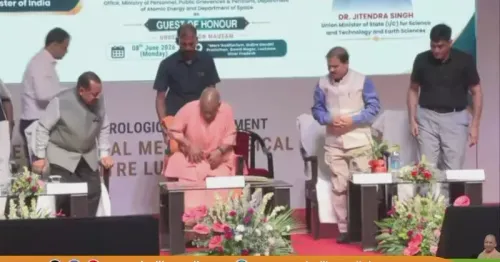
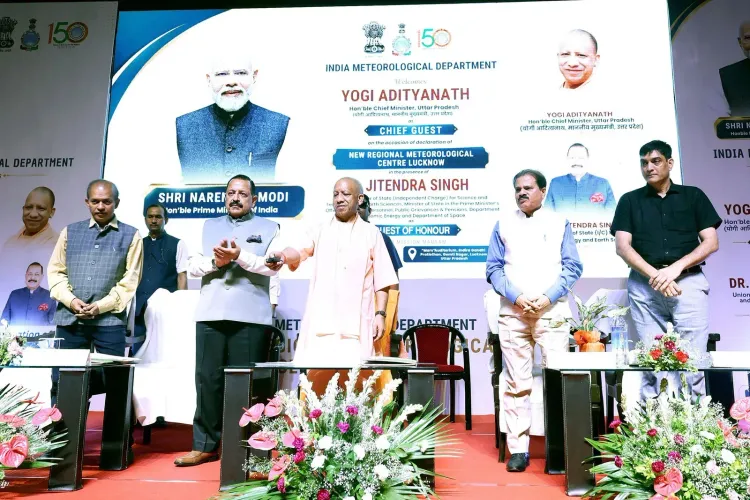
Uttar Pradesh Chief Minister Yogi Adityanath attended the establishment event of a Regional Meteorological Centre in Lucknow on June 8, 2026, alongside Union Minister Dr. Jitendra Singh. The centre marks a step toward decentralised weather services for India's most populous agrarian state under the Viksit Bharat vision.
Key Takeaways
CM Yogi Adityanath attended the launch event for a Regional Meteorological Centre in Lucknow on June 8, 2026 .
Union Minister of State (Independent Charge) for Earth Sciences Dr.
Jitendra Singh was present at the event.
The centre is a regional facility of the India Meteorological Department (IMD) under the Ministry of Earth Sciences .
CM Yogi linked the development to the national Viksit Bharat (Developed India by 2047) vision, calling it a step toward scientific advancement.
Uttar Pradesh's farmers, disaster management agencies, and state planners are among the primary stakeholders expected to benefit from localised weather services.
Integration with the state's real-time disaster alert and crop advisory systems will be the key operational milestone to watch.
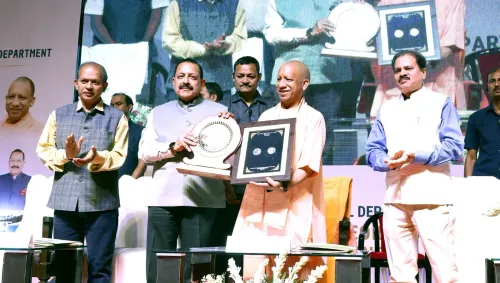
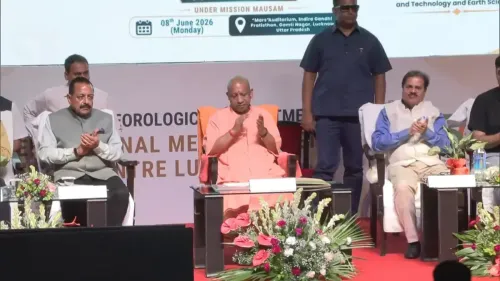
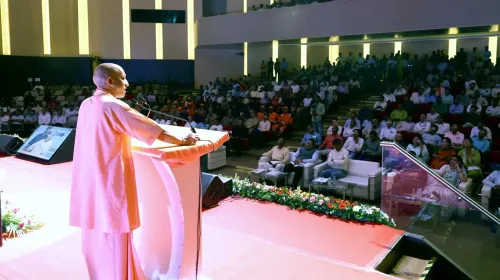
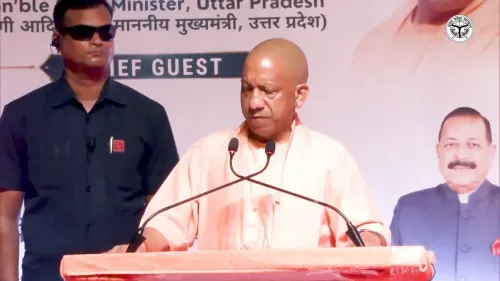
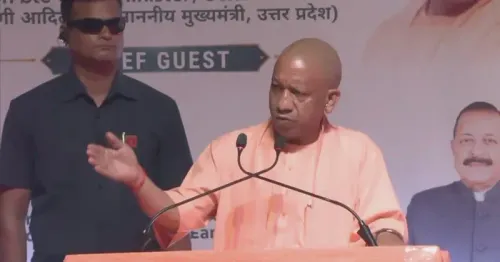
Uttar Pradesh Chief Minister Yogi Adityanath on Monday, June 8, 2026, attended an event in Lucknow marking the establishment of a Regional Meteorological Centre under the India Meteorological Department (IMD), in the presence of Union Minister of State (Independent Charge) for Earth Sciences Dr. Jitendra Singh.
Context
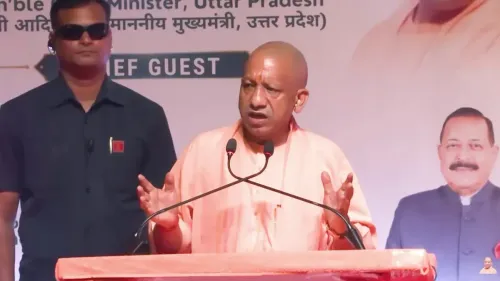
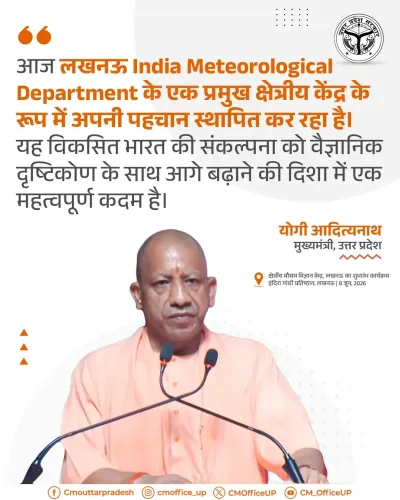
Posting on X, CM Yogi described the occasion as attending a programme 'Regional Meteorological Centre की स्थापना हेतु आयोजित कार्यक्रम' (an event organised for the establishment of the Regional Meteorological Centre) in the dignified presence of the Union Minister. He noted that 'अब लखनऊ भी मेट्रोलॉजिकल डिपार्टमेंट के एक रीजनल सेंटर के रूप में अपने आप को स्थापित कर रहा है' — 'Lucknow is now establishing itself as a regional centre of the Meteorological Department.' The Chief Minister congratulated the people of the state and extended his appreciation to the Union Minister and his team.
The new centre is positioned under the Ministry of Earth Sciences, the nodal ministry overseeing the IMD's national network of weather observation, forecasting, and early warning systems. Dr. Jitendra Singh, who holds independent charge of the ministry, was present at the launch event in Lucknow.
Policy Backdrop
The establishment of regional meteorological centres is part of a long-running effort by the Ministry of Earth Sciences to decentralise and modernise India's weather infrastructure, pursued through successive five-year plans and dedicated schemes since the early 2010s. The goal has been to improve forecast resolution and localise early warning services, particularly in large and agriculturally significant states.
CM Yogi framed the development explicitly within the 'Viksit Bharat' (Developed India) national vision — the government's stated goal of transforming India into a fully developed nation by 2047. He described the centre as 'वैज्ञानिक तरीके से आगे बढ़ाने की दिशा में एक महत्वपूर्ण कदम' — 'an important step in the direction of advancing the concept of Viksit Bharat through the state of Uttar Pradesh in a scientific manner.'
Stakeholders and Impact
Uttar Pradesh, India's most populous state, has a vast agrarian economy where timely and localised weather data is critical. Farmers, disaster management agencies, and state planning departments stand to benefit directly from a dedicated regional centre that can provide granular forecasts and crop advisories tailored to the state's geography.
Until now, weather services for the region were routed through centres in other cities, limiting the speed and specificity of local alerts. A Lucknow-based Regional Meteorological Centre is expected to shorten the data pipeline for state authorities managing floods, heatwaves, and unseasonal rainfall events — all recurring challenges in Uttar Pradesh.
What's Next
The immediate focus will be on the operational launch of services from the new centre and its integration with Uttar Pradesh's real-time disaster alert and agricultural advisory systems. The centre's ability to link seamlessly with the state's disaster management framework will determine the practical impact on communities across the state's 75 districts.
As India continues to expand its scientific infrastructure at the state level, the Lucknow centre will be watched as a model for how large agrarian states can leverage dedicated meteorological capacity to support both risk reduction and long-term development planning under the Viksit Bharat framework.
Point of View
Droughts, and extreme heat events affecting tens of millions of farmers. CM Yogi's framing of the event within the 'Viksit Bharat' narrative signals a deliberate effort to align state-level infrastructure wins with the BJP's overarching national development branding ahead of future electoral cycles. The presence of a Union Minister at a state-level scientific facility launch also underscores the Centre-state coordination that the current government has sought to project as a governance strength. Whether the centre delivers on its potential will depend on operational depth — specifically, how quickly it can feed localised data into Uttar Pradesh's disaster and agricultural advisory systems.
NationPress
23 Oct 2026
Frequently Asked Questions
What is the Regional Meteorological Centre in Lucknow?
It is a new regional facility of the India Meteorological Department (IMD) being established in Lucknow to provide localised weather forecasting, early warning services, and climate data specifically for Uttar Pradesh and the surrounding region.
Who inaugurated the Regional Meteorological Centre in Lucknow?
The establishment event was attended by Uttar Pradesh Chief Minister Yogi Adityanath and Union Minister of State (Independent Charge) for Earth Sciences Dr. Jitendra Singh on June 8, 2026.
What is the significance of the Lucknow IMD centre for UP farmers?
Farmers in Uttar Pradesh will benefit from more granular and timely weather forecasts and crop advisories, as the centre will provide localised data rather than relying on regional centres based in other cities.
What is Viksit Bharat and how does this centre relate to it?
Viksit Bharat is India's national vision to become a fully developed nation by 2047. CM Yogi described the Lucknow meteorological centre as an important step in advancing this vision through scientific infrastructure in Uttar Pradesh.
Which ministry oversees the new Regional Meteorological Centre in Lucknow?
The centre falls under the Ministry of Earth Sciences, which is the nodal ministry responsible for the India Meteorological Department and is headed by Union Minister Dr. Jitendra Singh.