CM Yogi inaugurates Regional Meteorological Centre in Lucknow
Synopsis
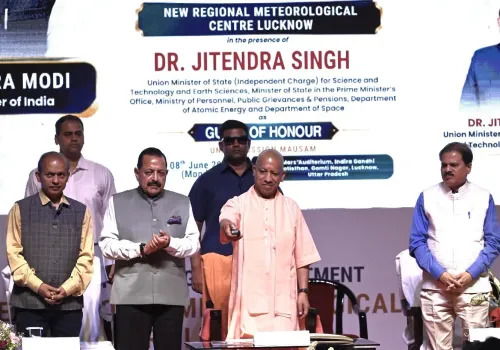
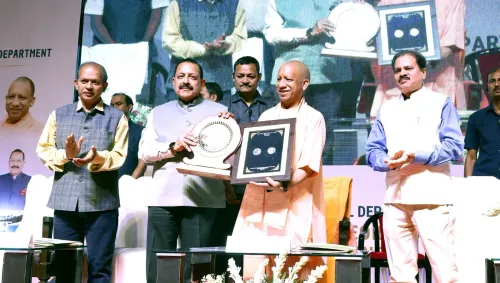
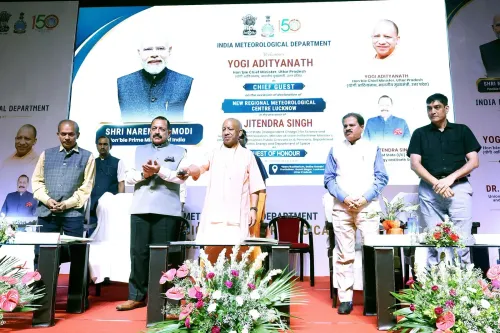
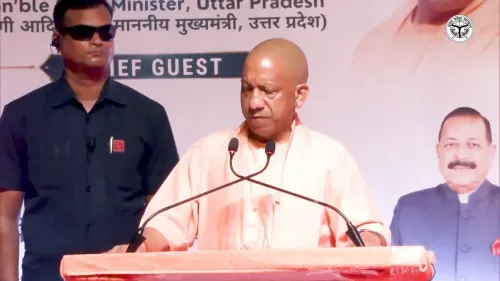
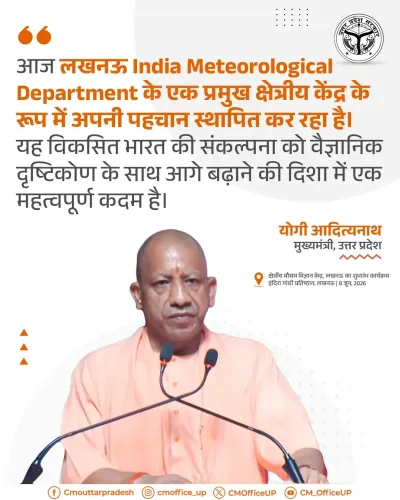
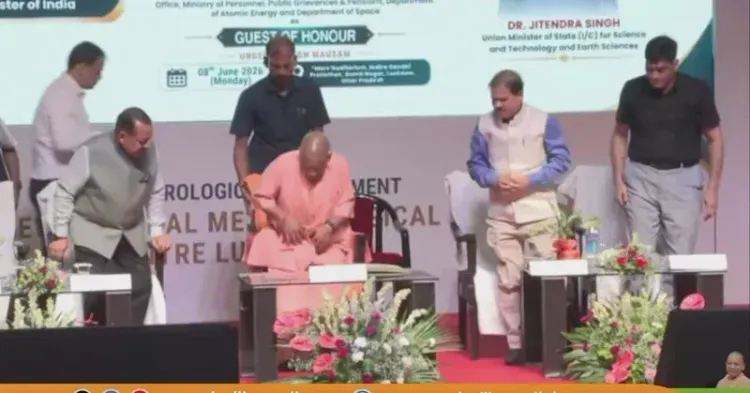
Uttar Pradesh Chief Minister Yogi Adityanath formally inaugurated the Regional Meteorological Centre in Lucknow on June 8, 2026, alongside Union Minister Dr. Jitendra Singh. The facility, part of the India Meteorological Department, will strengthen district-level weather forecasting and early-warning systems for India's most populous state.
Key Takeaways
CM Yogi Adityanath inaugurated the Regional Meteorological Centre, Lucknow on June 8, 2026 .
The event was a joint central-state initiative, with Union Minister Dr.
Jitendra Singh (MoS, Earth Sciences) in attendance.
The centre operates under the India Meteorological Department , established in 1875 under the Ministry of Earth Sciences.
Key beneficiaries include UP's farming communities , disaster management agencies, and the aviation sector.
The upgrade aligns with the National Monsoon Mission (2012) and successive plans to modernise IMD's regional network.
Further expansion of district-level IMD stations across Uttar Pradesh is expected ahead of the 2026 monsoon season.
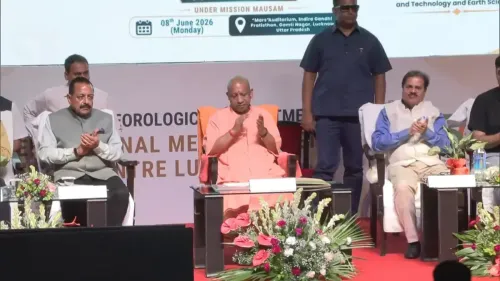
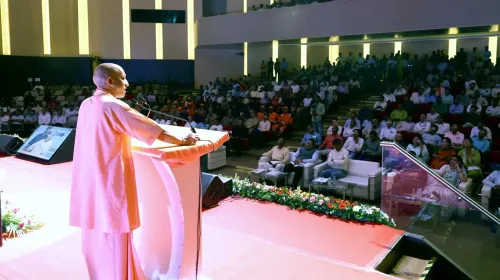
Uttar Pradesh Chief Minister Yogi Adityanath on Monday, June 8, 2026, formally inaugurated the Regional Meteorological Centre (RMC) in Lucknow, marking a significant upgrade to weather forecasting infrastructure in India's most populous state. The event was attended by Union Minister of State for Earth Sciences Dr. Jitendra Singh, who oversees the India Meteorological Department (IMD) and related scientific bodies.
Context
The Regional Meteorological Centre, Lucknow is a facility of the India Meteorological Department, the national weather and climate agency established in 1875 and currently operating under the Ministry of Earth Sciences. The centre is tasked with regional weather monitoring and forecasting specifically for Uttar Pradesh, providing district-level data critical to agriculture, disaster response, and aviation. CM Yogi's post on X tagged Dr. Jitendra Singh, signalling the joint central-state character of the inauguration.
The IMD has been at the centre of India's push to improve hyperlocal and district-level weather prediction, particularly as extreme weather events — unseasonal rains, heatwaves, and flash floods — have grown more frequent and economically damaging across the Gangetic plain.
Policy Backdrop
Modernisation of IMD's observational networks and regional centres has been a policy priority since the early 2000s, carried forward through successive five-year plans and the National Monsoon Mission launched in 2012. These efforts have aimed at closing the gap between national-level forecasting and the granular, district-level early warnings that farmers and local administrators actually require.
Uttar Pradesh, with its vast agricultural belt and a population exceeding 24 crore, has been identified as a high-priority state for such infrastructure upgrades. Improved regional forecasting directly supports the state's disaster management framework and helps farmers plan sowing, irrigation, and harvesting cycles more accurately.
Stakeholders and Impact
The primary beneficiaries of an upgraded RMC Lucknow are UP's farming communities, who depend on timely monsoon forecasts and extreme-weather alerts to protect crops and livelihoods. State and district disaster management agencies stand to gain from faster, more localised early-warning data, enabling pre-emptive evacuations and resource deployment ahead of floods or severe storms.
The aviation sector operating out of airports across Uttar Pradesh — including Lucknow's Chaudhary Charan Singh International Airport and the recently opened Noida International Airport corridor — also relies on precise regional meteorological data for flight safety and scheduling. Industrial and infrastructure planners in the state similarly benefit from improved seasonal and short-range forecasts.
What's Next
The inauguration of the RMC Lucknow is expected to be followed by the rollout of additional district-level IMD observation stations across Uttar Pradesh, deepening the forecasting network ahead of the 2026 monsoon season. Integration of the centre's data streams with the state's disaster management plans will be closely watched by administrators and civil society groups.
Nationally, the event fits into a broader pattern of the central government investing in scientific infrastructure in large states, with the Ministry of Earth Sciences signalling plans to expand IMD's regional footprint further. How quickly the upgraded centre translates into measurable improvements in forecast accuracy and early-warning lead times will be the key metric for both policymakers and the communities it serves.
Point of View
Co-inaugurating a Union government facility alongside a Cabinet minister reinforces the narrative of Centre-state synergy that has been a hallmark of his administration's public communications. The timing — on the eve of the monsoon season — lends the event practical urgency beyond ceremonial optics. Longer term, the credibility of this investment will rest on whether district-level farmers and administrators in UP actually receive more accurate, timely alerts during extreme weather events.
NationPress
24 Oct 2026
Frequently Asked Questions
What is the Regional Meteorological Centre in Lucknow?
The Regional Meteorological Centre (RMC) Lucknow is a facility of the India Meteorological Department dedicated to weather monitoring and forecasting for Uttar Pradesh, providing district-level data for agriculture, disaster management, and aviation.
Who inaugurated the Regional Meteorological Centre in Lucknow?
Uttar Pradesh Chief Minister Yogi Adityanath formally inaugurated the centre on June 8, 2026, alongside Union Minister of State for Earth Sciences Dr. Jitendra Singh.
How will the Lucknow Met Centre help UP farmers?
The centre will provide more accurate and timely monsoon forecasts, extreme-weather alerts, and district-level weather data, helping farmers plan sowing, irrigation, and harvesting and reducing crop losses from unseasonal weather.
What is the India Meteorological Department?
The India Meteorological Department (IMD) is India's national weather and climate agency, established in 1875 and currently operating under the Ministry of Earth Sciences. It runs a network of regional and district-level centres across the country.
What is the National Monsoon Mission?
The National Monsoon Mission, launched in 2012, is a central government initiative to improve the accuracy of monsoon and short-range weather forecasts in India through modernisation of observational networks and forecasting models.