Dr. Jitendra Singh launches India's 8th Regional Met Centre in Lucknow
Synopsis
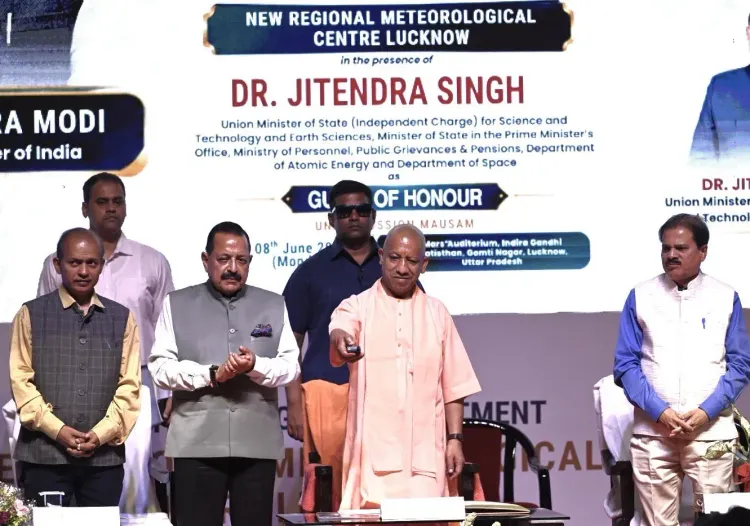
Union Minister Dr. Jitendra Singh inaugurated India's 8th Regional Meteorological Centre in Lucknow on June 8, 2026. India's Doppler Weather Radar network has grown from 17 in 2014 to 50, with 50 more planned under Mission Mausam. Uttar Pradesh's weather stations and lightning sensors have also expanded significantly.
Key Takeaways
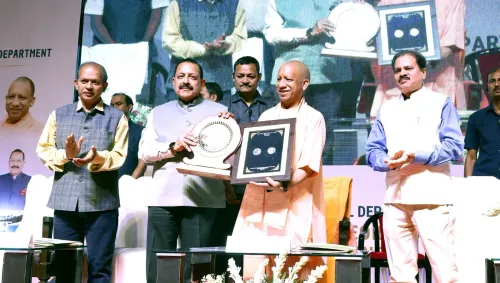
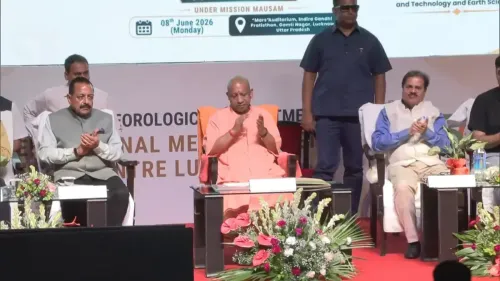
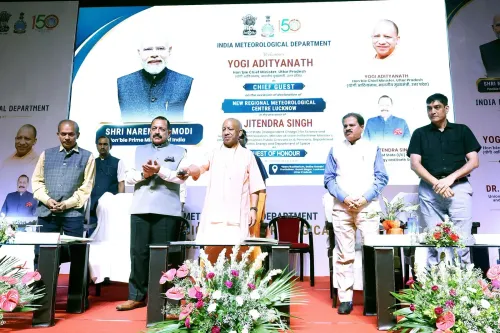
India's 8th Regional Meteorological Centre was inaugurated at Lucknow on June 8, 2026 by Union Minister Dr.
India's Doppler Weather Radar network grew from 17 radars in 2014 to 50 operational radars , with 50 more proposed under Mission Mausam .
Uttar Pradesh now operates 3 Doppler Weather Radars , up from 1 in 2014 , with more being commissioned.
The state's Automatic Weather Stations increased from 59 to 107 and Lightning Sensors from 0 to 7 over the same period.
States like Jammu and Kashmir and Uttarakhand had zero Doppler radars in 2014 and are now covered under the expanded network.
Citizens and disaster management agencies were urged to act on early weather warnings as the 2026 monsoon season progresses.
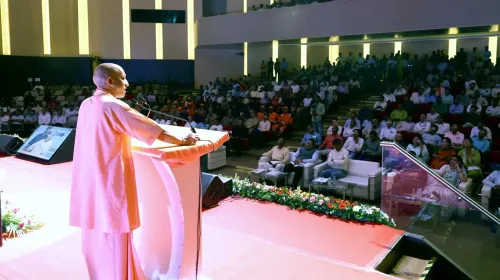
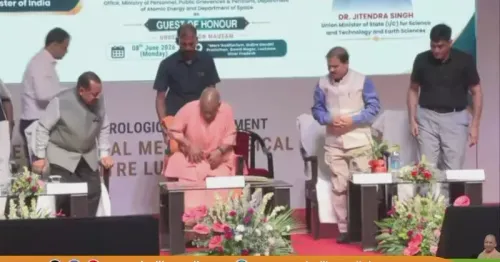
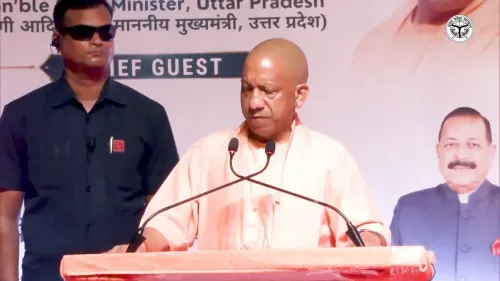
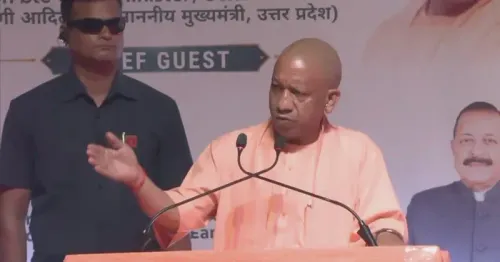
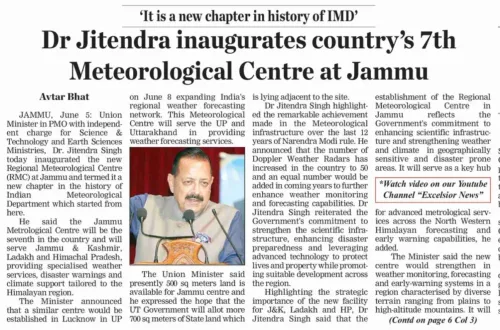
Union Science and Technology Minister Dr. Jitendra Singh on Monday, June 8, 2026, announced the inauguration of India's 8th Regional Meteorological Centre at Lucknow, marking a significant expansion of the country's weather forecasting infrastructure over the past decade.
Context
The new centre in Lucknow, the capital of Uttar Pradesh, adds to India's network of regional meteorological hubs operated by the India Meteorological Department (IMD). Dr. Singh highlighted that India's weather forecasting infrastructure has 'expanded unprecedentedly over the last one decade, enabling more accurate, location-specific and impact-based weather forecasting services across the country.'
The inauguration comes ahead of the critical 2026 monsoon season, when accurate, granular forecasts are most consequential for agriculture, disaster management, and public safety across the country's most densely populated state.
Policy Backdrop
India's Doppler Weather Radar network has grown from just 17 radars in 2014 to 50 operational radars today. An additional 50 radars are proposed under Mission Mausam, launched by Prime Minister Narendra Modi, which would take the total to nearly 100 radars within the next two years.
The minister pointed out that in 2014, several states including Jammu and Kashmir and Uttarakhand did not have even a single Doppler Weather Radar. The post-2014 acceleration in radar deployment has been positioned as a core component of the government's disaster-risk reduction and climate-resilience strategy, building on meteorological modernisation efforts that date to successive five-year plans from the mid-2000s.
The broader technology-upgradation drive also encompasses satellite systems and high-performance computing for now-casting, reflecting a shift from generalised forecasting toward impact-based early warning systems.
Uttar Pradesh: A Snapshot of Growth
Uttar Pradesh has seen a marked improvement in its ground-level meteorological infrastructure. The state operated just one Doppler Weather Radar in 2014; it now has three operational radars with more being commissioned. Automatic Weather Stations in the state increased from 59 to 107, while Automatic Rain Gauge Stations rose from 132 to 140.
Notably, the state had zero Lightning Sensors in 2014 and now operates seven, a capability that is directly relevant to reducing lightning-related fatalities — a persistent cause of weather-related deaths in the Gangetic plains.
Stakeholders and Impact
Dr. Singh specifically urged local authorities, disaster management agencies, and citizens to make full use of the improved forecasts and 'take early warnings seriously.' The call to action underscores a persistent gap: infrastructure investment alone does not translate into lives saved unless last-mile communication and community response are equally robust.
State governments, district disaster management authorities, and farming communities in vulnerable belts stand to benefit most directly from the enhanced network. High-impact weather events — floods, lightning strikes, and unseasonal rainfall — have historically caused disproportionate damage in states like Uttar Pradesh, making the Lucknow centre strategically important.
What's Next
The commissioning of the remaining radars under Mission Mausam will be a key benchmark for the programme's success. State-level integration of IMD alerts into district disaster-management plans will determine how effectively the upgraded infrastructure translates into on-ground preparedness.
With the 2026 monsoon already underway, the 8th Regional Meteorological Centre at Lucknow will face an immediate operational test — and its performance will set the tone for the broader expansion of India's weather-resilience architecture.
Point of View
Personally attributed to PM Modi, signals that weather infrastructure is now considered politically salient enough to carry the Prime Minister's brand. The real test, however, lies in last-mile integration: whether IMD alerts reach district collectors, gram panchayats, and farmers in time to prevent casualties will determine whether the hardware investment delivers its intended social return.
NationPress
23 Oct 2026
Frequently Asked Questions
What is India's 8th Regional Meteorological Centre and where is it located?
India's 8th Regional Meteorological Centre is a new facility of the India Meteorological Department inaugurated in Lucknow, Uttar Pradesh, on June 8, 2026, to provide more localised and impact-based weather forecasts for the region.
What is Mission Mausam and how many radars will it add?
Mission Mausam is a central government initiative launched by Prime Minister Narendra Modi that proposes to add approximately 50 new Doppler Weather Radars to India's existing network of 50, taking the total to nearly 100 radars within two years.
How many Doppler Weather Radars does India have in 2026?
India currently has 50 operational Doppler Weather Radars, up from just 17 in 2014. An additional 50 are planned under Mission Mausam.
How has Uttar Pradesh's weather infrastructure improved since 2014?
Uttar Pradesh's Doppler Weather Radars increased from 1 to 3, Automatic Weather Stations from 59 to 107, Automatic Rain Gauge Stations from 132 to 140, and Lightning Sensors from 0 to 7 since 2014.
Why is the Lucknow meteorological centre important for disaster management?
The Lucknow centre enhances location-specific and impact-based forecasting for one of India's most populous states, helping disaster management agencies and citizens respond earlier to floods, lightning, and unseasonal rainfall events.