Dr. Jitendra Singh launches IMD Regional Met Centre in Jammu
Synopsis
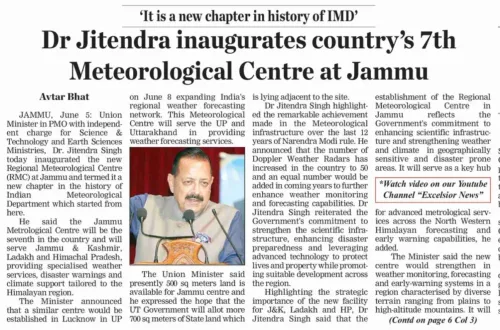
Union Minister Dr. Jitendra Singh inaugurated a new IMD Regional Meteorological Centre in Jammu on 6 June 2026, strengthening flash-flood early-warning capacity in the Himalayan union territory ahead of the monsoon season.
Key Takeaways
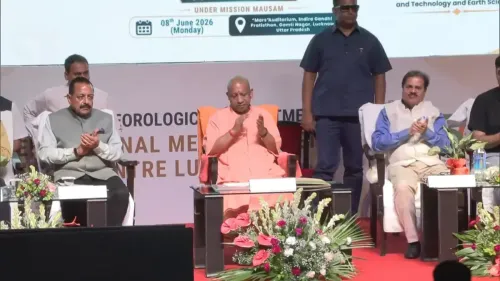
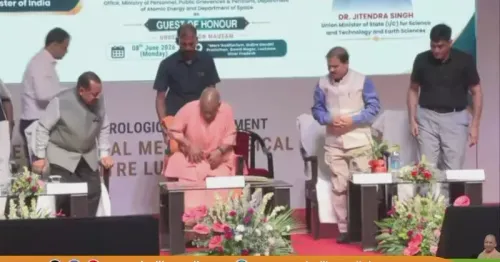
Jitendra Singh , Union Minister (IC) for Science & Technology and Earth Sciences, inaugurated the IMD Regional Meteorological Centre in Jammu on 6 June 2026 .
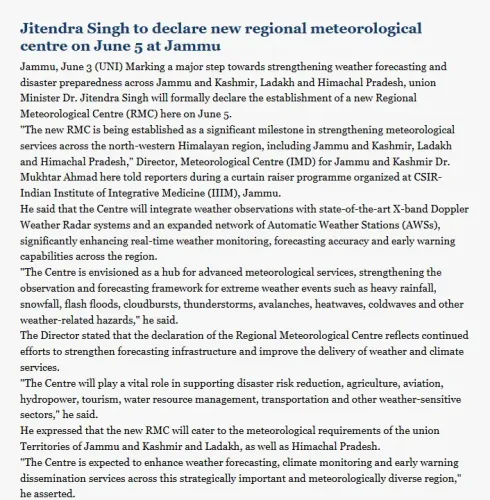
The centre is designed to provide real-time nowcasting and short-range forecasts for a region highly vulnerable to flash floods and cloudbursts .
The launch is part of IMD's broader modernisation programme to expand observational and forecasting infrastructure in Himalayan states.
Primary beneficiaries include Jammu residents and the J&K State Disaster Management Authority , which depends on granular meteorological data for timely alerts.
The centre's integration into district-level disaster management protocols ahead of the 2026 monsoon peak will be a key operational milestone to watch.
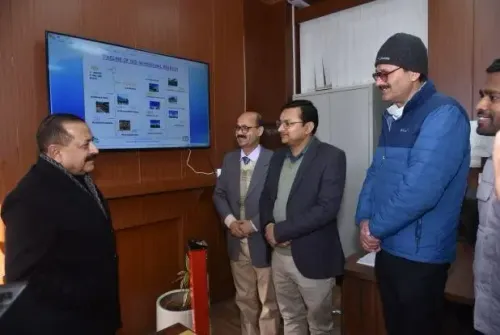
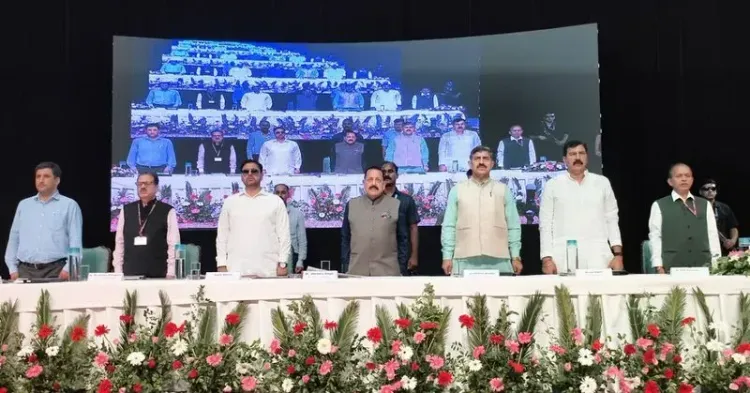
Union Minister of State (Independent Charge) for Science and Technology and Earth Sciences Dr. Jitendra Singh on Saturday, 6 June 2026 inaugurated a new Regional Meteorological Centre of the India Meteorological Department (IMD) in Jammu, bolstering early-warning capabilities in a region repeatedly threatened by flash floods and cloudbursts ahead of the monsoon season.
Context
The launch comes as Jammu and the broader Jammu and Kashmir union territory brace for the 2026 southwest monsoon, a period that historically triggers dangerous flash floods in the Himalayan river basins of the region. The new centre is expected to provide hyperlocal nowcasting — real-time, short-range forecasts — that district administrations and disaster response teams can act on with minimal lead time.
IMD, operating under the Ministry of Earth Sciences, is the nodal agency for weather forecasting across India. Its regional centres serve as the operational nerve centres for state-level alert dissemination, feeding data directly into disaster management protocols.
Policy Backdrop
The inauguration is part of a long-running effort to densify India's meteorological network in Himalayan and sub-Himalayan states. Following the catastrophic 2014 Jammu and Kashmir floods, successive central government administrations called for expanded observational infrastructure in the region, citing gaps in ground-level data that hampered timely warnings.
IMD's modernisation programme, which included a mandate to set up additional regional meteorological centres for improved nowcasting, laid the groundwork for facilities such as the one inaugurated in Jammu. India has incrementally expanded this infrastructure across Himalayan states as cloudbursts and flash floods have grown more frequent, a trend linked to shifting monsoon patterns.
Stakeholders and Impact
The most immediate beneficiaries are Jammu residents and the Jammu and Kashmir State Disaster Management Authority (SDMA), which relies on granular, location-specific forecasts to pre-position relief teams and issue evacuation advisories. Farmers, transport operators, and local administrations in flash-flood-prone districts of the union territory stand to gain from more reliable short-range alerts.
Under the National Disaster Management Plan, IMD regional centres are designated as the primary source of meteorological inputs for district-level contingency planning. A functional centre in Jammu closes a critical geographic gap, given the city's position at the confluence of Himalayan foothills and the Shivalik range, where weather systems can intensify rapidly.
What's Next
Attention will now shift to the operational rollout of the Jammu centre's forecasting products — particularly whether its nowcasting outputs are formally integrated into J&K SDMA alert protocols before the monsoon peaks, typically between July and September. The centre's performance during the first full monsoon season will be closely watched as a benchmark for IMD's regional expansion strategy in the union territory.
Dr. Singh's ministry is also expected to oversee similar infrastructure upgrades across other vulnerable Himalayan districts, with the Jammu centre serving as a template for rapid deployment of ground-observation and forecasting assets in disaster-prone zones.
Point of View
Operationally significant step rather than a symbolic one — the region's flash-flood vulnerability has long outpaced its meteorological coverage. By placing this launch in the pre-monsoon window, Dr. Singh's ministry signals an intent to demonstrate measurable disaster-preparedness outcomes before the season's peak. The move fits a broader pattern of the current government using infrastructure inaugurations in Jammu and Kashmir to project administrative normalisation and development delivery in the union territory. Whether the centre's forecasting products are genuinely integrated into SDMA response chains — rather than remaining a standalone facility — will determine its real policy impact.
NationPress
21 Oct 2026
Frequently Asked Questions
What is the new IMD Regional Meteorological Centre in Jammu?
It is a dedicated India Meteorological Department facility inaugurated in Jammu on 6 June 2026 to provide localised weather forecasting, nowcasting, and flash-flood early warnings for Jammu and Kashmir.
Why was a Regional Meteorological Centre set up in Jammu?
Jammu and the wider J&K region face recurring flash floods and cloudbursts during the monsoon season. A dedicated centre closes a gap in ground-level observational data needed for timely district-level disaster alerts.
Who inaugurated the IMD centre in Jammu in 2026?
Union Minister of State (Independent Charge) for Science and Technology and Earth Sciences Dr. Jitendra Singh inaugurated the centre on 6 June 2026 .
How does the Jammu IMD centre help with flood warnings?
The centre generates real-time nowcasts and short-range forecasts that feed into the J&K State Disaster Management Authority's alert system, allowing authorities to pre-position relief teams and issue evacuation advisories before flash floods strike.
What is IMD's role in disaster management in India?
The India Meteorological Department, under the Ministry of Earth Sciences, is the primary national agency for weather forecasting. Its regional centres supply meteorological data to state and district disaster management bodies under the National Disaster Management Plan.