Jitendra Singh flags IMD nowcast alert system for Jammu
Synopsis
Union Science and Technology Minister Dr. Jitendra Singh has spotlighted an IMD nowcasting initiative that aims to deliver precise weather warnings up to three hours in advance for Jammu, potentially averting major weather-related disasters in the Himalayan foothills region.
Key Takeaways
Jitendra Singh , Union Minister for Science and Technology and Earth Sciences, flagged the IMD nowcast alert system on 6 June 2026 .
The system is reported to provide precise weather warnings up to three hours before a weather event, improving on the standard nowcast window.
The initiative has a specific focus on Jammu , a region vulnerable to flash floods, cloudbursts, and landslides.
IMD , under the Ministry of Earth Sciences, has been expanding Doppler Weather Radar coverage since the early 2000s to strengthen short-range forecasting.
Enhanced lead times benefit residents, hill farmers, and district disaster management authorities in the Jammu region.
The broader policy goal includes integrating such alerts with state-level emergency systems across other Himalayan and flood-prone states.
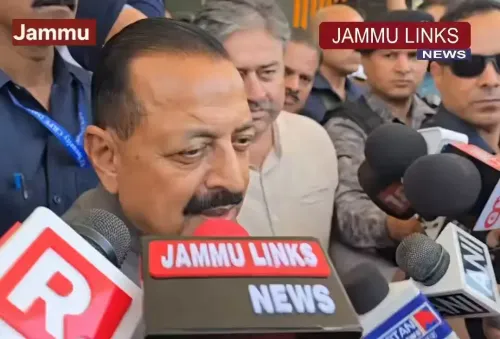
Union Science and Technology Minister Dr. Jitendra Singh on Saturday, 6 June 2026 highlighted a nowcasting-based early warning system being developed by the India Meteorological Department (IMD) that is reported to provide precise weather alerts up to three hours in advance, with a specific focus on Jammu and the surrounding Himalayan foothills region.
Context
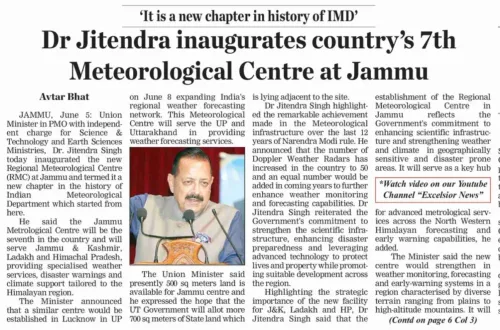
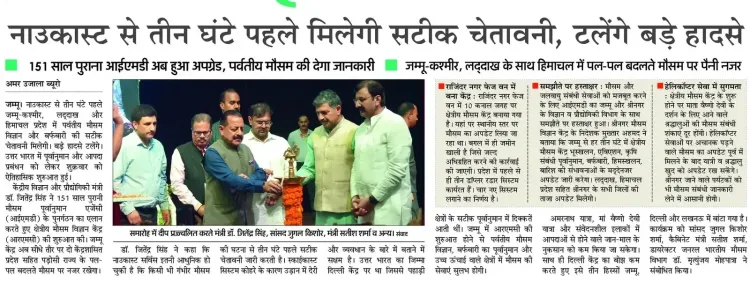
The minister shared a headline from a Hindi-language daily that read: 'Naucast se teen ghante pehle milegi sateek chetavni, talenge bade hadse' ('Precise warning will be available three hours before nowcast, major accidents will be averted'). The post was tagged with #IMD and #Jammu, indicating the minister's intent to draw attention to weather safety infrastructure in the region. Jammu lies in the Himalayan foothills and is frequently exposed to sudden weather events including flash floods, cloudbursts, and landslides.
Policy Backdrop
IMD has been expanding its observational network for decades, with Doppler Weather Radars being phased in from the early 2000s to strengthen short-range nowcasting capabilities. Nowcasting typically refers to weather forecasts covering a zero-to-two-hour window; a system that extends precise alerts to three hours ahead would represent a meaningful improvement in lead time for disaster response. These efforts fall within the broader framework of the National Disaster Management Act and successive government priorities to modernise weather prediction infrastructure.
The Ministry of Earth Sciences, which Dr. Jitendra Singh heads as Minister of State with Independent Charge, oversees IMD directly. The ministry has in recent years pushed for terrain-specific, high-resolution forecasts tailored to hill states and union territories including Jammu and Kashmir.
Stakeholders and Impact
The primary beneficiaries of an enhanced nowcast alert system in Jammu would be residents of low-lying and riverine areas, hill farmers, and district disaster management authorities who depend on timely warnings to evacuate or secure assets. Sudden weather events in the Jammu region have historically caused loss of life and damage to infrastructure, making lead-time improvements a direct public-safety concern. State emergency response teams would also gain a wider operational window to pre-position resources.
Broader adoption of such systems across other Himalayan and flood-prone states could significantly reduce weather-related casualties nationally, a goal that aligns with India's commitments under the Sendai Framework for Disaster Risk Reduction.
What's Next
The government's stated direction points toward expanding similar nowcast upgrades to additional states and integrating alerts with state-level emergency notification systems. IMD's ongoing radar densification programme and investments in numerical weather prediction models are expected to underpin such expansions. Observers will watch for formal announcements on the operational rollout of the three-hour advance warning capability and its integration into public alert platforms in Jammu and Kashmir and neighbouring hill states.
Point of View
Particularly ahead of the monsoon season when public anxiety around weather disasters peaks. Highlighting a Jammu-specific nowcast upgrade carries political salience given the union territory's strategic importance and its exposure to Himalayan weather hazards. The three-hour advance warning claim, if operationally validated, would mark a concrete step forward in India's disaster-risk reduction architecture. It also signals the ministry's intent to demonstrate tangible, region-specific outcomes from its ongoing investment in observational infrastructure.
NationPress
23 Oct 2026
Frequently Asked Questions
What is nowcasting and how is it different from a regular weather forecast?
Nowcasting refers to very short-range weather prediction, typically covering the next zero to two hours, using real-time radar and observational data. A regular forecast covers longer periods such as 24 to 72 hours and relies more heavily on numerical weather models.
What is the IMD three-hour advance warning system for Jammu?
According to the report shared by Minister Dr. Jitendra Singh, IMD is developing a nowcast-based system that can provide precise weather alerts up to three hours before a hazardous weather event in the Jammu region, improving on the standard nowcast window.
Why is Jammu specifically targeted for improved weather warnings?
Jammu lies in the Himalayan foothills and is frequently affected by sudden weather events such as flash floods, cloudbursts, and landslides, making it a priority area for terrain-specific, high-resolution forecasting upgrades.
Which ministry oversees IMD in India?
The India Meteorological Department functions under the Ministry of Earth Sciences, which is headed by Dr. Jitendra Singh as Union Minister of State with Independent Charge.
How will the new nowcast alert system help disaster management in Jammu?
A three-hour advance warning window gives district disaster management authorities, emergency responders, and residents more time to evacuate vulnerable areas, secure assets, and pre-position relief resources before a weather event strikes.