CM Yogi Orders Sharper Weather Early-Warning System for UP
Synopsis
Chief Minister Yogi Adityanath has ordered Uttar Pradesh to upgrade its weather early-warning system with IVRS, panchayat loudspeakers, FM radio, and mobile alerts, backed by 450 automatic weather stations, 2,000 rain gauges, and new Doppler radars across districts.
Key Takeaways
CM Yogi Adityanath directed officials on 23 May 2026 to make UP's weather early-warning system more precise, rapid, and people-centred.
Last-mile delivery channels mandated include IVRS, panchayat loudspeakers, local FM radio, mobile alerts, and social media .
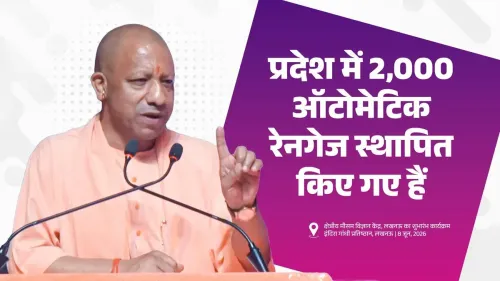
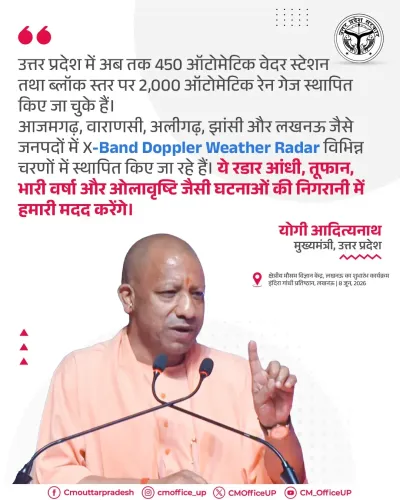
Uttar Pradesh currently operates 450 Automatic Weather Stations and 2,000 Automatic Rain Gauges for real-time weather monitoring.
Doppler Weather Radars are being installed across multiple districts to enhance nowcasting and disaster-response capacity.
The directive rests on three pillars: public awareness, technological empowerment, and coordinated disaster management .
Panchayati Raj Institutions are designated as a key channel for grassroots alert dissemination, especially in low-connectivity rural areas.
Chief Minister Yogi Adityanath on Saturday, 23 May 2026 directed officials to make Uttar Pradesh's weather early-warning system more precise, rapid, and people-centred, with a specific emphasis on reaching every citizen in villages and vulnerable areas before a weather disaster strikes. The Chief Minister's Office of Uttar Pradesh announced the directive via an official post on X.
Context
The directive, issued in Hindi, called for lास्ट माइल कनेक्टिविटी ('last-mile connectivity') to be ensured across rural and sensitive zones using a multi-channel approach. CM Yogi specifically named IVRS (Interactive Voice Response System), panchayat-level loudspeakers, local FM radio, mobile alerts, and social media as the tools to carry weather warnings to every citizen in time. The instruction reflects growing concern that technological investments in meteorological infrastructure remain ineffective unless the final link to the ordinary citizen is secured.
Policy Backdrop
Uttar Pradesh currently monitors weather through 450 Automatic Weather Stations and 2,000 Automatic Rain Gauges, according to the post. The state is also installing Doppler Weather Radars across several districts to strengthen technical capacity for detecting and responding to weather disasters. This build-out aligns with the IMD Modernisation Programme that has progressively expanded ground-sensor and radar coverage across monsoon-vulnerable states since the late 2000s, and with the National Policy on Disaster Management 2009, which mandated community-level dissemination of early warnings. India's approach also mirrors the Sendai Framework for Disaster Risk Reduction's emphasis on people-centred early action.
Uttar Pradesh is India's most populous state and is routinely exposed to monsoon floods, heatwaves, and heavy-rainfall events, particularly in its eastern and central regions. Ensuring that meteorological data translates into timely ground-level action has been a persistent governance challenge across successive administrations.
Stakeholders and Impact
The most direct beneficiaries are rural residents and farmers, who are disproportionately exposed to weather shocks and historically the last to receive official alerts. Panchayati Raj Institutions — village and block-level self-government bodies — are positioned as a key delivery channel under the plan, with loudspeakers at panchayat offices serving as a low-tech but high-reach medium in areas with poor smartphone penetration. The integration of IVRS and social media alongside these traditional channels signals an intent to cover both digitally connected and offline populations simultaneously.
Farmers, in particular, stand to benefit from more accurate and timely advisories that can inform decisions on sowing, harvesting, and protecting livestock — decisions where a delay of even a few hours can mean significant economic loss. Disaster-response agencies and district administrations are also expected to benefit from better nowcasting data flowing from the expanded Doppler radar network.
What's Next
The immediate test for the upgraded system will be the 2026 monsoon season, which is already approaching. Operational integration of the newly installed Doppler radars with IMD's national network will be critical to translating hardware investment into actionable forecasts. CM Yogi's directive specifically cited जनजागरूकता, तकनीकी सशक्तीकरण एवं समन्वित आपदा प्रबंधन ('public awareness, technological empowerment, and coordinated disaster management') as the three pillars for making the state more resilient. How effectively district administrations and panchayat bodies operationalise the multi-channel alert mandate will determine whether this directive translates into measurable reductions in weather-related casualties and losses across the state.
Point of View
A shift in emphasis that is politically astute ahead of the monsoon season. By naming panchayat loudspeakers and FM radio alongside digital tools, the government is acknowledging that smartphone-centric solutions alone cannot reach UP's vast rural population. The move fits a broader national pattern of state governments racing to demonstrate climate-resilience credentials after high-casualty weather events drew scrutiny in the 2010s. The real test will be whether district-level execution matches the ambition of the directive before the first major weather event of 2026.
NationPress
7 Oct 2026
Frequently Asked Questions
What has CM Yogi ordered regarding weather warnings in UP?
CM Yogi Adityanath has directed officials to make Uttar Pradesh's weather early-warning system more precise and people-centred, using IVRS, panchayat loudspeakers, FM radio, mobile alerts, and social media to ensure last-mile reach to villages and vulnerable areas.
How many automatic weather stations does Uttar Pradesh have?
According to the Chief Minister's Office, Uttar Pradesh currently monitors weather through 450 Automatic Weather Stations and 2,000 Automatic Rain Gauges.
What is last-mile connectivity in the context of weather alerts?
Last-mile connectivity refers to ensuring that weather warnings reach the final recipient — typically a villager or farmer in a remote area — through accessible channels such as loudspeakers, FM radio, or IVRS calls, even without internet access.
What is a Doppler Weather Radar and why is UP installing them?
A Doppler Weather Radar is a remote-sensing system that tracks precipitation and detects severe weather in real time. Uttar Pradesh is installing them across districts to improve nowcasting and strengthen technical capacity for disaster response.
How does UP's weather alert plan align with national disaster policy?
The plan aligns with the National Policy on Disaster Management 2009, which mandated community-level early-warning dissemination, and with the Sendai Framework for Disaster Risk Reduction's emphasis on people-centred early action.