Dr. Jitendra Singh Marks 12 Years of IMD Modernisation
Synopsis
Union Science and Technology Minister Dr. Jitendra Singh marked twelve years of the Modi government by highlighting IMD's expanded Doppler radar network, AI-powered forecasting, SkyCast fog monitoring, and the launch of Mission Mausam — positioning earth sciences investment as central to India's disaster preparedness agenda.
Key Takeaways
Jitendra Singh posted on June 1, 2026 , marking 12 years of the Modi government with a focus on meteorological infrastructure gains.
IMD has reportedly tripled its Doppler Weather Radar network and expanded Automatic Weather Stations over the period (specific figures unverified).
AI-integrated computing power for weather forecasting is claimed to have increased 19 times (unverified).
SkyCast fog-monitoring technology has been deployed to improve safety for the aviation sector .
Mission Mausam , launched by PM Narendra Modi , is the government's flagship initiative to consolidate and advance weather and climate services.
Key beneficiaries include farmers , coastal communities , the aviation sector , and disaster management authorities .
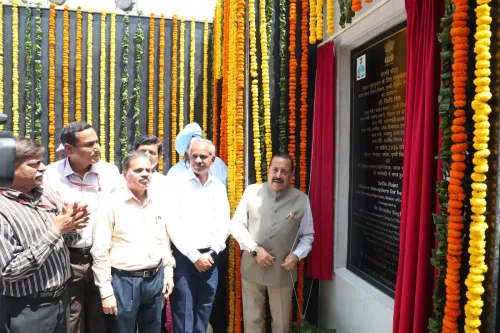
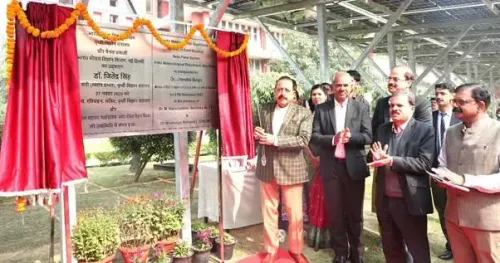
Union Science and Technology Minister Dr. Jitendra Singh on Monday, June 1, 2026, highlighted twelve years of advances in India's weather forecasting and disaster preparedness infrastructure, crediting the India Meteorological Department (IMD) and the Ministry of Earth Sciences with a series of capability expansions under the Modi government.
Context
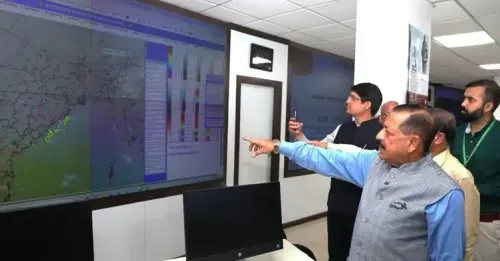
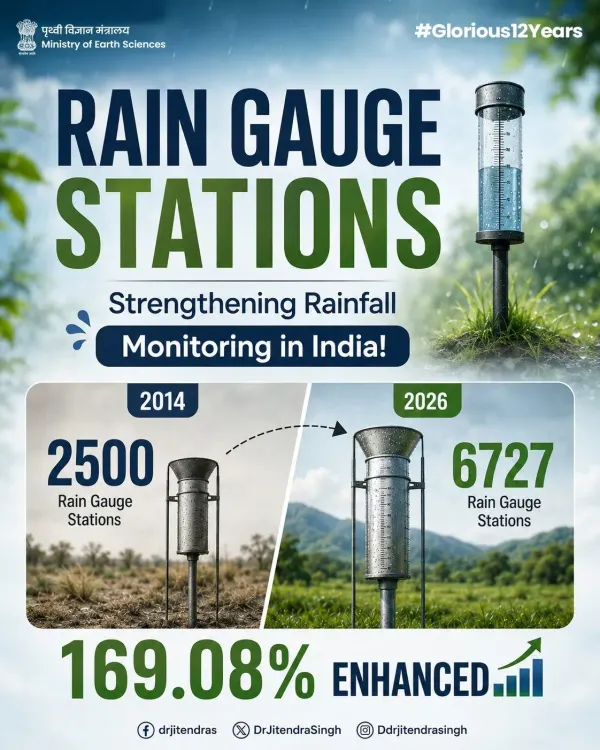
Marking the anniversary of the Modi government's twelfth year in office, Dr. Singh enumerated a set of upgrades to India's meteorological network. These include a tripling of Doppler Weather Radars, an expansion of Automatic Weather Stations, the deployment of SkyCast fog-monitoring technology for aviation, and a claimed 19-fold increase in AI-integrated computing power. The minister described these as part of a broader drive toward 'precision forecasting and disaster preparedness.' It should be noted that specific quantitative claims in the post have not been independently verified.
The post also highlighted Mission Mausam, a central government initiative launched by Prime Minister Narendra Modi aimed at strengthening weather and climate services, including advanced observation and prediction systems. Dr. Singh framed the mission as the culmination of a decade of investment in earth sciences infrastructure.
Policy Backdrop
India's meteorological modernisation has a layered history. The Ministry of Earth Sciences, formed in 2006, consolidated weather, ocean, and atmospheric agencies that were previously distributed across multiple departments, bringing IMD and allied bodies under a unified framework. An IMD Modernisation Programme (Phase-I, 2007–2015) introduced the country's first network of Doppler Weather Radars and Automatic Weather Stations, laying the foundation for subsequent upgrades.
The Modi government, since taking office in 2014, has framed science and technology investment — particularly in earth observation — as integral to both economic resilience and climate adaptation. The integration of artificial intelligence into forecasting systems and the expansion of radar coverage represent a continuation of that policy direction, now articulated under the Mission Mausam umbrella.
Stakeholders and Impact
The beneficiaries of improved weather forecasting span several critical sectors. Farmers across India depend on accurate monsoon and extreme-weather alerts to protect crops and plan sowing cycles. The aviation sector stands to gain directly from the SkyCast fog-monitoring system, which targets one of the most disruptive weather hazards for airports, particularly in northern India during winter.
Disaster management authorities and coastal communities — the latter vulnerable to cyclones and storm surges — are also key stakeholders in any expansion of real-time observation infrastructure. Enhanced computing power for numerical weather prediction can shorten the lead time needed for credible cyclone-track forecasts, directly affecting evacuation decisions and preparedness planning.
What's Next
The detailed implementation roadmap, funding allocations, and institutional framework for Mission Mausam are expected to be elaborated in subsequent budget cycles or parliamentary sessions. Further rollout of Doppler radar coverage to underserved regions and deeper integration of AI systems into IMD's operational forecasting pipeline remain the two most closely watched near-term deliverables.
As India faces intensifying climate variability, the government's stated commitment to earth sciences infrastructure will be tested by the quality and timeliness of forecasts during high-stakes weather events — from monsoon onset to cyclone landfalls — in the seasons ahead.
Point of View
Timed to the twelfth anniversary of the Modi government and designed to anchor science-ministry achievements within a broader political narrative of delivery. By foregrounding IMD and earth sciences — rather than space or biotech — the minister signals that weather forecasting and disaster resilience are now considered vote-relevant public goods, not technocratic backwaters. The invocation of Mission Mausam as a capstone achievement suggests the government intends the programme to carry symbolic as well as operational weight in the run-up to future electoral cycles. The framing also positions India's earth observation investments as self-reliant, AI-driven modernisation — consistent with the wider 'Atmanirbhar Bharat' narrative applied across technology sectors.
NationPress
20 Sept 2026
Frequently Asked Questions
What is Mission Mausam launched by PM Modi?
Mission Mausam is a central government initiative launched by Prime Minister Narendra Modi to strengthen India's weather and climate services, including upgrading observation networks, prediction systems, and related infrastructure under the Ministry of Earth Sciences.
What has IMD achieved in the last 12 years under the Modi government?
According to Union Minister Dr. Jitendra Singh, IMD has tripled its Doppler Weather Radar network, expanded Automatic Weather Stations, deployed SkyCast fog-monitoring for aviation, and boosted AI-integrated computing power by 19 times, though these specific figures have not been independently verified.
What is SkyCast fog monitoring and how does it help aviation?
SkyCast is a fog-monitoring system deployed by India's earth sciences agencies to provide real-time visibility data for airports, helping airlines and air traffic controllers manage flight operations during dense fog conditions, particularly in northern India during winter months.
What does the Ministry of Earth Sciences do in India?
The Ministry of Earth Sciences, formed in 2006, oversees India's meteorological, oceanographic, and atmospheric research agencies, including the India Meteorological Department (IMD), and is responsible for weather forecasting, cyclone warnings, ocean observation, and related disaster preparedness functions.
How does improved weather forecasting benefit Indian farmers?
Accurate and timely weather forecasts help farmers plan sowing, irrigation, and harvesting decisions, and provide advance warning of extreme events such as heavy rainfall, heatwaves, or unseasonal frost, reducing crop losses and supporting agricultural income stability.