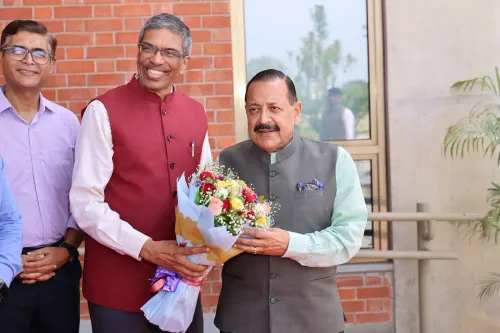
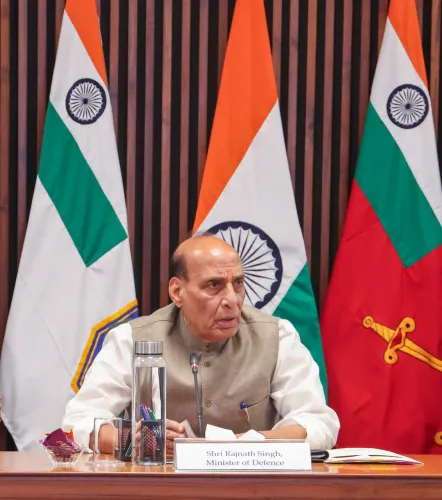
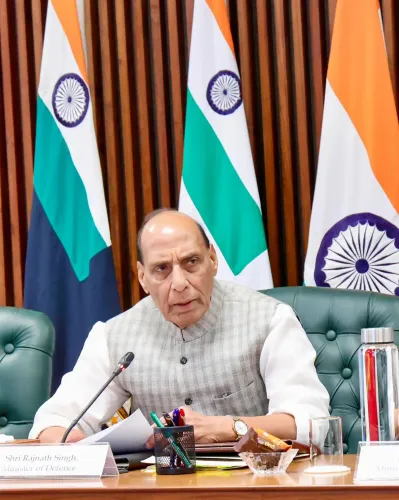
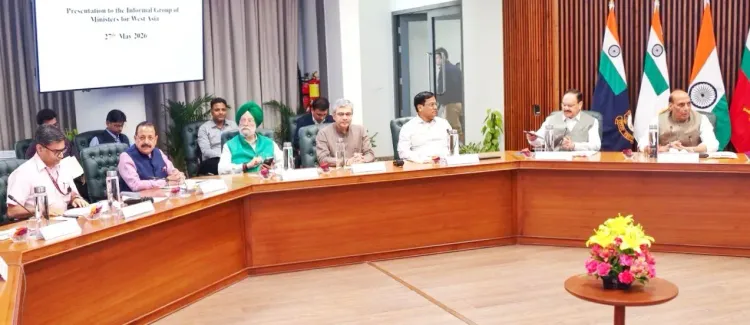
Dr. Jitendra Singh attends 6th IGoM meet on West Asia
Synopsis
Union Minister Dr. Jitendra Singh attended the sixth session of India's Informal Empowered Group of Ministers on West Asia, chaired by Defence Minister Rajnath Singh, as New Delhi sustains whole-of-government monitoring of a conflict with direct stakes for Indian diaspora and energy security.
Key Takeaways
Jitendra Singh participated in the sixth meeting of the IGoM on 28 May 2026 .
The IGoM is chaired by Raksha Mantri Rajnath Singh , signalling defence-level engagement alongside diplomacy.
The body monitors the West Asia conflict for its impact on Indian interests including energy supply and diaspora welfare.
An estimated 9 million Indian nationals live and work in Gulf states , making evacuation contingency planning a key concern.
West Asia supplies a significant share of India's crude oil imports , linking regional stability to domestic energy costs.
The regularity of IGoM sessions indicates New Delhi treats the situation as an ongoing strategic challenge requiring sustained inter-ministerial coordination.
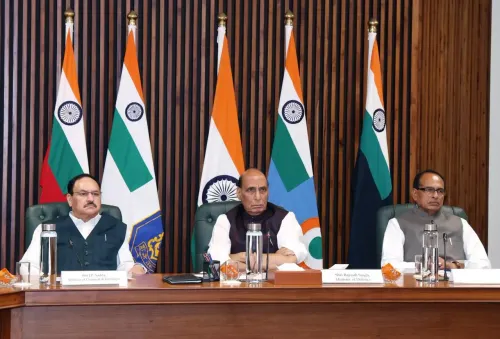
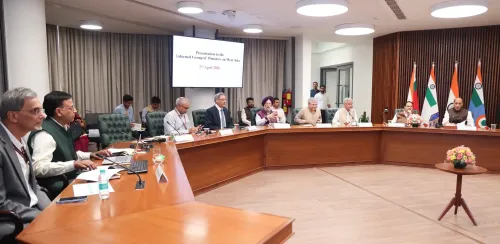
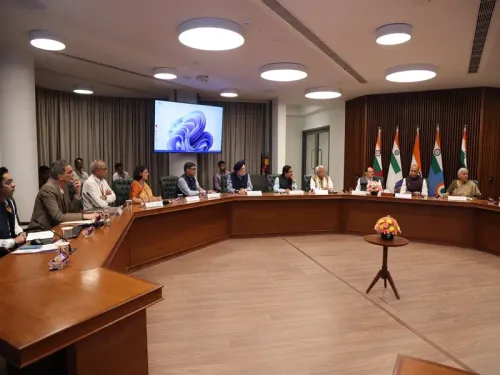
Union Science and Technology Minister Dr. Jitendra Singh on Thursday, 28 May 2026, attended the sixth meeting of the Informal Empowered Group of Ministers (IGoM) constituted to monitor the evolving security situation in West Asia, with the meeting chaired by Defence Minister Rajnath Singh.
Context
The IGoM is an inter-ministerial coordination body set up by the Indian government to track developments in West Asia — a region whose stability has direct consequences for India's energy security and the welfare of millions of Indian expatriates working across Gulf countries. The group brings together ministers from multiple portfolios to ensure a whole-of-government assessment of risks and contingencies.
The fact that Raksha Mantri Rajnath Singh chairs the group signals that the government's monitoring framework extends beyond conventional diplomatic channels to encompass defence preparedness and potential evacuation planning.
Policy Backdrop
India has a long-standing practice of constituting such empowered inter-ministerial groups when regional crises abroad could affect its strategic and economic interests. West Asia is of particular importance: the region supplies a substantial share of India's crude oil and natural gas imports, and an estimated 9 million Indian nationals live and work across Gulf states, representing the country's single largest diaspora concentration.
India's approach to the region has historically been guided by the doctrine of strategic autonomy — maintaining ties with multiple stakeholders without direct military entanglement. The IGoM mechanism reflects that posture, prioritising informed monitoring and contingency readiness over reactive policy shifts.
Stakeholders and Impact
The most directly affected constituency is the Indian diaspora in the Gulf, whose remittances form a critical pillar of household incomes across states such as Kerala, Uttar Pradesh, Bihar, and Rajasthan. Any deterioration in regional security raises the spectre of large-scale evacuation operations, for which inter-ministerial coordination of the kind the IGoM provides is essential groundwork.
Energy importers and refiners in India are equally attentive to the situation: sustained conflict in West Asia can disrupt shipping lanes, spike crude prices, and feed through to domestic fuel costs and inflation. The IGoM's multi-ministry composition ensures that the Ministry of Petroleum, Ministry of External Affairs, and security establishments are all operating from a shared situational picture.
What's Next
Observers will watch for an official readout from the Ministry of External Affairs or the Prime Minister's Office following the sixth IGoM session, which could indicate whether the government's threat assessment has shifted or whether any fresh contingency measures are being activated. Parliamentary questions on the welfare of Indian nationals in conflict-affected zones are also likely as the monsoon session approaches.
The regularity of IGoM meetings — now at its sixth session — underscores that New Delhi views the West Asia conflict as a sustained, evolving challenge rather than a short-term crisis, and that whole-of-government vigilance will remain in place for the foreseeable future.
Point of View
The government is building a situational-awareness architecture that can pivot quickly from monitoring to action. This fits a broader pattern in Modi government crisis management: institutionalise coordination early so that operational decisions, whether diplomatic démarches or evacuation logistics, are not improvised under pressure. The IGoM's durability across six meetings also suggests the conflict shows no sign of resolution that would allow New Delhi to stand down its watch.
NationPress
29 Jul 2026
Frequently Asked Questions
What is the IGoM on West Asia?
The Informal Empowered Group of Ministers (IGoM) is an inter-ministerial body set up by the Indian government to monitor developments in West Asia and coordinate responses that protect Indian interests, including the safety of the Indian diaspora and energy supply chains.
Why is Rajnath Singh chairing the IGoM and not the External Affairs Minister?
Defence Minister Rajnath Singh chairs the IGoM, reflecting that the government's monitoring of the West Asia conflict includes defence preparedness and potential evacuation contingencies, not just diplomatic tracking.
How many Indians live in Gulf countries?
An estimated 9 million Indian nationals live and work across Gulf states, making the region home to India's single largest diaspora concentration and a central concern in any West Asia crisis response.
How does the West Asia conflict affect India's energy security?
West Asia supplies a substantial share of India's crude oil and natural gas imports; sustained conflict in the region can disrupt shipping lanes, raise crude prices, and push up domestic fuel costs and inflation.
What happens after an IGoM meeting?
Following IGoM sessions, observers typically watch for official readouts from the Ministry of External Affairs or the Prime Minister's Office that may indicate shifts in India's threat assessment or the activation of fresh contingency measures for Indian nationals abroad.