Rajnath Singh Heads IGoM to Strengthen India's Defense Amid West Asia Tensions
Synopsis
In light of the escalating situation in West Asia, Defence Minister Rajnath Singh leads the IGoM to enhance India’s defense readiness. This meeting focuses on energy security, food supply stability, and economic resilience amidst regional conflicts. Learn more about the critical decisions made to safeguard national interests.
Key Takeaways
The IGoM meeting focuses on enhancing India's readiness amidst West Asia tensions.
Strategies for energy security and food supply stability are prioritized.
Government ensures continued availability of essential commodities.
Proactive measures are being taken to support vulnerable populations.
Daily price monitoring shows no unusual volatility in essential commodities.
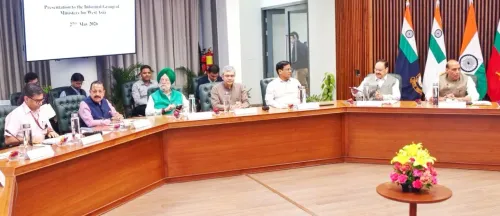
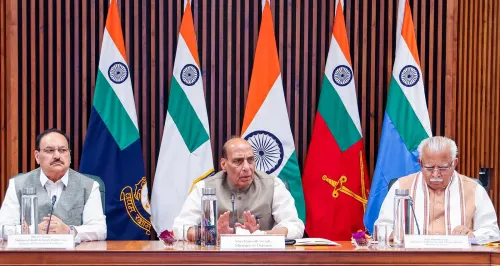
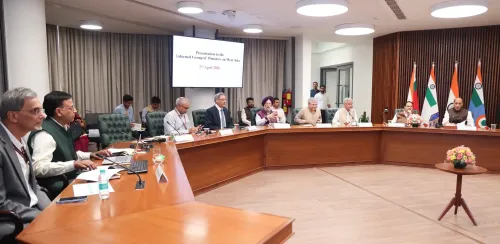
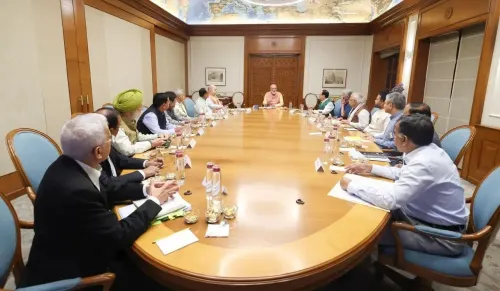
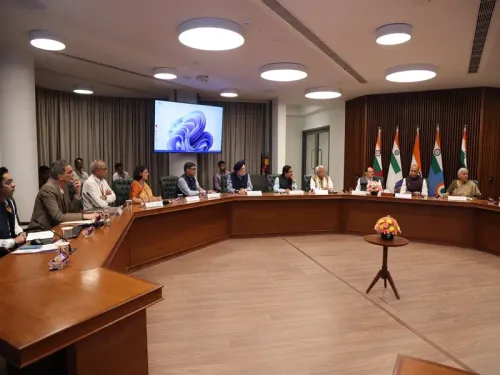
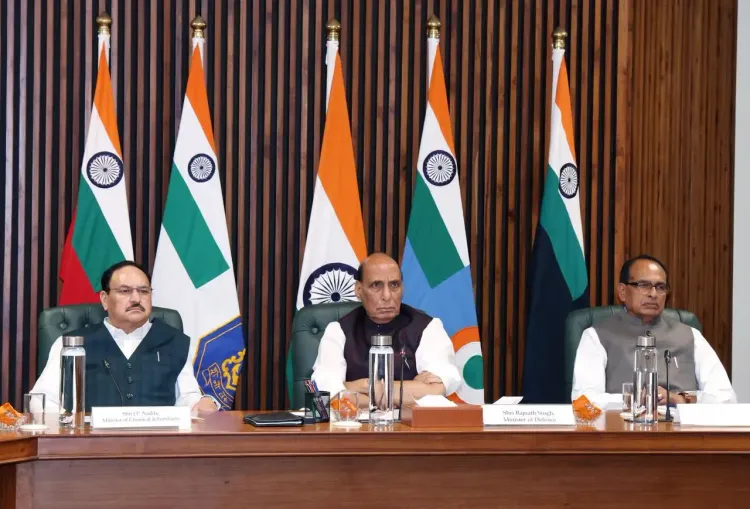
New Delhi, April 8 (NationPress) The Informal Group of Ministers (IGoM), under the leadership of Defence Minister Rajnath Singh, convened for its third session to evaluate India’s preparedness amidst the changing dynamics in West Asia.
This influential committee scrutinized strategies to maintain energy security, ensure stability in food supplies, and bolster overall economic resilience.
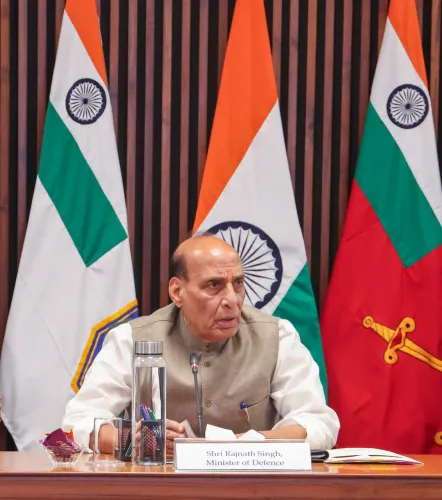
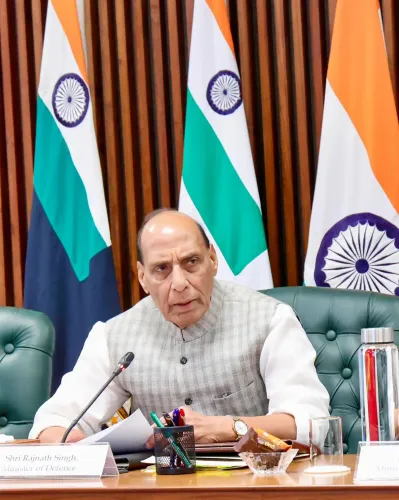
Defence Minister Rajnath Singh urged all government departments to stay alert and prioritize preparedness, coordination, and the strengthening of resilience.
He emphasized that the government is committed to the uninterrupted supply of LPG, petrol, diesel, and fertilizers for farmers, while ensuring essential commodities are available nationwide.
Singh acknowledged PM Modi's guidance in protecting citizens from the repercussions of regional conflicts.
The IGoM was briefed that India has evacuated more vessels from the Strait of Hormuz in the last 40 days than any other nation.
Eight LPG vessels, carrying roughly 340 TM—equivalent to about 11 days of India's import needs—have sailed safely, reinforcing the nation's energy security. There have been no reports of shortages at LPG distribution points, and domestic cylinder deliveries remain steady.
To assist vulnerable populations, including migrant laborers, the distribution of 5 kg Free Trade LPG cylinders was increased beyond the initial 20 percent priority allocation starting April 7.
A critical decision made today allocates 70 percent of fuel demand to non-domestic bulk consumers, focusing on vital sectors such as pharmaceuticals, food processing, polymers, agriculture, packaging, paints, steel, and defense-related industries to avert supply chain issues.
The promotion of Piped Natural Gas (PNG) is being vigorously pursued, with an ongoing campaign resulting in the addition of 3.16 lakh new PNG connections—three times the level seen in March 2025—while over 16,700 LPG connections have been surrendered.
In terms of food supply, ample buffer stocks of rice and wheat are accessible for the Public Distribution System and emergency measures under the National Food Security Act.
The Food Corporation of India is prepared to release surplus stocks via the Open Market Sale Scheme to stabilize prices. Wheat procurement under the Minimum Support Price (MSP) has begun, and packaging materials are being secured for the upcoming 2026–27 season.
The domestic availability of edible oils and sugar remains sufficient, with stable retail prices and low inflation.
The meeting included participation from Finance Minister Nirmala Sitharaman, External Affairs Minister S. Jaishankar, and other senior officials such as Shivraj Singh Chouhan, Piyush Goyal, Jagat Prakash Nadda, Hardeep Singh Puri, Prahlad Joshi, Ashwini Vaishnaw, Kiren Rijiju, Kinjarapu Rammohan Naidu, and Jitendra Singh.
Ministers were assured that daily monitoring of prices for 40 essential commodities across 578 centers indicates no unusual volatility, with only minor increases in edible oils.
The government will continue its proactive measures wherever necessary to protect national interests.
Point of View
The meeting led by Defence Minister Rajnath Singh highlights the government's proactive measures to address the challenges posed by evolving geopolitical dynamics in West Asia. The focus on energy security and food supply is crucial for maintaining stability and resilience in India.
NationPress
19 Sept 2026
Frequently Asked Questions
What measures are being taken to ensure energy security?
The IGoM has implemented strategies to facilitate the uninterrupted supply of LPG, petrol, and diesel, while also promoting Piped Natural Gas (PNG) connections.
How is the government supporting vulnerable populations?
The government has doubled the supply of 5 kg Free Trade LPG cylinders to migrant laborers, ensuring that essential resources are available to those in need.
What is the current status of food supplies in India?
India has adequate buffer stocks of rice and wheat for emergency needs, and the Food Corporation of India is prepared to release surplus stocks to stabilize market prices.
Who attended the recent IGoM meeting?
The meeting included key figures such as Finance Minister Nirmala Sitharaman and External Affairs Minister S. Jaishankar, among other senior ministers.