India exits 'Fragile Five', now world's fastest-growing major economy: Modi
Synopsis
From 'Fragile Five' cautionary tale to the world's fastest-growing major economy in 12 years — Modi's Independence Day address reframed India's economic identity, anchored the Viksit Bharat 2047 vision, and placed 25 crore poverty exits at the centre of the national story.
Key Takeaways
PM Narendra Modi declared on 15 August that India has exited the 'Fragile Five' grouping to become the world's fastest-growing major economy.
25 crore Indians have been lifted out of poverty over the past 12 years , according to the Prime Minister.
Modi highlighted progress in defence production , electronics manufacturing , railways , and the digital sector as key growth drivers.
India has set a national target of becoming a developed nation — Viksit Bharat — by 2047 , marking 100 years of Independence.
Modi credited all sections of society — Dalit, tribal, rural, urban, youth, elderly — for the country's economic transformation.
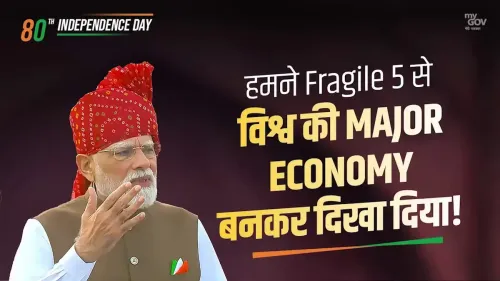
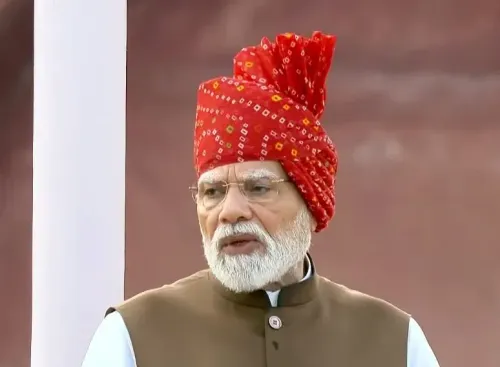
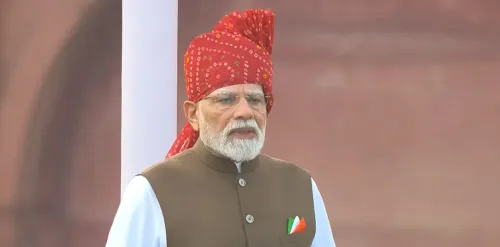
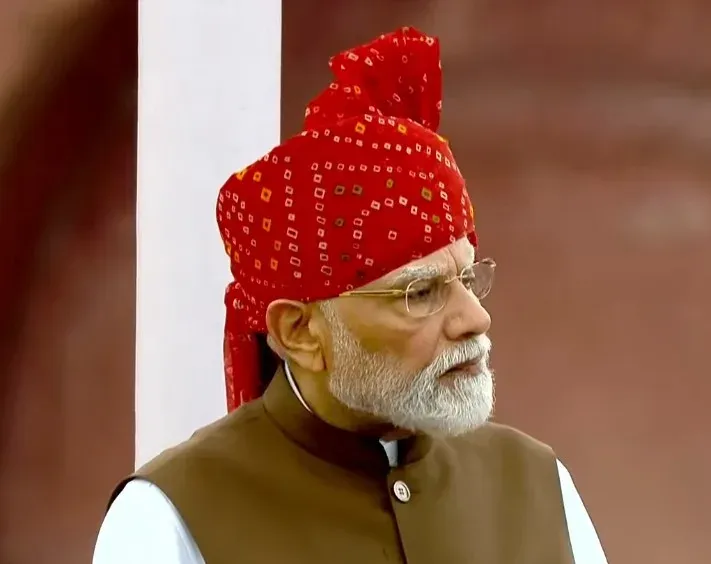
Prime Minister Narendra Modi on 15 August declared that India has shed its 'Fragile Five' label to become the world's fastest-growing major economy, crediting 140 crore citizens for the transformation achieved over the past 12 years. Addressing the nation from the ramparts of the Red Fort on Independence Day, Modi said no force could now stop India's resolve.
From Fragile Five to Fastest-Growing
'The entire world dumped us in the category of Fragile Five,' Modi said, referencing the early 2010s grouping of vulnerable emerging-market economies. 'However, India has, within just 12 years, emerged as the world's fastest-growing major economy.' The Prime Minister attributed the turnaround not to policy alone but to the collective determination of every section of society — from Dalit and tribal communities to the urban middle class, from youth to the elderly.
25 Crore Out of Poverty
Modi highlighted that 25 crore Indians have exited poverty in this period, calling it the outcome of the 'efforts, determination and dedication' of ordinary citizens. 'I acknowledge and pay my respectful tribute to their efforts,' he said. The claim aligns broadly with data from the NITI Aayog Multidimensional Poverty Index, which has recorded significant poverty reduction since 2015-16, though independent economists note measurement methodologies vary.
Key Sectors Driving the Surge
The Prime Minister pointed to advances across defence production, garment and electronics manufacturing, railways, and the digital and innovation sectors as markers of India's accelerated growth. These sectors have been central to flagship programmes including Make in India, Digital India, and the Production-Linked Incentive scheme. Notably, India's electronics exports have more than tripled over the past five years, and defence exports crossed ₹21,000 crore in the last fiscal year, according to government data.
The Viksit Bharat 2047 Vision
Modi reiterated India's national ambition of becoming a fully developed nation — Viksit Bharat — by 2047, when the country completes 100 years of Independence. 'India has dreamed a big dream, to touch new heights. The dream is that when we complete 100 years of Independence, we will make Viksit Bharat in 2047, with the contribution, efforts and participation of 140 crore people of our nation,' he said. The 2047 target has become a central organising frame for government policy across infrastructure, manufacturing, and social development.
What Comes Next
The Independence Day address sets the rhetorical tone for policy priorities in the year ahead. Analysts will watch whether the Viksit Bharat roadmap translates into specific budgetary commitments in the coming months. With India's GDP growth projected to lead major economies this year, the government faces pressure to ensure that headline growth translates into broad-based employment and income gains across all demographics Modi cited.
Point of View
But it papers over a more complicated picture. India's per-capita income still ranks among the lower-middle tier globally, and the quality of jobs created during the growth surge remains a contested metric. The 25-crore poverty-exit figure draws on the Multidimensional Poverty Index, which uses a broader basket of welfare indicators than income alone — a methodology critics argue flatters the headline number. The Viksit Bharat 2047 goal is an ambitious organising vision, but without binding sectoral targets and independent outcome verification, it risks becoming another aspirational frame that outlasts the governments that coined it.
NationPress
29 Sept 2026
Frequently Asked Questions
What is the 'Fragile Five' and why was India in it?
The 'Fragile Five' was a term coined by Morgan Stanley in 2013 to describe five emerging-market economies — India, Brazil, Indonesia, South Africa, and Turkey — that were highly vulnerable to capital outflows due to large current-account deficits and dependence on foreign investment. India was included because of a weak rupee, high inflation, and a widening fiscal gap at the time.
How has India become the world's fastest-growing major economy?
India has recorded consistently high GDP growth rates over the past decade, driven by domestic consumption, digital infrastructure expansion, manufacturing incentives under PLI schemes, and rising defence and electronics exports. The International Monetary Fund and World Bank have repeatedly projected India as the fastest-growing G20 economy in recent years.
What is the Viksit Bharat 2047 target?
Viksit Bharat — meaning 'Developed India' — is the government's stated goal of achieving developed-nation status by 2047, when India marks 100 years of Independence. It encompasses targets across infrastructure, manufacturing, education, health, and per-capita income, though specific binding benchmarks are still being defined across ministries.
How were 25 crore Indians lifted out of poverty?
The government's claim of 25 crore people exiting poverty is primarily based on the NITI Aayog's Multidimensional Poverty Index, which measures deprivation across health, education, and living standards — not income alone. The index recorded a sharp decline in poverty between 2015-16 and 2022-23, though economists note that income-based poverty measures show a more varied picture.
Which sectors did PM Modi highlight as driving India's growth?
Modi specifically cited defence production, garment and electronics manufacturing, railways, and the digital and innovation sectors. Government data shows defence exports crossed ₹21,000 crore in the last fiscal year, and electronics exports have more than tripled over five years, reflecting tangible gains in these areas.