PM Modi at Bharat Agriculture Conference: 50 crore out of poverty, farm growth above 4%
Synopsis
Modi's Bharat Agriculture Conference address packed a striking data point — 50 crore people lifted from poverty, backed by a decade of 4%-plus farm growth — alongside a call to reimagine Indian farmers as tech entrepreneurs. Add sharp political jabs and a ₹16 lakh crore fertiliser subsidy figure, and this was equal parts policy showcase and electoral messaging.
Key Takeaways
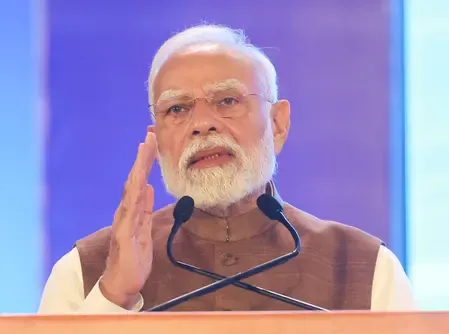
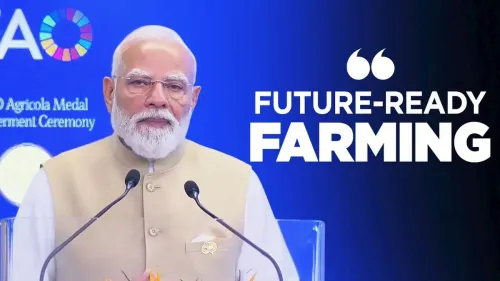
PM Modi addressed the Bharat Agriculture Conference 2026 at Bharat Mandapam, New Delhi on 12 November 2026 .
He cited a World Bank study showing 50 crore people have exited poverty in India, linking progress to a decade of 4%+ annual agricultural growth — the first such sustained run since Independence.
The Centre has spent ₹16 lakh crore on fertiliser subsidies; urea available internationally for ₹3,000 per bag is supplied to farmers for under ₹300 .
Livestock of over 8 crore farmers vaccinated free against Foot and Mouth Disease; India now has more than 725 Krishi Vigyan Kendras .
Modi highlighted the 'Drone Didi' scheme and called on startups to build AI-integrated and solar-powered farm equipment.
He called for farmers to evolve from 'annadatas' into 'krishi udyamis' (agricultural entrepreneurs) to fully benefit from technology and market access.
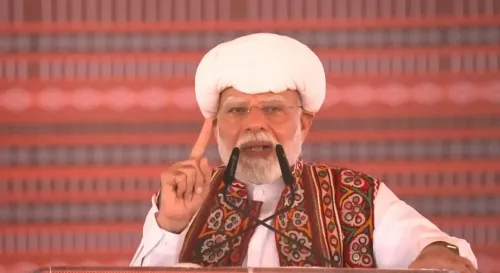
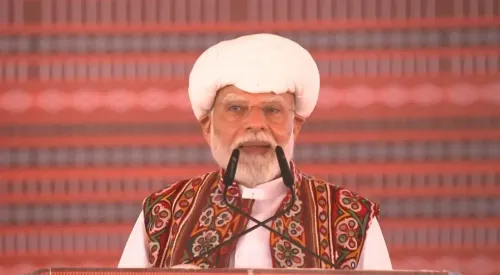
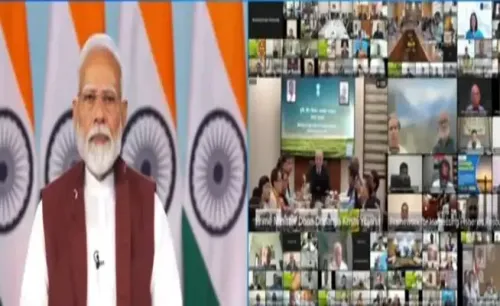
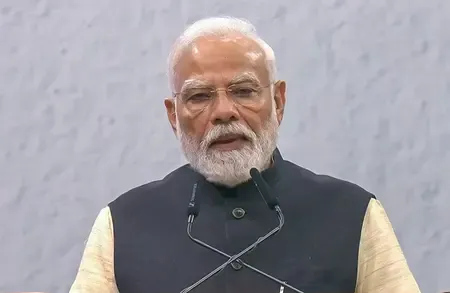
Prime Minister Narendra Modi on Thursday, 12 November 2026 declared that transforming agriculture into a 'smart' sector and strengthening farmers' economic position are non-negotiable pillars of India's development, citing a World Bank study that found 50 crore people in the country have escaped poverty. He was addressing the Bharat Agriculture Conference 2026, organised by the India Today Group at Bharat Mandapam, New Delhi — a two-day gathering that brought together more than 2,000 farmers, policymakers, industry representatives, and global experts.
A Decade of Sustained Farm Growth
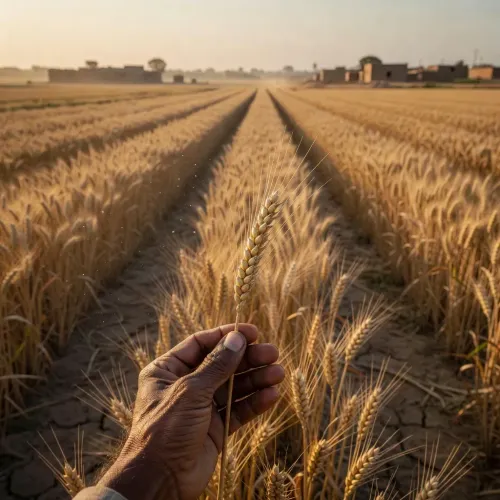
Modi highlighted that over the past ten years, India's agricultural growth rate has consistently exceeded 4 per cent annually — the first time since Independence that the sector has maintained such momentum over a sustained period. He noted that this era of robust farm output has directly coincided with a sharp decline in rural poverty, reinforcing his argument that farm-sector vitality is inseparable from broader poverty alleviation. According to the World Bank data he referenced, the reduction in poverty has been particularly pronounced in rural areas.
Government Support: Fertilisers, Vaccines, and Infrastructure
The Prime Minister outlined several measures his government has taken to insulate farmers from market shocks. He said the Centre has spent ₹16 lakh crore to keep fertilisers affordable — a bag of urea that costs ₹3,000 in the international market is made available to Indian farmers for less than ₹300. He also recalled a period when global crude oil prices surged to $120 per barrel amid tensions in West Asia; rather than passing the full burden on to cultivators, the government raised diesel prices by only ₹7 a litre and absorbed the remaining ₹43.
On rural infrastructure, Modi noted that India now has more than 725 Krishi Vigyan Kendras. Livestock belonging to over 8 crore farmers have been vaccinated free of cost against Foot and Mouth Disease, he added.
'Drone Didis' and the Tech Push in Rural India
Modi singled out the success of the 'Drone Didi' programme, under which women in rural areas have been trained to operate agricultural drones. He said these women have dismantled the assumption that advanced technology is incompatible with village life. Recounting one such example, he noted that a woman drone operator is now addressed as 'pilot' in her village and 'pilot bhabhi' at home — a cultural shift, he argued, as significant as the technological one. He urged startups to develop solar-powered farm equipment and AI-integrated tools to cut input costs and simplify key tasks such as sowing and harvesting.
From 'Annadatas' to 'Krishi Udyamis'
The Prime Minister called for a rapid transformation of farmers — traditionally referred to as 'annadatas' (food providers) — into 'krishi udyamis', or agricultural entrepreneurs, so that cultivators can fully capture the value of modern technology and emerging market opportunities. This framing represents a push to integrate India's farming community into broader value chains rather than limiting their role to primary production.
Political Remarks and Historical Recollections
Modi also used the platform to make pointed political remarks, criticising those who, in his characterisation, 'behave as if they alone own the Constitution and democracy.' He recalled an episode from his tenure as Gujarat Chief Minister, when the state was ranked number one in an assessment by a group of eminent economists — reportedly named after a former Prime Minister. He alleged that the then central government issued a directive deeming the report unacceptable and demanding prior approval before publication. 'And now these same people talk about democracy,' he said. The remark was widely understood as directed at the Congress, though he did not name the party explicitly. All such characterisations are attributed to the Prime Minister's address.
What Comes Next
The Bharat Agriculture Conference 2026 is scheduled across two days, with its remaining sessions expected to produce actionable recommendations on smart farming, agri-tech investment, and rural supply-chain modernisation. The push for AI and solar-powered farm tools, if followed by specific policy or procurement commitments, could shape the next phase of the government's agricultural technology agenda.
Point of View
And the World Bank figure encompasses a broad base period. The urea subsidy number (₹16 lakh crore) is significant, but the structural question of whether price controls are the most efficient route to farmer welfare remains unresolved. The 'krishi udyami' vision is directionally sound, but the gap between aspirational language and ground-level implementation — credit access, logistics, digital literacy — is where previous agri-tech pushes have stalled. Notably, the most politically charged moment of the speech, the Gujarat ranking anecdote, risks overshadowing the substantive agriculture agenda in news coverage.
NationPress
12 Nov 2026
Frequently Asked Questions
What did PM Modi say at the Bharat Agriculture Conference 2026?
PM Modi addressed the Bharat Agriculture Conference 2026 at Bharat Mandapam on 12 November 2026, highlighting that India's agricultural growth has exceeded 4% annually for the past decade — the first sustained run of this kind since Independence. He cited a World Bank study crediting this period with lifting 50 crore people out of poverty, and called for transforming farmers into 'krishi udyamis' (agricultural entrepreneurs) through AI and solar-powered technology.
What is the World Bank study Modi cited about poverty reduction?
Modi referenced a World Bank study showing that 50 crore people in India have moved out of poverty, with the decline particularly sharp in rural areas. He attributed this progress in part to the decade-long acceleration in agricultural growth, though the precise methodology and reference period of the study were not detailed in his remarks.
How much has the government spent on fertiliser subsidies for farmers?
According to Modi, the Centre has spent ₹16 lakh crore to keep fertilisers affordable. A bag of urea that costs ₹3,000 on the international market is supplied to Indian farmers for under ₹300, with the government absorbing the difference.
What is the 'Drone Didi' programme Modi spoke about?
The Drone Didi programme trains women in rural areas to operate agricultural drones, challenging assumptions that advanced technology cannot function effectively in villages. Modi cited the example of a woman now called 'pilot' in her community as evidence that the initiative is changing both farm practices and social perceptions.
What political remarks did Modi make at the conference?
Modi criticised unnamed opponents for, in his words, behaving as if they 'alone own the Constitution and democracy.' He recalled an episode from his time as Gujarat Chief Minister when the then central government allegedly blocked publication of a state ranking by eminent economists without prior approval. The remarks were widely interpreted as directed at the Congress, though no party was named explicitly.