Agriculture budget up fivefold since 2013-14; farmers saved ₹50 lakh crore: PM Modi
Synopsis
Standing before farmers in Banaskantha, Modi put a ₹50 lakh crore number on a decade of agricultural policy — combining direct transfers, subsidies, insurance payouts and avoided diesel costs into a single headline claim. The 24th PM-KISAN instalment and ₹14,000 crore in Gujarat projects dropped the same day, underscoring how agri-outreach has become inseparable from the BJP's electoral ground game.
Key Takeaways
PM Modi addressed farmers in Bhildi, Banaskantha, Gujarat on 30 October 2026 , claiming the Centre's agriculture budget has risen more than fivefold since 2013-14 .
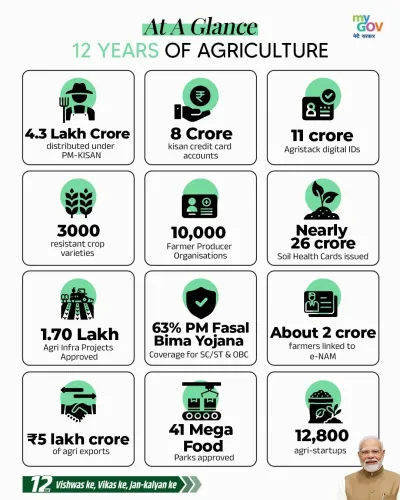
Farmers have collectively received or saved over ₹50 lakh crore through government schemes, according to Modi. ₹4.5 lakh crore transferred directly to small farmers via PM-KISAN ; more than ₹2 lakh crore paid out under crop insurance (PMFBY) over 10–12 years .
Around 12 lakh solar pumps installed under PM-KUSUM , saving an estimated 80 crore litres of diesel.
More than 26 crore Soil Health Cards distributed and nearly 3,000 new seed varieties made available to farmers.
Modi also released the 24th PM-KISAN instalment and launched ₹14,000 crore worth of development projects in Banaskantha during the same visit.
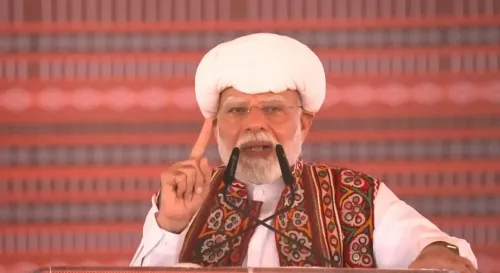
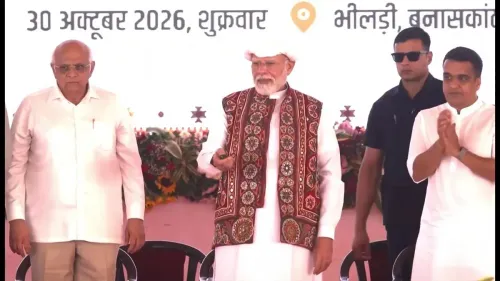
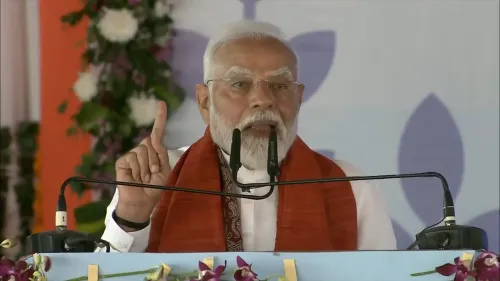
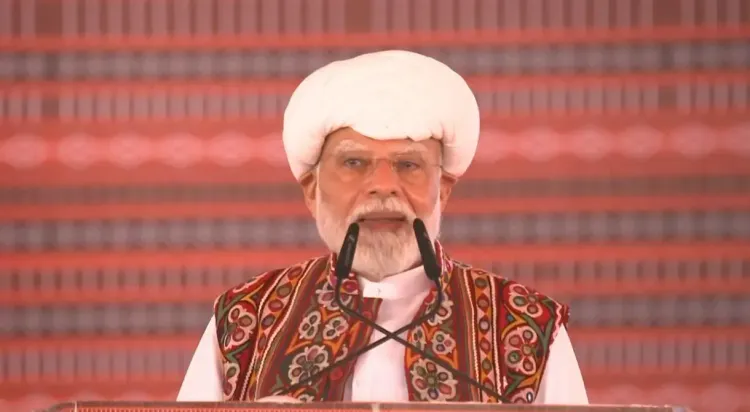
Prime Minister Narendra Modi on Friday, 30 October 2026, said the Centre's agriculture budget had risen more than fivefold since 2013-14, and that farmers had collectively received or saved over ₹50 lakh crore through government schemes and policy decisions over the past several years. Modi made these claims while addressing a large gathering of farmers in Bhildi, Banaskantha district, Gujarat, on the first leg of a two-day state visit.
Five Schemes at the Centre of Modi's Claim
The Prime Minister cited five major policy interventions to substantiate the ₹50 lakh crore figure: PM-KISAN income support, fertiliser subsidies, minimum support prices (MSP), crop insurance under the Pradhan Mantri Fasal Bima Yojana (PMFBY), and solar-powered irrigation under PM-KUSUM. He described the combined effect as both direct transfers and avoided costs — a distinction that is important in reading the headline number.
Of the total, around ₹4.5 lakh crore had been transferred directly into the bank accounts of small and marginal farmers through PM-KISAN, according to Modi. He noted that small farmers — who account for more than 85 per cent of the farming community — had historically received inadequate institutional attention, and that the income-support scheme was designed specifically to address that gap.
Crop Insurance and Soil Health Cards
On crop insurance, Modi said farmers had received more than ₹2 lakh crore in compensation under PMFBY over the past 10–12 years. He also pointed to the distribution of more than 26 crore Soil Health Cards, which he said had helped farmers determine the precise type and quantity of fertiliser needed for their fields — reducing both input costs and soil degradation over time.
Solar Pumps and the Diesel-Saving Argument
Under PM-KUSUM, the government has reportedly installed around 12 lakh solar pumps for irrigation, cutting dependence on electricity and diesel. Modi argued that without these pumps, farmers would have had to purchase more than 80 crore litres of diesel — a saving he included in the broader ₹50 lakh crore estimate. He added that surplus electricity generated by farm-based solar systems represented an additional financial benefit.
Science, Seeds and Agriculture's Evolving Identity
Modi said agriculture had been increasingly integrated with science and technology over the past 12 years, with nearly 3,000 new seed varieties made available to help farmers adapt to changing climatic conditions. 'Agriculture had increasingly been linked with science and technology,' he noted, describing farming as both a tradition and a living part of India's culture.
Gujarat Visit and PM-KISAN 24th Instalment
The Bhildi address came as part of Modi's two-day Gujarat tour. On the same day, he launched and dedicated development projects worth more than ₹14,000 crore in Banaskantha and released the 24th instalment of PM-KISAN to beneficiaries. 'The government's measures are aimed at increasing farm incomes, reducing cultivation costs and strengthening the agricultural sector,' he said. With assembly cycles in several states approaching and rural distress remaining a political flashpoint, the government's emphasis on quantifying agricultural gains signals a sustained outreach to India's farming constituency.
Point of View
Subsidies, insurance payouts and imputed savings — not a single auditable cash flow — and that conflation deserves scrutiny. MSP benefits, for instance, accrue only to farmers who sell in regulated markets, leaving out a large share of smallholders the government says it is targeting. The diesel-saving argument, while legitimate in principle, rests on counterfactual assumptions that are difficult to verify independently. More broadly, India's farm income data has remained contested for years, and the government's periodic mega-numbers have not been accompanied by a consistent, publicly accessible measurement framework — which is precisely the accountability gap that critics, agrarian economists and opposition parties continue to flag.
NationPress
30 Oct 2026
Frequently Asked Questions
What is the ₹50 lakh crore figure PM Modi cited for farmers?
According to Prime Minister Modi, farmers have collectively received or saved more than ₹50 lakh crore over the past several years through five government programmes: PM-KISAN direct transfers, fertiliser subsidies, MSP, crop insurance under PMFBY, and solar irrigation under PM-KUSUM. The figure combines actual cash transfers with estimated input-cost savings.
How much has been transferred under PM-KISAN so far?
Modi said approximately ₹4.5 lakh crore has been transferred directly into the bank accounts of small and marginal farmers through the PM-KISAN income-support scheme. On 30 October, he also released the 24th instalment of the scheme during his Gujarat visit.
What is PM-KUSUM and how does it benefit farmers?
PM-KUSUM (Pradhan Mantri Kisan Urja Suraksha evam Uttham Mahabhiyan) provides solar-powered irrigation pumps to farmers, reducing their dependence on grid electricity and diesel. About 12 lakh solar pumps have been provided under the scheme, with Modi estimating this has saved over 80 crore litres of diesel.
How much have farmers received under crop insurance?
More than ₹2 lakh crore has been paid out to farmers in claims under the Pradhan Mantri Fasal Bima Yojana (PMFBY) crop insurance scheme over the past 10–12 years, according to Modi's address in Bhildi.
Why did PM Modi visit Bhildi in Gujarat?
Modi was on a two-day Gujarat visit during which he addressed farmers in Bhildi, Banaskantha. On the same day, he launched and dedicated development projects worth more than ₹14,000 crore in the district and released the 24th instalment of PM-KISAN.