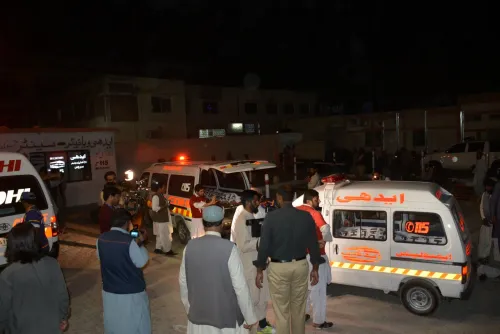
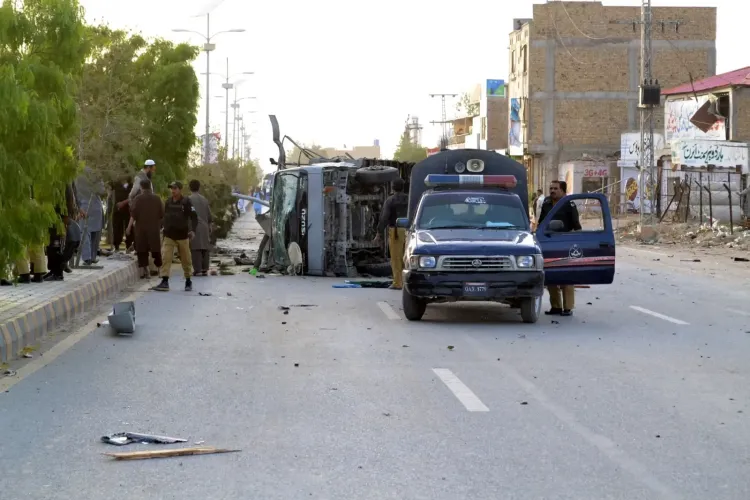
BLA's 'QAHR' drone and mortar blitz hits Pakistani forces in Balochistan's Kharan
Synopsis
The BLA's newly unveiled aerial wing 'QAHR' struck Pakistani forces camps in Balochistan's Kharan district with at least five drone strikes and mortar fire on Thursday — the latest in a rapidly escalating pattern of attacks that now includes convoy ambushes in Basima, Panjgur, and Turbat. The use of drones marks a significant tactical leap for the insurgency, and Pakistan's official silence on casualties only deepens the uncertainty.
Key Takeaways
Pakistani forces camps in Balochistan's Kharan district were hit by five drone strikes and mortar fire in the Patkin area on Thursday, 30 October 2026 .
A second camp in Kharan's Albat area was also targeted; the drone's explosive payload reportedly failed to detonate.
No group has formally claimed Thursday's attacks, but the Baloch Liberation Army (BLA) has previously owned similar drone strikes in Balochistan.
The BLA's aerial wing 'QAHR' (Qazi Aero Hive Rangers) was announced earlier this year under Operation Herof Phase 2 , with claimed strikes including Gwadar Port .
Convoy ambushes were also reported this week in Basima, Panjgur, and Turbat , with clashes in Basima lasting over two hours .
Pakistani authorities have not released official casualty figures for any of the attacks; all figures are based on local media and unverified sources.
Pakistani security forces came under a coordinated series of drone and mortar attacks in Balochistan's Kharan district on Thursday, 30 October 2026, with local media reporting casualties and material losses, though official figures remain unavailable. The strikes are consistent with the operational pattern of the Baloch Liberation Army (BLA), which has previously claimed similar attacks on military installations across the province.
The Kharan Attacks: What Happened
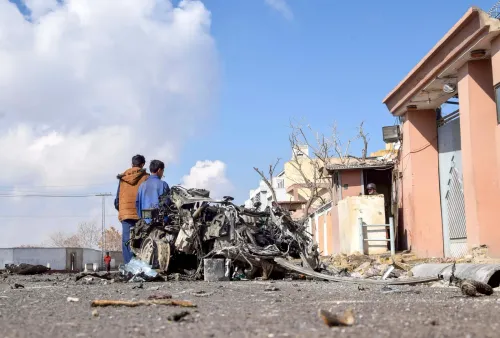
According to The Balochistan Post, citing local sources, a main Pakistani forces camp in Kharan's Patkin area was struck by five drone strikes, subsequently followed by mortar fire. In a separate incident the same day, a Pakistani forces camp in Kharan's Albat area was also targeted by a drone, though the explosive payload reportedly failed to detonate.
No armed organisation has formally claimed responsibility for Thursday's attacks. However, the BLA has a documented history of drone strikes against Pakistani military installations in Balochistan, making it the primary suspect, according to local media assessments.
The QAHR Aerial Wing and Operation Herof
The BLA earlier this year announced the formation of its aerial wing, named 'QAHR' (Qazi Aero Hive Rangers), as part of the second phase of its 'Operation Herof'. The group claimed to have targeted Pakistani forces at multiple locations under this operation, reportedly including Gwadar Port. The deployment of drones marks a significant tactical escalation by the insurgent organisation, signalling a shift from conventional ambushes to unmanned aerial capabilities.
Earlier Strike at Tarki Dam and Pattern of Escalation
The Kharan attacks followed a similar incident three days earlier, when drones targeted a Pakistani forces camp at Tarki Dam in Surab. Reports indicate that around 10 blasts were heard within that camp, though details of casualties or material losses remained unknown at the time.
This is not an isolated spike — the attacks form part of a broader pattern of intensifying militant activity across Balochistan. Earlier this week, Pakistani forces and alleged government-backed elements, described by local sources as 'death squads' outsourced by the Pakistan Army and its intelligence agencies, reportedly suffered casualties in armed attacks across Basima, Panjgur, and Turbat.
Convoy Ambushes in Basima, Panjgur, and Turbat
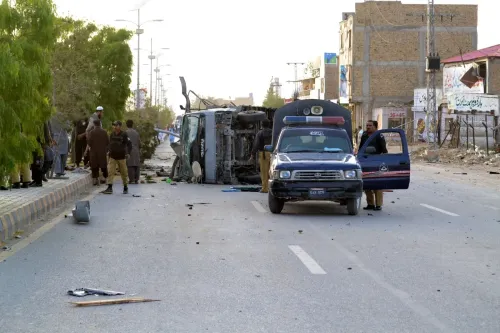
In Basima, armed men reportedly ambushed a forces convoy near the Sajid area, with local sources indicating casualties and two vehicles severely damaged. The Balochistan Post reported that clashes continued for more than two hours, with helicopters eventually arriving to reinforce the security forces.
A separate convoy was targeted in Gwargo area of Panjgur on Wednesday, when three vehicles of Pakistani forces were reportedly fired upon. In Turbat's Noduz area, gunmen targeted members of the alleged army-backed 'Death Squad', with firing reported to have lasted for an extended period. In all three incidents, authorities have not released official casualty figures, according to the report.
Context and What Comes Next
Balochistan has witnessed a sustained insurgency for decades, with the BLA and allied groups contesting Pakistani state authority across the mineral-rich province that borders both Iran and Afghanistan. The introduction of drone warfare by a non-state actor within Pakistani territory represents a notable tactical evolution that could prompt a security rethink in Islamabad. With no official acknowledgement of casualties and independent verification remaining impossible, the full scale of Thursday's attacks remains uncertain. Analysts and regional observers will be watching whether Islamabad escalates its counter-insurgency operations or chooses to keep the situation under media restriction.
Point of View
If it sustains operational tempo, could force a significant recalibration of counter-insurgency doctrine in a province already under severe economic and humanitarian stress. India and regional observers watching the China-Pakistan Economic Corridor's security calculus — anchored in Gwadar — will note that the insurgency is now targeting port infrastructure and military camps with unmanned systems simultaneously.
NationPress
30 Oct 2026
Frequently Asked Questions
What is the BLA's 'QAHR' aerial wing?
'QAHR', which stands for Qazi Aero Hive Rangers, is the drone-capable aerial wing announced by the Baloch Liberation Army (BLA) earlier in 2026 as part of Phase 2 of its 'Operation Herof'. The group has claimed multiple drone strikes against Pakistani military installations using this wing, reportedly including targets at Gwadar Port.
What happened in Kharan, Balochistan on 30 October 2026?
Pakistani forces camps in Balochistan's Kharan district were struck in a series of drone and mortar attacks on Thursday, 30 October. A camp in the Patkin area was hit by five drone strikes followed by mortar fire, while a separate camp in the Albat area was also targeted by a drone whose payload reportedly failed to detonate. No official casualty figures have been released.
Who is responsible for the Kharan drone attacks?
No armed organisation has formally claimed responsibility for the 30 October attacks at the time of reporting. However, the Baloch Liberation Army has previously claimed drone strikes against Pakistani military installations in Balochistan and operates the 'QAHR' aerial wing, making it the primary suspect according to local media assessments.
Were there other attacks in Balochistan around the same time?
Yes. Three days before the Kharan attacks, drones struck a Pakistani forces camp at Tarki Dam in Surab, with around 10 blasts reportedly heard. Earlier in the week, convoy ambushes and gun attacks were reported in Basima, Panjgur, and Turbat, with clashes in Basima lasting over two hours before helicopters arrived to reinforce the security forces.
What are the broader implications of drone use by Baloch insurgents?
The use of drones by a non-state actor within Pakistani territory represents a significant tactical escalation in the Balochistan insurgency. It signals a shift from conventional guerrilla ambushes to unmanned aerial capabilities, which could complicate Pakistan's counter-insurgency operations and raise security concerns around strategic assets like Gwadar Port.