Giriraj Singh hails Bhildi bovine research centre inauguration

Synopsis
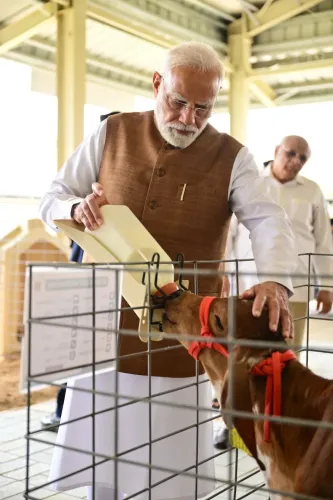
Union Minister Giriraj Singh on 30 October 2026 hailed the inauguration of the India Bovine Breeding and Research Centre at Bhildi as a concrete realisation of PM Modi's vision to link animal husbandry with science and technology for farmer prosperity.
Key Takeaways
The India Bovine Breeding and Research Centre was inaugurated at Bhildi on 30 October 2026 .
Union Minister Giriraj Singh described the inauguration as 'an important step' toward farmer and livestock-keeper prosperity.
The centre aligns with the Rashtriya Gokul Mission , launched in 2014 , to improve indigenous bovine breeds through scientific selection.
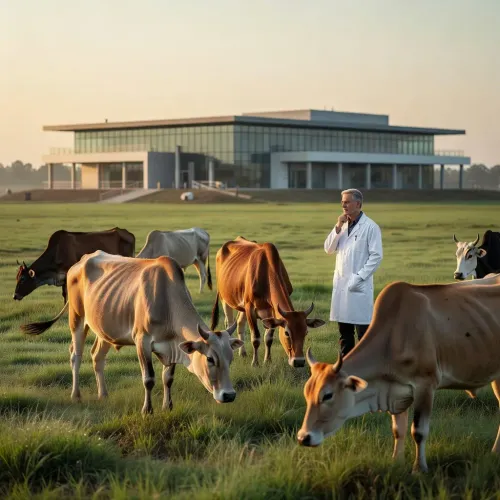
The facility is intended to advance selective breeding, genetic improvement, and bovine research at scale.
The government's broader strategy aims to diversify farmer incomes by raising per-animal productivity rather than expanding landholding.
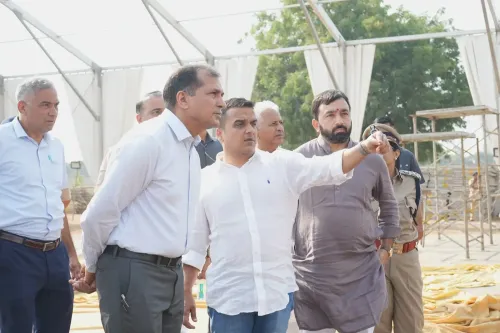
A new chapter in India's livestock science opened on Friday, 30 October 2026, as the India Bovine Breeding and Research Centre was inaugurated at Bhildi — a move Union Textiles Minister Giriraj Singh framed as the direct translation of Prime Minister Narendra Modi's long-held vision to marry animal husbandry with modern science and technology.
What went up at Bhildi today
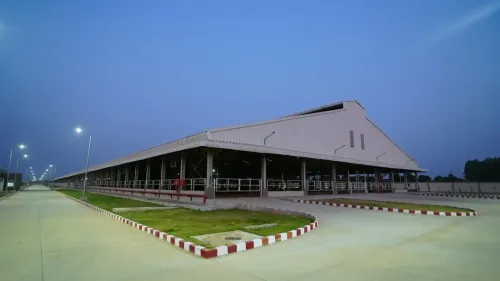
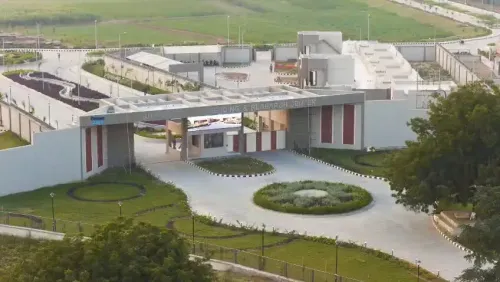
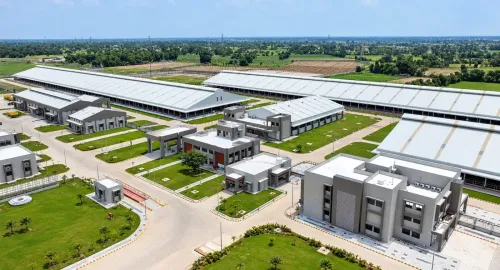
Posting on X, Giriraj Singh described the inauguration as 'ek mahatvapurn kadam' — 'an important step' — toward ensuring the prosperity of farmers and livestock keepers across the country. He credited PM Modi's 'doordarshi soch' (far-sighted thinking) for consistently linking animal husbandry to science, modern technology, and research. The India Bovine Breeding and Research Centre at Bhildi, located in Gujarat's Banaskantha district, is designed to advance selective breeding, genetic improvement, and scientific research for India's bovine population.
The Rashtriya Gokul Mission thread running through this
Today's inauguration sits firmly within a policy arc that began in 2014, when the government launched the Rashtriya Gokul Mission — a flagship programme to enhance the productivity of indigenous bovine breeds through scientific selection and structured breeding programmes. That mission established a national framework; a dedicated research centre at Bhildi now gives it a permanent institutional address. The logic is straightforward: India holds one of the world's largest cattle populations, yet per-animal milk yield has historically lagged global benchmarks. Bridging that gap through genetics and research, rather than imports, is precisely the bet the government is making.
Why livestock farmers are watching this closely
For dairy producers and livestock farmers — particularly across Gujarat, Rajasthan, and the Hindi heartland — a dedicated bovine breeding and research facility signals potential access to superior semen doses, breed improvement services, and veterinary research outputs that were previously concentrated in a handful of national institutes. The government's broader push to diversify farmer incomes beyond crop agriculture gives this centre added weight: a higher-yielding indigenous cow or buffalo directly lifts household income without demanding additional land. That is the arithmetic driving the policy, and Bhildi is now part of the equation.
The real test will come in the operational phase — whether the centre delivers breed-improvement services at scale to small and marginal livestock keepers, or remains a flagship institution whose benefits travel slowly to the last mile.
Point of View
A gap that has historically blunted the impact of well-designed national missions. If the centre operationalises breed-improvement services at village level, it could meaningfully shift the income calculus for millions of dairy-dependent households.
NationPress
30 Oct 2026
Frequently Asked Questions
What is the India Bovine Breeding and Research Centre at Bhildi?
It is a dedicated national facility inaugurated on 30 October 2026 at Bhildi to conduct scientific research on bovine breeds, advance selective breeding, and improve the genetic quality and productivity of India's cattle population.
Where is Bhildi located?
Bhildi is a town in Banaskantha district of Gujarat, an agriculturally significant region known for its dairy farming activity.
What is the Rashtriya Gokul Mission and how does it relate to this centre?
The Rashtriya Gokul Mission was launched in 2014 to enhance the productivity of indigenous bovine breeds through scientific selection and structured breeding. The Bhildi centre builds on this mission by providing dedicated institutional infrastructure for bovine breeding research.
Why did Giriraj Singh comment on a livestock centre given his role as Textiles Minister?
As a senior BJP leader and Union Minister, Giriraj Singh frequently amplifies government initiatives across sectors, especially those credited to PM Modi's policy vision. His post reflects the party's broader communication strategy around rural and agricultural development.
How will the Bhildi centre benefit farmers?
The centre aims to develop and distribute improved bovine breeds with higher milk yield, potentially raising dairy income for smallholder farmers without requiring additional land — a key government goal for diversifying rural livelihoods.