Ramaswamy Unveils 7 Ohio Day-1 Executive Orders

Synopsis
Vivek Ramaswamy has published seven Day-1 executive orders for Ohio — covering property-tax probes, sanctuary-city defunding, a data-center freeze, a Medicaid spending cap waiver, violent-crime clearance targets, contract audits, and a new inter-agency anti-fraud task force — all pledged before midnight on January 11.
Key Takeaways
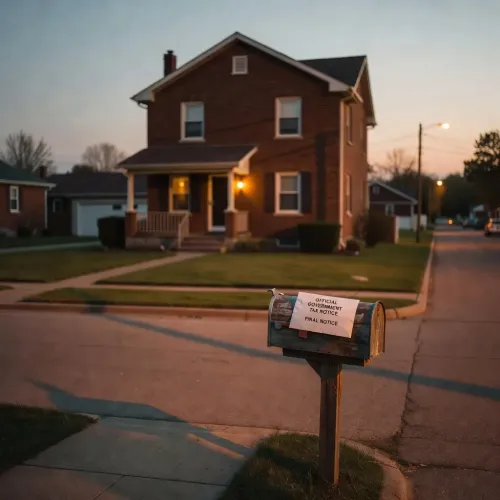
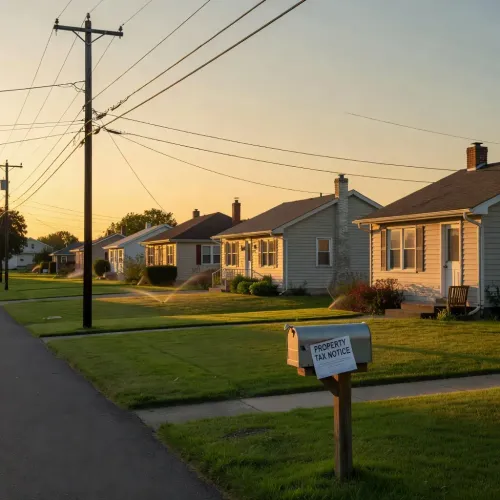
E.O. #1 triggers full investigations into any Ohio jurisdiction where property taxes have risen more than 100% since 2020 .
E.O. #2 strips state grant eligibility — including public-safety and homeland-security funding — from localities that refuse to honor federal immigration detainers.
E.O. #3 freezes all new data-center permits and approvals until the Ohio General Assembly passes comprehensive legislation.
E.O. #4 seeks a Section 1115 Medicaid waiver modelled on Tennessee's TennCare III, allowing Ohio to retain up to 55% of federal savings when spending falls below the cap.
E.O. #5 ties discretionary law-enforcement funding to violent-crime clearance rates, citing a current rate of 34% .
E.O. #7 creates an inter-agency anti-fraud task force reporting directly to the Governor, covering Medicaid, benefits, child-care, visa, voter-registration, and trucking fraud.
Seven executive orders, signed before midnight on a single day — entrepreneur Vivek Ramaswamy has published what he calls his pinned list of Day 1 commitments for Ohio, spanning property-tax investigations, immigration enforcement, data-center regulation, Medicaid reform, violent-crime clearance, contract audits, and a new anti-fraud task force. The post, shared on Friday, 30 October 2026, carries a three-word instruction at the end of its preamble: 'Buckle up.'
Property taxes and the 100% threshold
The first order directs Ohio's Department of Taxation, working alongside the Auditor of State, to review property-tax changes in every county, township, municipality, school district, and special district in the state. Any jurisdiction where property taxes have risen by more than 100% since 2020 will face a full investigation into how that additional revenue has been spent. It is a direct escalation from review to accountability — the order does not stop at publishing data; it triggers consequences.
Sanctuary cities: grants as the lever
Executive Order #2 would bar Ohio local governments from adopting policies that prevent their law enforcement from cooperating with federal immigration authorities. The enforcement mechanism is financial: any political subdivision that does not honor detainer requests or share information as federal law allows would lose eligibility for state grants administered by executive agencies — including public-safety and homeland-security grants — until it complies. The policy would also be referred for possible legal action. This approach mirrors a well-established federal playbook: conditioning grant funding on immigration cooperation has been tested in multiple administrations since the 2010s, and Ramaswamy's order applies the same logic at the state level.
Data centers in Ohio: a regulatory freeze until law catches up
Order #3 tells every state agency, board, and commission to pause action on any application, permit, incentive, or approval for a new data center. The pause is explicitly designed to give the Ohio General Assembly time to pass what Ramaswamy describes as 'comprehensive data center legislation' built around his 'non-negotiable principles.' The order lands at a moment of acute national tension: rapid growth in AI-related computing demand has outpaced energy and regulatory infrastructure in several states, making Ohio's approach a potential template — or a cautionary tale — for others.
Medicaid, the TennCare model, and keeping Ohio's savings in Ohio
Order #4 directs the Department of Medicaid to apply for a Section 1115 waiver that caps Ohio's Medicaid spending, modelled explicitly on Tennessee's TennCare III waiver. Under that arrangement, Tennessee was permitted to keep up to 55 percent of federal savings generated when it spent below its cap. Ramaswamy's order proposes similar terms so that more of every dollar of fraud Ohio stops would flow back to Ohio. Section 1115 waivers have been a tool for state Medicaid experimentation since the 1990s, but spending-cap designs have historically drawn scrutiny from federal regulators and advocates for low-income beneficiaries — making the federal response to any Ohio waiver application one of the clearest things to watch.
Violent crime, forensics, and the 34% clearance gap
Order #5 directs the Departments of Public Safety and of Rehabilitation and Corrections to prioritise violent-crime clearance rates when allocating discretionary funding to local law enforcement. The order references a current clearance rate of 34% and calls for advanced forensic science tools to drive that number 'aggressively' higher. Solving roughly one in three violent crimes means two in three go unpunished — framing that carries its own argument for urgency.
Contract review and the fraud task force
Orders #6 and #7 form the fiscal-integrity backbone of the package. The sixth order mandates a review of every executive-branch contract funded in whole or in part from the General Revenue Fund, with the Department of Administrative Services and the Office of Budget and Management required to assess each contract's legal basis, necessity, performance, cost of exit, and alternatives — then recommend continuation or termination. The seventh establishes an inter-agency anti-fraud task force reporting directly to the Governor. Its mandate is deliberately broad: Medicaid fraud, benefits fraud, child-care fraud, visa fraud, voter-registration fraud, trucking fraud, foreign CDL licensure, and abuse of foreign hiring by public entities. Experts from the private sector would sit alongside officials from the Auditor of State, the Secretary of State, and the Attorney General's offices.
Seven orders. One night. The Ohio General Assembly's next move on data-center legislation — and Washington's answer on the Medicaid waiver — will determine whether this blueprint holds.
Point of View
While the Medicaid waiver play signals an intent to use Washington's own fiscal architecture against itself. The data-center freeze is the most structurally novel move: it explicitly subordinates executive-agency permitting to legislative deliberation, a stance that inverts the usual executive-branch instinct to act first and legislate later. Whether Ohio's General Assembly moves fast enough — and whether the Biden-era waiver precedent survives a 2026 federal review — will define whether this blueprint lands as a governing model or an opening bid.
NationPress
30 Oct 2026
Frequently Asked Questions
What are Vivek Ramaswamy's Day-1 executive orders for Ohio?
Ramaswamy has listed seven executive orders he says will be signed before midnight on January 11, covering property-tax investigations, ending sanctuary-city policies, pausing data-center permits, seeking a Medicaid spending-cap waiver, prioritising violent-crime clearance, auditing state contracts, and establishing an inter-agency anti-fraud task force.
What happens to Ohio sanctuary cities under Ramaswamy's order?
Under Executive Order #2, any Ohio city, township, or county that refuses to honor federal immigration detainer requests or share information with federal immigration authorities would lose eligibility for state grants — including public-safety and homeland-security grants — until it complies, and the policy would be referred for possible legal action.
Why is Ramaswamy pausing data center projects in Ohio?
Executive Order #3 freezes all new data-center applications, permits, and incentives to allow the Ohio General Assembly time to pass comprehensive data-center legislation built around what Ramaswamy calls his non-negotiable principles, reflecting a broader national debate over AI-driven energy and infrastructure demand.
What is the TennCare model Ramaswamy wants Ohio to follow for Medicaid?
TennCare III was a Section 1115 waiver that capped Tennessee's Medicaid spending and allowed the state to keep up to 55% of federal savings when it spent below the cap. Ramaswamy's Order #4 directs Ohio's Department of Medicaid to apply for a similar waiver so more fraud-prevention savings stay in Ohio.
What is Ohio's current violent-crime clearance rate according to Ramaswamy?
Ramaswamy's fifth executive order cites a current violent-crime clearance rate of 34% in Ohio and directs the Departments of Public Safety and of Rehabilitation and Corrections to prioritise raising that figure through discretionary funding tied to clearance performance and advanced forensic science.