CM Dhami Credits Modi's 12-Year Leadership for Uttarakhand's Rise
Synopsis
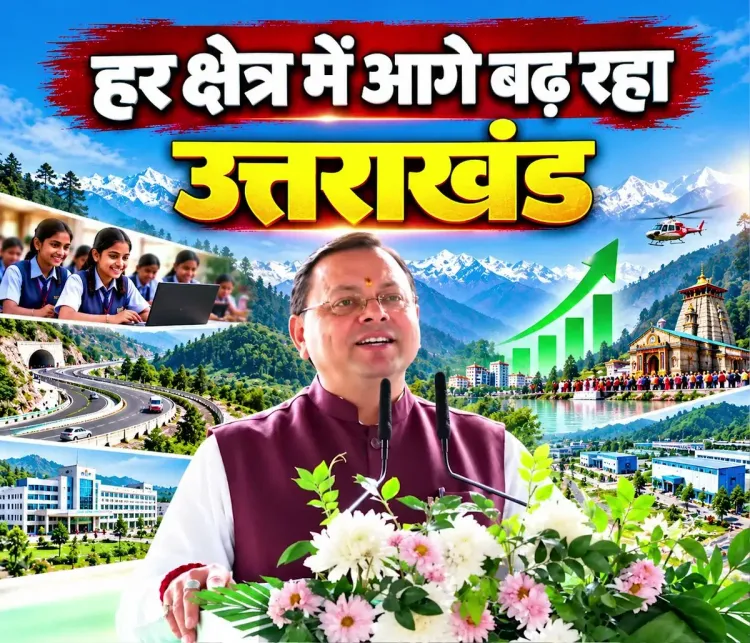
Uttarakhand CM Pushkar Singh Dhami praised PM Modi's 12-year leadership on October 30, 2026, citing 'unprecedented progress' in connectivity, tourism, agriculture, and employment, invoking the Atmanirbhar Uttarakhand vision.
Key Takeaways
CM Pushkar Singh Dhami credited PM Narendra Modi 's 12 years of leadership for Uttarakhand's multi-sector development on October 30, 2026 .
Sectors highlighted include road, rail, and air connectivity, tourism, agriculture, education, health, and employment.
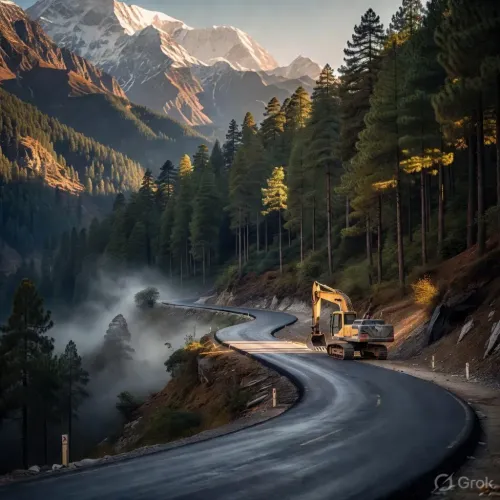
The Char Dham Pariyojana (announced 2016 ) upgraded highway links to Uttarakhand's four major pilgrimage sites, anchoring the connectivity claim.
The Atmanirbhar Bharat programme ( 2020 ) provided the self-reliance framework cited in Dhami's 'aatmanirbhar Uttarakhand' vision.
Uttarakhand's borders with China and Nepal give its infrastructure development a strategic dimension beyond economic progress.
The post follows a pattern of BJP chief ministers crediting central leadership at the 12-year milestone of the 2014 mandate.
Twelve years into Narendra Modi's tenure as Prime Minister, Uttarakhand Chief Minister Pushkar Singh Dhami on Friday, October 30, 2026 laid out a sweeping claim: that the Himalayan state has scaled new heights of development across every major sector — and that the credit sits squarely at the centre's door.
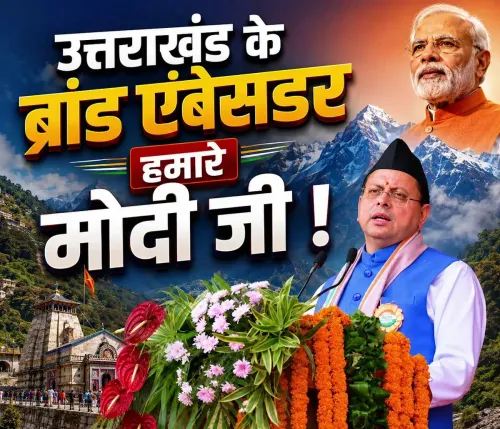
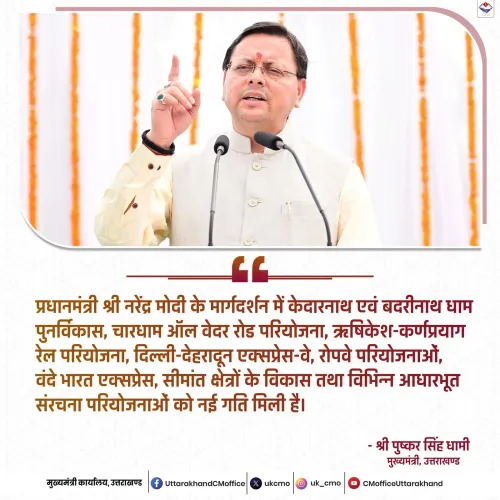
In his post on X, CM Dhami wrote — 'पिछले 12 वर्षों में आदरणीय प्रधानमंत्री श्री नरेंद्र मोदी जी के नेतृत्व एवं मार्गदर्शन में उत्तराखंड विकास की नई ऊंचाइयों की ओर अग्रसर है' ('In the last 12 years, under the leadership and guidance of respected Prime Minister Narendra Modi, Uttarakhand is advancing towards new heights of development'). He listed road, rail and air connectivity, tourism, agriculture, education, health, and employment as domains of 'unprecedented progress,' and tied all of it to the larger vision of a 'strong, prosperous, and self-reliant Uttarakhand.'
Connectivity and Pilgrimage: The Signature Projects Behind the Claim
The connectivity reference carries real weight in a state defined by its terrain. The Char Dham Pariyojana, announced in 2016, set out to widen and upgrade the highway network linking Uttarakhand's four major pilgrimage sites — Badrinath, Kedarnath, Gangotri, and Yamunotri — transforming access to some of the subcontinent's most-visited religious destinations. For a state whose economy leans heavily on spiritual tourism, the project is more than infrastructure: it is the circulatory system of the local economy.
Beyond roads, rail and air connectivity improvements have gradually shrunk the distance between the plains and the hills. The broader Atmanirbhar Bharat programme, launched in 2020, gave state governments a framework to align local agricultural and industrial policy with the central self-reliance narrative — a thread CM Dhami explicitly picks up in his framing of an 'aatmanirbhar Uttarakhand.'
The BJP's Tested Playbook — and Why It Still Resonates
Uttarakhand is no ordinary BJP-governed state. Formed in 2000, it shares borders with both China and Nepal, giving its infrastructure story a strategic dimension that goes well beyond development optics. Roads that ease pilgrim traffic also serve military logistics — a fact that has historically accelerated central attention and funding for the state's connectivity gaps.
The framing of CM Dhami's post is a recognisable BJP template: the chief minister as grateful executor of a vision set from New Delhi, with Modi's name front-and-centre as the animating force. Similar tributes have emerged from BJP chief ministers across the Hindi belt at the twelve-year mark of the 2014 general election mandate. The consistency is deliberate — it reinforces the party's central argument that governance outcomes in states are a function of aligned national leadership.
What the post does not offer is granular data — specific kilometre figures, budget allocations, or employment numbers that would allow independent verification of the 'unprecedented progress' claim. The narrative is directional, not quantitative. That gap is worth noting, even as the policy infrastructure behind the claim is real and documented.
With the next Union Budget cycle and ongoing road and rail projects in the pipeline, Uttarakhand's trajectory will soon have fresh numbers attached — and those numbers will either vindicate the rhetoric or complicate it.
Point of View
Where state-level outcomes are consistently narrated as extensions of New Delhi's vision rather than independent governance achievements. At the twelve-year mark of Modi's premiership, such tributes serve a dual purpose: they reinforce party unity optics and position the chief minister as a loyal implementer ahead of any electoral cycle. For Uttarakhand specifically, the self-reliance and connectivity narrative is grounded in real flagship projects — the Char Dham corridor and Atmanirbhar Bharat — but the absence of granular data leaves the claim in the realm of assertion. The next Union Budget's Uttarakhand allocations and project completion timelines will be the real scorecard.
NationPress
30 Oct 2026
Frequently Asked Questions
What development claims did CM Dhami make about Uttarakhand under Modi?
CM Dhami claimed that over the last 12 years under PM Modi's leadership, Uttarakhand has made unprecedented progress in road, rail, and air connectivity, tourism, agriculture, education, health, and employment, moving toward a 'strong, prosperous, and self-reliant Uttarakhand.'
What is the Char Dham Pariyojana and why is it significant for Uttarakhand?
The Char Dham Pariyojana, announced in 2016, is a central government project to upgrade highway infrastructure connecting Uttarakhand's four major Hindu pilgrimage sites — Badrinath, Kedarnath, Gangotri, and Yamunotri. It is significant because spiritual tourism is a cornerstone of the state's economy.
What is Atmanirbhar Bharat and how does it relate to Uttarakhand?
Atmanirbhar Bharat is a national self-reliance programme launched in 2020. Uttarakhand, like other BJP-governed states, has aligned its local agricultural and industrial policies with this framework, which CM Dhami references as the 'aatmanirbhar Uttarakhand' vision.
Why is Uttarakhand's infrastructure development strategically important?
Uttarakhand shares international borders with both China and Nepal, meaning road and connectivity projects there serve military logistics and national security purposes alongside their economic and tourism functions, attracting heightened central government attention and funding.
When did Pushkar Singh Dhami become Chief Minister of Uttarakhand?
Pushkar Singh Dhami has been serving as Chief Minister of Uttarakhand since 2021. He is a BJP leader and has been a prominent voice for the party's development narrative in the Himalayan state.