Modi: Centre spent ₹16 lakh crore on fertiliser subsidies to shield farmers
Synopsis
At PM Kisan Utsav Diwas in Gujarat's Bhildi, Modi revealed the Centre has spent ₹16 lakh crore on fertiliser subsidies alone — part of a broader ₹50 lakh crore farm-sector support claim. With the agriculture budget up fivefold since 2013-14 and 12 lakh solar pumps distributed, the speech was as much a political accounting exercise as a policy address.
Key Takeaways
PM Modi announced the Centre has spent around ₹16 lakh crore on fertiliser subsidies to protect farmers from rising global input costs.
He said farmers had received or saved more than ₹50 lakh crore through various government schemes and decisions.
The agriculture budget has grown more than fivefold compared with 2013-14 , according to Modi.
More than ₹2 lakh crore has been paid out as crop insurance compensation over the past 10–12 years .
Around 12 lakh solar pumps have been distributed under the PM-KUSUM scheme. ₹24 lakh crore has been transferred to wheat and paddy farmers as MSP payments over the last 12 years , Modi said.
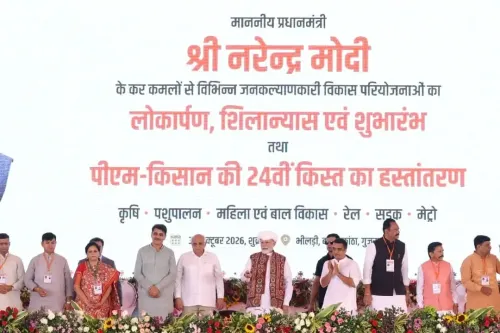
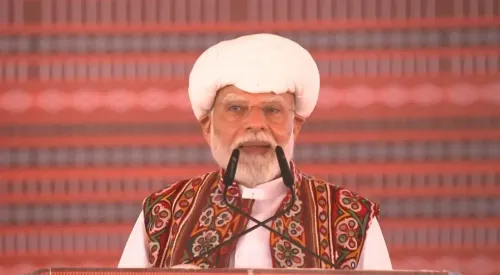
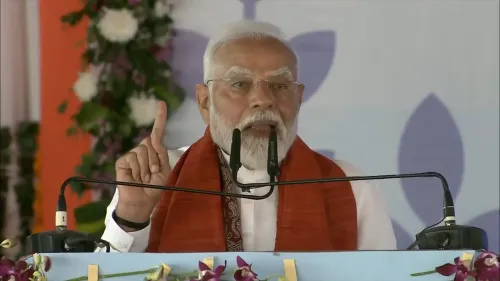
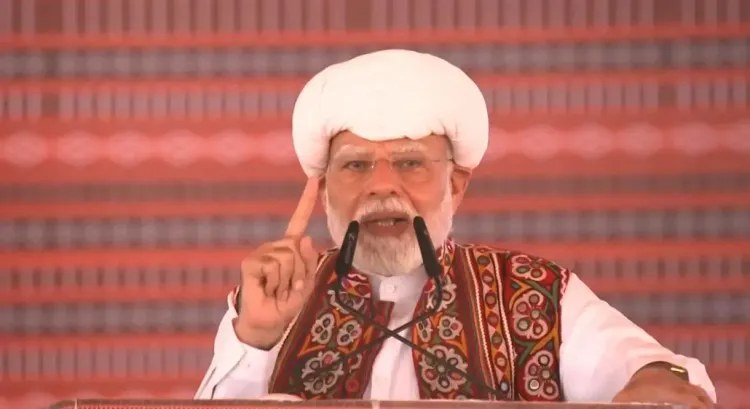
Prime Minister Narendra Modi on Friday, 30 October 2026, said the Centre has spent around ₹16 lakh crore on fertiliser subsidies over the past several years to protect farmers from the impact of surging international fertiliser prices driven by global uncertainty. He made the announcement while addressing farmers at a national-level PM Kisan Utsav Diwas programme in Bhildi, Banaskantha district, Gujarat.
Key Announcement at PM Kisan Utsav Diwas
Speaking directly to the farming community, Modi said global disruptions had caused sharp spikes in fertiliser prices internationally, but the government had chosen to absorb those additional costs rather than pass them on to cultivators. 'Over the past few years, amid global uncertainty, fertiliser prices have risen sharply. But our government, which is dedicated to farmers, did not allow this burden to fall on them. The government has spent around Rs 16 lakh crore on this,' he said.
The Prime Minister explained that the subsidies are designed to ensure farmers can continue purchasing key fertilisers at prices well below their actual market cost — directly safeguarding agricultural production and keeping cultivation expenses in check.
Broader Agricultural Support: The Numbers
Modi placed the fertiliser figure within a wider accounting of the government's farm-sector spending. He said the agriculture budget had grown more than fivefold compared with 2013-14, and that farmers had received or saved more than ₹50 lakh crore through various government schemes and policy decisions over the years.
Among the key interventions he cited were direct income support through the PM-KISAN scheme, minimum support prices (MSP), crop insurance, and solar-powered irrigation. He also stated that more than ₹2 lakh crore had been paid to farmers as crop insurance compensation over the past 10–12 years, and that around 12 lakh solar pumps had been distributed under the PM-KUSUM scheme.
MSP and a Dig at Previous Governments
Modi also used the occasion to draw a sharp contrast with earlier administrations on the question of MSP. 'Earlier governments were also deceiving farmers on the issue of MSP. But it is our government that has fulfilled the promise of MSP. In the last 12 years, Rs 24 lakh crore has gone into the accounts of wheat and paddy farmers as MSP,' he said.
The remark reflects a recurring political message from the ruling Bharatiya Janata Party (BJP) — that its tenure has represented a structural shift in how the state supports agricultural incomes, particularly on input costs and price guarantees. Critics, however, have in the past questioned whether MSP benefits reach the majority of small and marginal farmers who lack access to government procurement infrastructure.
Gujarat Visit and Other Inaugurations
The Prime Minister was in Gujarat for a two-day visit beginning Friday, with programmes spread across Banaskantha and Ekta Nagar. In Banaskantha, he also inaugurated the Bharat Bovine Breeding and Research Centre (BBBRC) and launched several projects linked to agriculture, animal husbandry, and infrastructure development in the region.
This comes amid a sustained government push to consolidate its rural and farmer-facing narrative ahead of upcoming state electoral cycles, with subsidy data and direct-benefit-transfer figures being prominently deployed at public events.
Point of View
But the government has not yet provided a year-by-year breakdown or an independent audit of the claim — something that would allow voters and economists to assess its credibility. More broadly, the ₹50 lakh crore 'received or saved' metric bundles together direct transfers, subsidised inputs, and notional savings, making independent verification difficult. The MSP claim, too, obscures a structural gap: the majority of India's small and marginal farmers are not plugged into government procurement, meaning headline transfer figures can overstate reach. That said, the fertiliser subsidy architecture has genuinely shielded cultivators from a commodity price cycle that hit many other agriculture-dependent economies hard post-2022.
NationPress
30 Oct 2026
Frequently Asked Questions
How much has the Centre spent on fertiliser subsidies for farmers?
Prime Minister Narendra Modi said on 30 October 2026 that the Centre has spent around ₹16 lakh crore on fertiliser subsidies over the past several years. The spending was aimed at absorbing rising international fertiliser costs so that farmers would not face higher input prices.
What is PM Kisan Utsav Diwas and where was it held?
PM Kisan Utsav Diwas is a national-level government programme recognising and celebrating farmer welfare initiatives. The 2026 event was held in Bhildi, Banaskantha district, Gujarat, where Prime Minister Modi addressed a large gathering of farmers.
What other agricultural support did Modi highlight at the event?
Modi cited a more than fivefold increase in the agriculture budget since 2013-14, over ₹2 lakh crore in crop insurance payouts over 10–12 years, distribution of around 12 lakh solar pumps under PM-KUSUM, and ₹24 lakh crore in MSP payments to wheat and paddy farmers over 12 years.
What did Modi say about MSP and previous governments?
Modi claimed that earlier governments had deceived farmers on MSP commitments, while his government had fulfilled those promises, channelling ₹24 lakh crore directly into the accounts of wheat and paddy farmers over the past 12 years through MSP payments.
What else did Modi inaugurate during his Gujarat visit?
During his two-day Gujarat visit starting 30 October 2026, Modi inaugurated the Bharat Bovine Breeding and Research Centre (BBBRC) in Banaskantha and launched several projects related to agriculture, animal husbandry, and infrastructure. He also had programmes scheduled at Ekta Nagar.