PM Modi's Independence Day speech: 15 key takeaways for Viksit Bharat 2047
Synopsis
Modi's 80th Independence Day address was less a speech and more a national balance sheet — seven pillars, 15 priorities, and targets stretching to 2047. From three semiconductor plants already underway to training 1 crore youth in AI within a year, the Red Fort address set the most detailed Viksit Bharat blueprint yet.
Key Takeaways
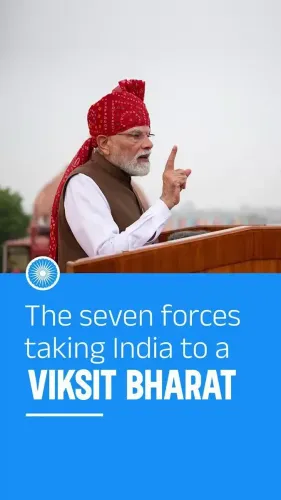
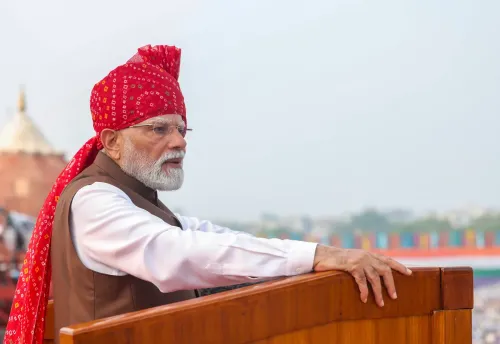
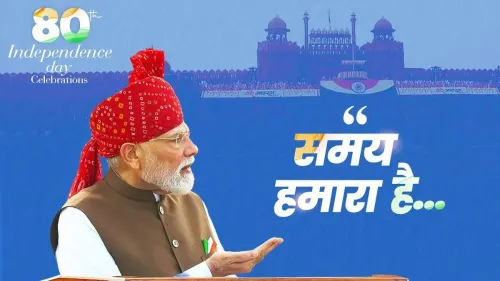
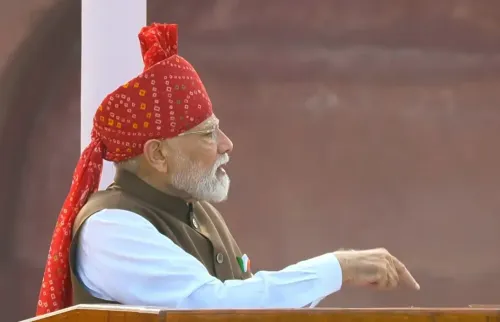
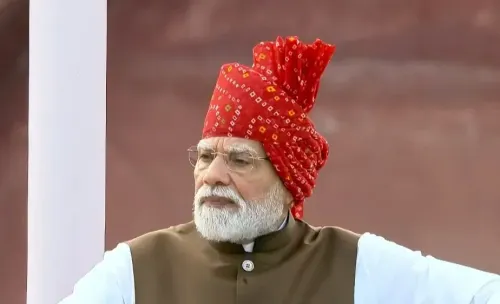
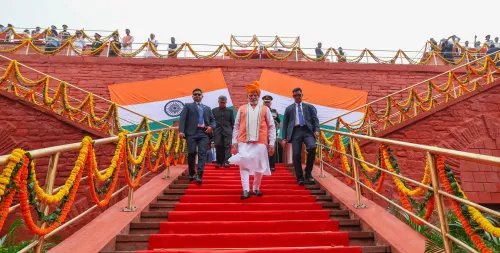
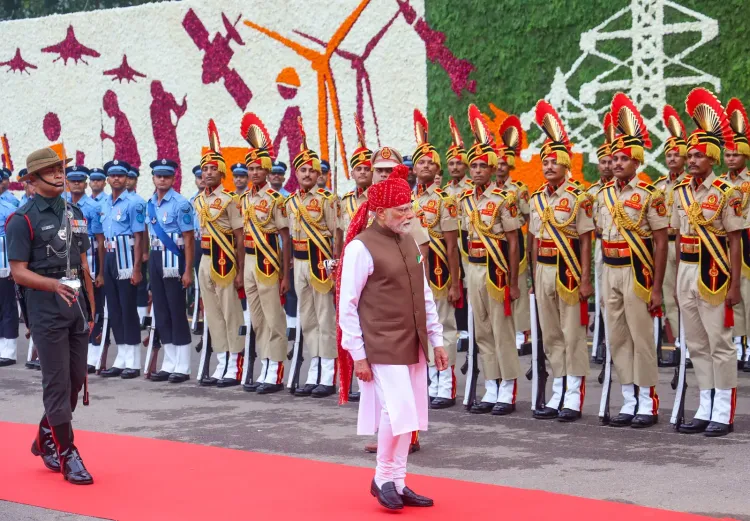
PM Modi addressed the nation on 15 August 2025 , India's 80th Independence Day , from the Red Fort .
The speech outlined 15 priorities across seven pillars: manufacturing, agriculture, technology, defence, energy, infrastructure and soft power.
India targets 100 GW of nuclear power capacity by 2047 , alongside solar, green hydrogen and green mobility expansion.
Three domestic semiconductor plants have been initiated; more are expected in coming years.
The government plans to train 1 crore youth in AI skills within the next year, backed by a ₹1 lakh crore Innovation Fund .
Goals include 6 crore Lakhpati Didis and 33% women's representation in legislatures as markers of inclusive development.
Prime Minister Narendra Modi on 15 August 2025 laid out an expansive roadmap for a developed India from the ramparts of the Red Fort, marking the country's 80th Independence Day. Anchoring his address in the Viksit Bharat 2047 vision, Modi placed citizens, youth, farmers, entrepreneurs and innovators at the centre of the nation's next chapter, identifying seven pillars — manufacturing, agriculture, technology, defence, energy, infrastructure and soft power — as the engines of transformation.
Self-Reliance and Manufacturing
Aatmanirbhar Bharat remained a central theme, with Modi pressing for a stronger Make in India push that takes Indian products from domestic shelves to global markets. He called for India to own the full manufacturing value chain — from design and components through to finished goods — and to build a global identity rooted in reliability, precision and quality.
On semiconductors, Modi noted that three domestic fabrication plants have already been initiated, with more expected in the coming years, signalling a concrete step toward ending India's dependence on imported chips.
Agriculture, Technology and Energy
Farmers were urged to move beyond primary production into food processing and exports, with greater emphasis on chemical-free farming that meets international standards. On technology, Modi identified AI, quantum computing, robotics, space, data centres, semiconductors and next-generation communications as the pillars of India's innovation economy.
For energy security, the Prime Minister set a target of 100 GW of nuclear power capacity by 2047, alongside rapid expansion in solar energy, green hydrogen, energy storage and green mobility. Near-total railway electrification, modern coaches and the development of hydrogen-powered trains were cited as markers of India's clean transport push.
Infrastructure, Defence and Digital India
Modi reaffirmed the Gati Shakti framework, committing to seamless national connectivity through high-speed rail, modern highways, airports, inland waterways and multimodal logistics. On defence, he articulated a clear goal: India must become a global defence supplier, with advanced capabilities in drones, counter-drone systems, hypersonic technologies and cybersecurity.
On digital leadership, Modi pointed to UPI and India's Digital Public Infrastructure as proof of the country's capabilities, and set the next goal as exporting Indian digital technologies and Made-in-India 6G to the world.
Youth, Women and Inclusive Growth
India's 2.5 lakh registered start-ups and a ₹1 lakh crore Innovation Fund were cited as evidence of the government's bet on young entrepreneurs. The government also plans to train 1 crore young people in AI skills over the next year, aiming to position India's youth as leaders in the global AI economy.
On inclusion, Modi highlighted the goal of 6 crore Lakhpati Didis, expanded healthcare and social security coverage, and reiterated the call for 33% representation for women in legislatures as pillars of equitable development.
Soft Power and the Road to 2047
From yoga, Ayurveda and textiles to films, VFX, animation and gaming, Modi called on India to leverage its cultural depth to strengthen its global footprint. The overarching message of the address was one of resolve: that India's next chapter must convert ambition into strength, and strength into measurable success — with every citizen contributing to the Viksit Bharat journey by 2047.
Point of View
Which is both a strength and a vulnerability. The semiconductor push, with three plants initiated, is the most concrete industrial signal in the speech; whether those plants hit commercial scale on schedule will be the real test of the Aatmanirbhar narrative. The Lakhpati Didi and 33% women's reservation goals have been on the agenda for several years, and progress on the latter remains stalled in state legislatures. The breadth of the vision — seven pillars, 15 priorities, a 22-year horizon — risks diffusion: without a ranked, funded execution order, a comprehensive blueprint can also be a convenient shield against accountability on any single front.
NationPress
30 Sept 2026
Frequently Asked Questions
What is the Viksit Bharat 2047 vision outlined by PM Modi?
Viksit Bharat 2047 is Prime Minister Modi's framework for transforming India into a fully developed nation by the centenary of its independence. The vision spans seven pillars — manufacturing, agriculture, technology, defence, energy, infrastructure and soft power — with specific targets such as 100 GW of nuclear power and AI skilling for 1 crore youth.
What did PM Modi say about India's semiconductor ambitions?
Modi confirmed that three domestic semiconductor fabrication plants have already been initiated, with more expected in coming years. The goal is to build a self-sufficient semiconductor ecosystem and reduce India's dependence on imported chips.
What is the government's AI skilling target announced on Independence Day?
The government plans to train 1 crore young Indians in AI skills over the next year, aiming to make India's youth competitive leaders in the global AI economy. This is backed by a ₹1 lakh crore Innovation Fund supporting start-ups and research.
What energy targets did Modi announce in the Independence Day speech?
Modi set a target of 100 GW of nuclear power capacity by 2047, alongside rapid expansion in solar energy, green hydrogen, energy storage and green mobility. Near-total railway electrification and hydrogen-powered trains were also highlighted as clean transport priorities.
What did Modi say about women's inclusion and the Lakhpati Didi scheme?
Modi reiterated the goal of 6 crore Lakhpati Didis — women earning over ₹1 lakh annually through self-help group enterprises — and renewed the call for 33% representation for women in legislatures, framing both as central to India's inclusive development agenda.