Trump bets on AI and robotics to reshape US military power

Synopsis
At a Pittsburgh summit packed with defence contractors and venture capitalists, Trump declared AI and robotics the new backbone of American military power — and the Pentagon's procurement rulebook is being rewritten to match. With a $450 million AI expansion and hundreds of millions in robotics investment announced on the spot, this is the most concentrated private-capital alignment with US defence priorities in years.
Key Takeaways
President Donald Trump declared the US military is being restructured around AI, robotics, and frontier technologies at the Pennsylvania Defense and Innovation Summit on 16 July .
Defence Secretary Pete Hegseth announced the Pentagon is abandoning its slow procurement model in favour of commercial competition and speed.
AI firm AIR announced a $450 million expansion of its Pittsburgh operations; Voyager Technologies pledged hundreds of millions to build a robotics and space hub in the city.
Carnegie Robotics said it expected to produce hundreds of millions of dollars' worth of autonomous technology for the US Army .
Hegseth warned that nations falling behind on AI, autonomy, quantum, and hypersonics now will fall 'even further behind' over time.
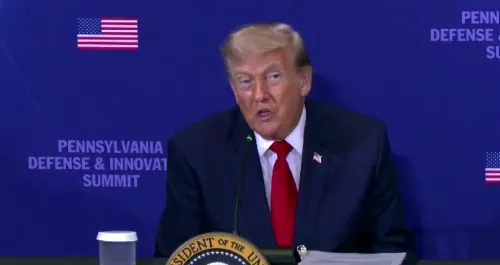
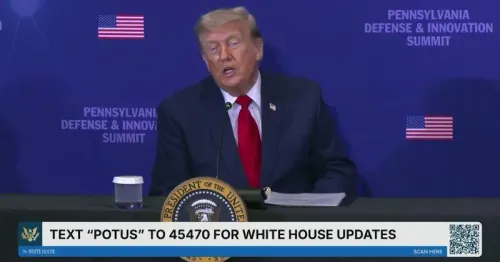
US President Donald Trump on Wednesday, 16 July declared that the United States is fundamentally restructuring its armed forces around artificial intelligence, robotics, and other frontier technologies, as his administration pushes to accelerate defence innovation ahead of what officials describe as the next generation of warfare. The announcement came at the Pennsylvania Defense and Innovation Summit in Pittsburgh, where Trump was joined by top Pentagon officials and executives from defence contractors, technology firms, and private equity investors.
What Trump Said at the Summit
'The talent and innovation in this room will keep America safe for many years to come,' Trump told attendees. 'They are very advanced, the most advanced equipment anywhere in the world.' The summit drew together major players across the defence-tech ecosystem, many of whom unveiled fresh investment commitments in advanced manufacturing and military technology.
Pentagon's Shift Away from Slow Procurement
Defence Secretary Pete Hegseth signalled a decisive break from the Pentagon's traditional acquisition model, saying the department was abandoning a slow, bureaucracy-driven procurement process in favour of one built on commercial competition and technological speed. 'Our bureaucracy was built to keep most of you out, and we've been waging a war of attrition against the Pentagon bureaucracy to open up the aperture and make sure competition and speed and innovation and commercial options have a seat at the table,' Hegseth said. He added that companies should no longer need to 'sue their way into the Department of War' to compete for contracts — a pointed reference to the legal battles that have historically blocked smaller tech firms from Pentagon deals.
Key Investments Announced at Pittsburgh
Voyager Technologies said it would invest hundreds of millions of dollars to transform Pittsburgh into an international hub for robotics and space technology. AI software company AIR announced a $450 million expansion of its Pittsburgh operations. Carnegie Robotics said it expected to produce hundreds of millions of dollars' worth of autonomous technology for the US Army and its vehicle fleet. Investor Antonio Gracias said the administration had 'fundamentally changed the environment' for defence technology companies, arguing it was 'unleashing American entrepreneurship in the defence area.' Thomas Tull, Co-Chairman of TWG Global, said the policy shift was enabling billions in investment that would otherwise not have been possible.
Why AI and Autonomy Are Now Central to US Strategy
Hegseth framed the technology race in stark terms: 'AI and frontier models, autonomy, quantum space, hypersonics — you name it. If you're ahead now and you get ahead of the game, you're going to be way ahead. If you fall behind now, you fall even further behind.' Pentagon officials have been steadily expanding partnerships with commercial technology companies over recent months, accelerating the integration of AI, autonomous systems, and quantum technologies across the armed forces. This summit marks one of the most public and concentrated displays of that effort to date.
What Comes Next
The administration's push signals a structural reorientation of US defence spending toward commercial and dual-use technologies — a model that mirrors, and seeks to outpace, similar moves by rival powers. With billions in private capital now formally aligned with Pentagon priorities, the pace of adoption across the armed forces is expected to accelerate significantly in the coming months.
Point of View
And Hegseth's war-of-attrition framing against his own bureaucracy is unusually candid. But the deeper question is whether speed and commercial incentives alone produce the right kind of military capability, or whether they simply accelerate procurement of whatever Silicon Valley is already building. The concentration of venture capital and defence contracts in a single room also raises accountability questions that the administration has not yet answered: who sets requirements, who audits outcomes, and what happens when a $450 million AI contract underdelivers in a conflict scenario?
NationPress
14 Oct 2026
Frequently Asked Questions
What did Trump announce at the Pennsylvania Defense and Innovation Summit?
President Trump declared that the US military is being rebuilt around artificial intelligence, robotics, autonomous systems, and other frontier technologies. He made the announcement on 16 July at a Pittsburgh summit attended by defence contractors, technology firms, and private investors.
What is the Pentagon changing about its procurement process?
Defence Secretary Pete Hegseth said the Pentagon is moving away from its historically slow, bureaucracy-driven acquisition model toward one that prioritises commercial competition, innovation, and speed. He said companies should no longer need to take legal action to compete for defence contracts.
Which companies announced investments at the Pittsburgh summit?
AI software company AIR announced a $450 million expansion of its Pittsburgh operations. Voyager Technologies pledged hundreds of millions to develop Pittsburgh as a robotics and space technology hub. Carnegie Robotics said it expects to produce hundreds of millions of dollars' worth of autonomous technology for the US Army.
Why is the US focusing on AI and autonomy for its military?
Pentagon officials argue that AI, autonomous systems, quantum technologies, and hypersonics will define future military capability. Hegseth warned that nations that fall behind on these technologies now will fall even further behind, framing the moment as a pivotal inflection point in military competition.
Who attended the Pennsylvania Defense and Innovation Summit?
The summit brought together executives from major defence contractors, technology companies, venture capital firms, and private equity investors. Notable attendees included investor Antonio Gracias and TWG Global Co-Chairman Thomas Tull, both of whom spoke about the administration's impact on defence-tech investment.