NATO defence spending surge powers US arms manufacturing boom, Trump says
Synopsis
Trump used the Ankara NATO summit to reframe European rearmament as an American jobs story. With $150 billion in allied defence spending flowing largely into US-made weapons, and $3 billion in new deals signed at the summit, the US defence industrial base is on an expansion footing not seen in decades — if the production timelines Trump cited hold.
Key Takeaways
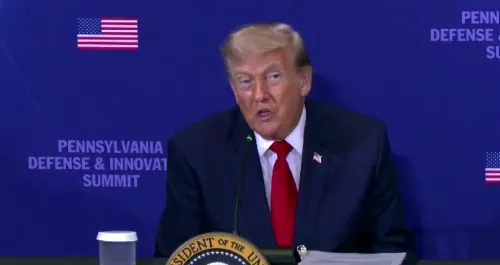
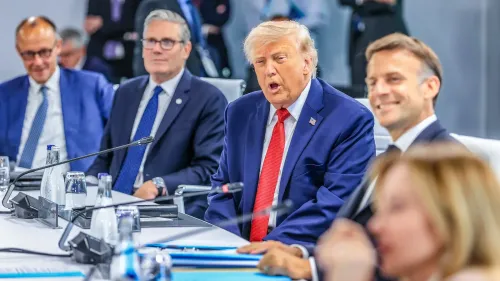
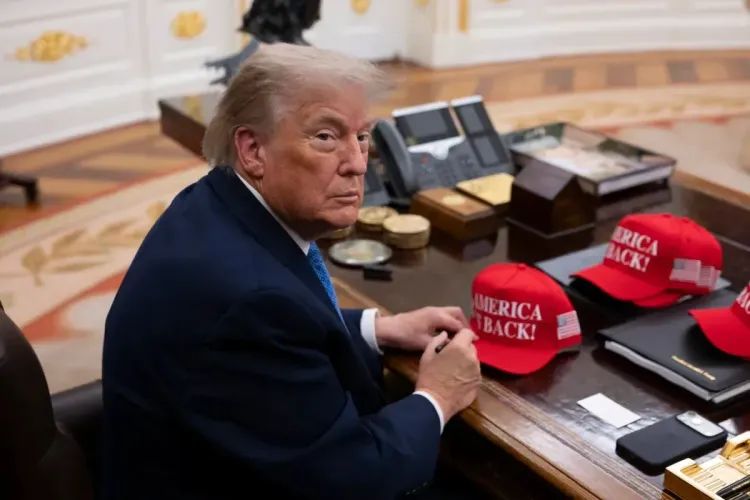
President Trump spoke at a news conference after the NATO summit in Ankara on 8 July .
NATO member defence spending surged by nearly $150 billion in 2025 , much of it directed at American-made equipment, according to Trump.
New defence investment deals worth $3 billion were announced at the summit, involving Lockheed Martin , Northrop Grumman , Rheinmetall , and Anduril .
Trump said the production backlog for major weapons systems could shrink to a one-to-two-week wait within 18 months .
NATO allies have adopted a new defence spending benchmark of five per cent of GDP , up from the previous two-per-cent target.
Trump projected allied defence spending would collectively exceed $1 trillion a year .
President Donald Trump on Wednesday, 8 July declared that a dramatic rise in NATO defence spending was driving a manufacturing boom across the United States, as European allies accelerate purchases of American-made weapons and major US defence contractors scale up production capacity to meet what Trump called unprecedented global demand. Trump made the remarks at a news conference following the NATO summit in Ankara.
Key Developments at the Ankara Summit
Trump said NATO member states had adopted a new benchmark of spending five per cent of GDP on defence, a threshold he described as a historic turning point for the US defence industry. He credited the commitment with unlocking a surge in allied procurement. 'As a result of the commitment we achieved last year, defence spending of other NATO members surged by almost $150 billion in 2025, and much of that money is being spent on American-made equipment,' Trump said.
The President also announced $3 billion in new defence investment agreements unveiled at the summit, spanning missile systems, drone technology, and sustainment infrastructure across Europe.
What US Defence Companies Are Building
Trump named Lockheed Martin, Raytheon, Boeing, and Northrop Grumman as among the manufacturers expanding production after years of running round-the-clock shifts to fill orders. He said he had pushed companies to build new facilities rather than rely on overtime. 'I said, that’s not the way to do it. You have to build more plants,' he said.
Specific deals announced at the summit include Lockheed Martin establishing a Patriot missile sustainment facility in Europe, Northrop Grumman proceeding with the sale of advanced American drone technology, a partnership between Lockheed Martin and Rheinmetall to produce Army Tactical Missile Systems (ATACMS), and Anduril manufacturing its new Barracuda missile system for Poland.
Trump's Claims on Production Timelines
Trump projected that the current backlog for major weapons systems — which he said currently runs to a year or two — would shrink sharply within 18 months. 'We think within a year, year and a half, max, instead of waiting for a year or two years, we’ll be having it on a two-week wait, maybe a one-week wait,' he said. He added that some manufacturers were building as many as three, four or five new production facilities, which he said would 'quadruple the output' of missiles, munitions, and other military systems.
Jobs and Economic Argument
Trump framed the defence spending surge primarily as an economic and employment story for the United States. 'I think all of these agreements directly benefit the US defence industry base and what it really does is… jobs,' he said. He projected that the alliance would collectively channel over $1 trillion a year toward defence, and argued that allied governments preferred American-built equipment because, in his words, 'it works better.'
This comes amid a broader transatlantic debate over burden-sharing that has defined US-NATO relations for years. The five-per-cent GDP target marks a significant escalation from the previous two-per-cent benchmark, and its adoption signals a structural shift in European defence posture — one that, if sustained, would make the US defence industrial base a primary beneficiary. Whether the production expansion Trump described materialises on the timelines he cited will be closely watched by both allied governments and defence investors.
Point of View
And the claim that backlogs will shrink to a one-to-two-week wait within 18 months strains credibility given well-documented supply chain constraints in the US defence industrial base. More importantly, the five-per-cent GDP target is aspirational — most European members are only now reaching two per cent. The deals announced in Ankara are real, but the gap between summit announcements and delivered hardware has historically been wide. The story to watch is not what was signed in Ankara, but what gets built and delivered — and on whose timeline.
NationPress
7 Oct 2026
Frequently Asked Questions
What did Trump announce at the NATO summit in Ankara?
Trump announced $3 billion in new defence investment agreements at the NATO summit in Ankara on 8 July, including a Patriot missile sustainment facility in Europe by Lockheed Martin, advanced drone technology sales by Northrop Grumman, an ATACMS production partnership between Lockheed Martin and Rheinmetall, and Anduril's Barracuda missile system for Poland.
How much did NATO defence spending increase in 2025?
According to Trump, NATO member defence spending surged by nearly $150 billion in 2025, with a significant portion directed toward American-made military equipment. He attributed the increase to the alliance adopting a five-per-cent-of-GDP defence spending benchmark.
Which US defence companies are expanding production?
Trump named Lockheed Martin, Raytheon, Boeing, and Northrop Grumman as companies expanding production capacity. He said they had previously relied on round-the-clock shifts and were now building new manufacturing facilities to meet demand.
What is the new NATO defence spending target?
NATO members have adopted a benchmark of spending five per cent of their gross domestic product on defence, a significant increase from the previous two-per-cent target. Trump described this as creating a historic opportunity for the US defence industry.
When does Trump expect weapons production backlogs to clear?
Trump said he expects the backlog for major weapons systems — currently running at one to two years — to shrink to a one-to-two-week wait within approximately 18 months, as new manufacturing plants come online and output potentially quadruples.