NATO chief credits Trump factor as Italy, Spain raise defence spending
Synopsis
NATO's Secretary General Mark Rutte has done something unusual: publicly credited Donald Trump for pushing Italy, Spain, Belgium, and Canada past the 2% GDP defence threshold — and framed the US president as the first leader since Eisenhower to actually deliver on burden-sharing. With European allies reportedly already at 4% of GDP combined, the Ankara summit may mark the moment NATO's decade-long spending debate shifts from promise to reality.
Key Takeaways
NATO Secretary General Mark Rutte said the Alliance's previous model was 'not sustainable', with Europe too dependent on the United States for its own defence.
Rutte credited the 'Trump factor' for pushing allies including Italy , Spain , Belgium , and Canada to reach the 2 per cent of GDP defence spending threshold last year.
European allies and Canada are reportedly already investing approximately 4 per cent of GDP in combined defence and security, one year into a ten-year rebalancing project.
The US is pushing NATO members toward a 5 per cent of GDP target for defence and security spending.
Rutte called Trump 'the first since Eisenhower ' to keep the promise of convincing European allies to share more of the defence burden.
The Ankara summit is expected to see nations present concrete plans to meet the 5 per cent GDP spending target.
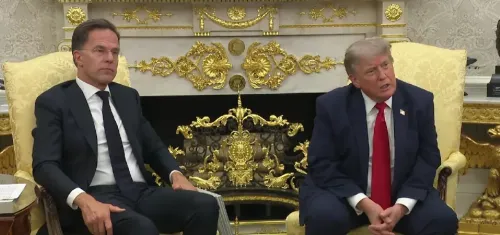
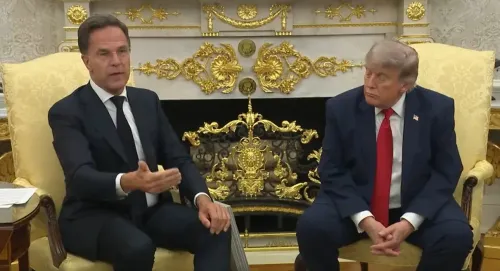
NATO Secretary General Mark Rutte on the eve of the Ankara summit said the Alliance is undergoing a fundamental transformation, with Europe assuming a larger share of its own defence burden — and credited US President Donald Trump as a key driver behind allies including Italy and Spain ramping up military expenditure. Rutte's remarks were reported by Italian media ahead of what is expected to be a pivotal gathering for the Alliance.
A NATO That Could Not Sustain Its Old Model
Rutte was unambiguous in his assessment of the previous burden-sharing arrangement. 'The NATO of just three, four or five years ago was not sustainable,' he said, arguing that it was unreasonable to expect a country of 350 million people, located eight hours by plane from Europe, to shoulder the primary responsibility for defending a continent of 600 million people.
He described the dependence of 'the richest area in the world' on the United States as excessive, and called for a rebalancing in which Washington continues to provide the nuclear umbrella and decisive conventional support, while European allies — alongside Canada — take on greater conventional responsibility.
The Trump Factor in Driving Spending
On military spending, Rutte explicitly acknowledged the role of the Trump administration. 'If countries like Italy and Spain are increasing defence spending, it is also due to the Donald Trump factor,' he said. He described the US push for allies to reach 5 per cent of GDP for combined defence and security spending as 'very helpful', adding that it was 'probably a weak term' for how strongly Washington has pressed the case.
Rutte also noted that Spain, Italy, Belgium, and Canada all reached the 2 per cent of GDP threshold last year — a milestone that had eluded several of them for years. He attributed this partly to the war in Ukraine and, 'in a small part', to Trump's pressure. Notably, Rutte said Trump is 'the first since Eisenhower' to have kept the promise of convincing European allies to share more of the defence burden.
Where European Spending Stands Now
Rutte cited a striking headline figure: just one year into what he described as a ten-year project, European allies and Canada are already investing approximately 4 per cent of their GDP in combined defence and security. He framed this as evidence of a genuine shift in strategic mindset rather than a cosmetic adjustment driven by political pressure.
The Secretary General stressed, however, that spending alone is insufficient. The Alliance, he said, must convert investment into operational capabilities — requiring 'more forces, more resources, and a much stronger industrial base.'
What the Ankara Summit Is Expected to Deliver
Looking ahead to the Ankara summit, Rutte expressed confidence that member nations would present 'clear, concrete, and credible plans' to reach the 5 per cent GDP target for defence and security spending. He described European allies and Canada as now being 'on track' to match US defence spending levels — a development he called 'a real change in mindset: a stronger Europe in a stronger NATO.'
The summit comes at a moment of heightened urgency, with the Russia-Ukraine war continuing to reshape European security calculations and alliance cohesion under sustained pressure from Washington to deliver on commitments.
Point of View
A broader category than the traditional NATO defence-only metric, which makes the headline number look more impressive than a like-for-like comparison would. The real test at Ankara is whether the 5% target comes with binding timelines and independent verification, or remains aspirational. Europe's defence industrial base — chronically underfunded and fragmented — is the harder constraint that no summit communiqué can paper over.
NationPress
5 Oct 2026
Frequently Asked Questions
What did NATO Secretary General Mark Rutte say about Trump's role in defence spending?
Rutte said that if countries like Italy and Spain are increasing defence spending, it is 'also due to the Donald Trump factor.' He described US pressure on allies to raise spending as 'very helpful' and called Trump the first US president since Eisenhower to keep the promise of convincing European allies to share more of the defence burden.
Which NATO countries recently reached the 2 per cent of GDP defence spending target?
According to Rutte, Spain, Italy, Belgium, and Canada all reached the 2 per cent of GDP threshold last year. He attributed this to the ongoing war in Ukraine and, in part, to pressure from the Trump administration.
What is NATO's new defence spending target and where do European allies stand?
The US is pushing NATO allies toward a target of 5 per cent of GDP for combined defence and security spending. Rutte said that European allies and Canada are already investing approximately 4 per cent of GDP — a figure reached just one year into what he described as a ten-year rebalancing project.
What is the Ankara summit expected to decide on NATO spending?
The Ankara summit is expected to see member nations present clear, concrete, and credible plans to reach the 5 per cent of GDP target for defence and security spending. Rutte expressed confidence ahead of the summit that allies are now on track to match US defence spending levels.
Why did Rutte say the old NATO model was unsustainable?
Rutte argued it was unreasonable for the United States — a country of 350 million people located eight hours by plane from Europe — to bear primary responsibility for defending a continent of 600 million people. He described the dependence of 'the richest area in the world' on US security guarantees as excessive and called for a fundamental rebalancing.