NATO chief Rutte backs Trump on Iran, calls him 'leader of the free world'
Synopsis
NATO's chief flew to Washington and gave Trump one of his strongest public endorsements yet — calling the US president 'the leader of the free world' for acting on Iran's nuclear ambitions. With the Ankara summit days away and European burden-sharing still a flashpoint, Rutte's visit was as much diplomatic damage control as genuine praise.
Key Takeaways
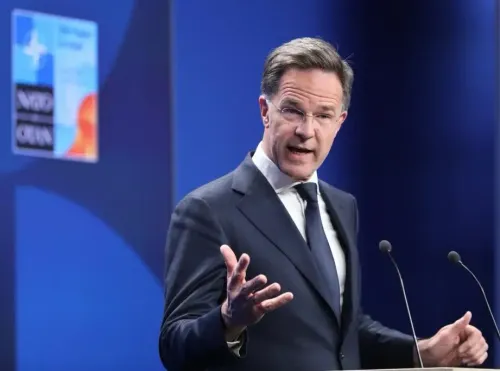
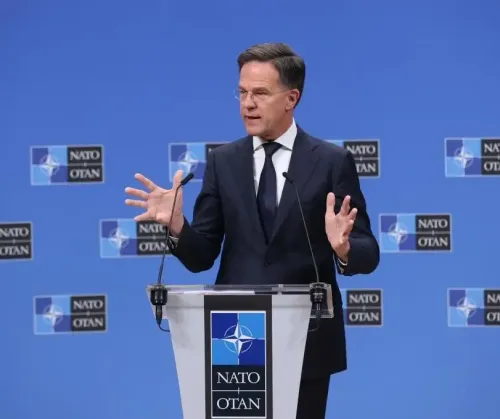
NATO Secretary General Mark Rutte publicly defended President Trump's military action against Iran at the White House on 25 June .
Rutte called Trump 'the leader of the free world taking responsibility... for the rest of the world' on the Iran campaign.
Trump criticised European allies for failing to offer support, saying 'We were let down.' Rutte said between 4,000 and 5,000 US planes flew from European air bases during the Iran campaign, arguing Europe was indispensable.
European allies and Canada have raised defence spending by nearly 20 per cent in the past year; the target is 5% of GDP by 2035 .
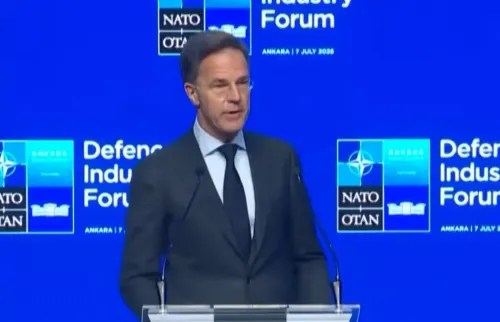
The NATO Ankara summit is scheduled for 7–8 July , focusing on defence spending, industrial production, and Ukraine support.
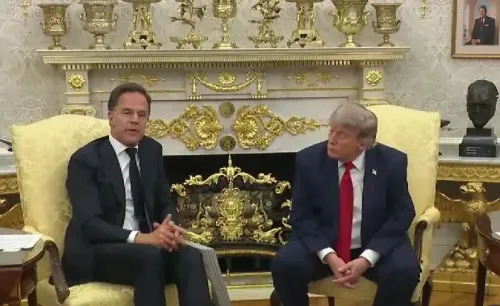
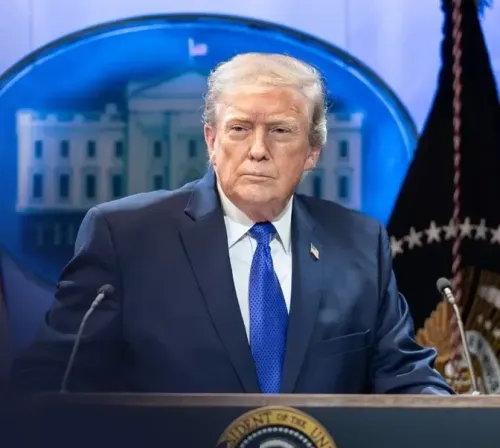
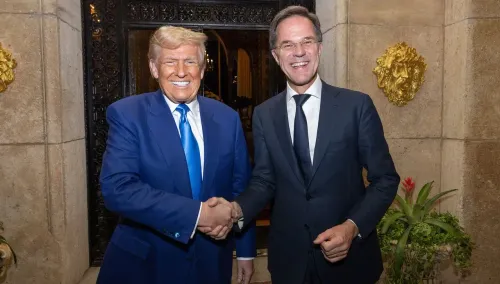
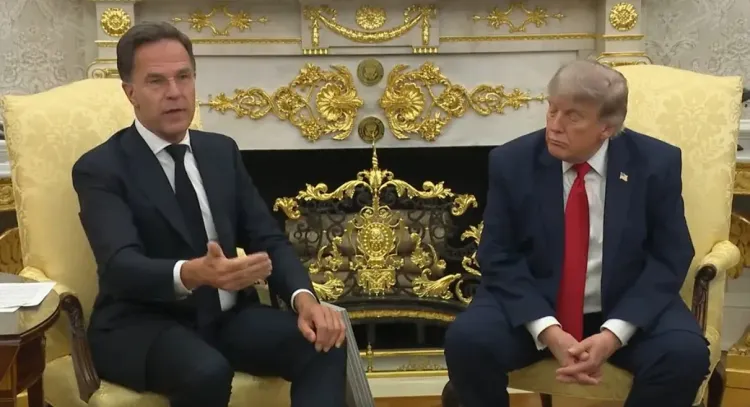
NATO Secretary General Mark Rutte on Wednesday, 25 June publicly defended President Donald Trump's military action against Iran, asserting that US strikes had prevented Tehran from acquiring nuclear capability and that Trump remained fully committed to the transatlantic alliance. The remarks came during a joint appearance at the White House, ahead of next month's NATO summit in Ankara.
Rutte's Defence of Trump's Iran Policy
Rutte offered an unambiguous endorsement of the US president's handling of the Iran conflict, describing the action as a matter of global security rather than regional politics. 'I really want to make clear how important it is, what you are doing on Iran,' Rutte said, standing alongside Trump.
He characterised Iran as 'a country which is exporting chaos' and 'exporting terrorism', warning that it 'was very near to getting their hands on the nuclear capability.' Rutte argued that a nuclear-armed Iran would pose 'a danger to the whole world, particularly the region, Israel, and to Europe, but also the rest of the world.'
In notably strong language, Rutte described Trump as 'the leader of the free world taking responsibility beyond the shores of the United States, for the rest of the world' — framing the military campaign as a contribution to collective security rather than unilateral action.
Trump's Criticism of European Allies
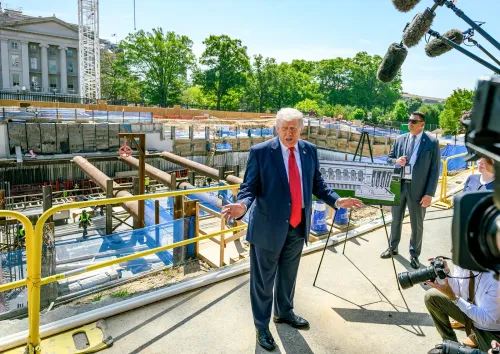
Trump, for his part, renewed criticism of several European allies, saying they had failed to offer support during the conflict. 'We were let down,' Trump said. 'We didn't need help on this at all. We demolished them in literally the first week, but it would have been nice if they would have said, "We'd like to help."'
Rutte acknowledged there had been 'a reason for disappointment' but characterised those instances as 'isolated cases', arguing that European nations had nonetheless enabled US operations through bilateral agreements. He noted that between 4,000 and 5,000 US planes had taken off from European air bases during the campaign. 'I would argue, it would have been very difficult to do Iran without having Europe as a power projection platform for the United States,' he said.
NATO Commitment and Defence Spending
Speaking to reporters outside the West Wing, Rutte pushed back firmly against suggestions that Trump's commitment to NATO had weakened. 'He is completely committed to the NATO alliance,' Rutte said.
He added that Trump had been 'absolutely clear' in pressing allies to spend more on defence, describing last year's agreement to raise defence and security spending to 5 per cent of GDP by 2035 as one of the President's biggest foreign policy achievements. According to Rutte, European allies and Canada had increased defence spending by nearly 20 per cent in the past year alone.
Rutte also pointed to the economic dimension, saying European purchases from American defence manufacturers and European corporate investments were supporting nearly 200,000 US jobs — an argument likely calibrated to resonate with Trump's domestic political priorities.
Ukraine and the Road to Ankara
The NATO chief reaffirmed continued support for Ukraine, saying Kyiv was 'doing so much better over the last five, six months than before', crediting sustained US assistance for strengthening Ukraine's position on the battlefield.
The NATO summit in Ankara on 7–8 July is expected to focus on implementing the alliance's new defence spending commitments, expanding defence industrial output, and sustaining support for Ukraine. The alliance has also maintained that Iran must never acquire a nuclear weapon — a position Rutte repeatedly emphasised during his Washington visit. This comes amid a broader debate within NATO about burden-sharing and the future of European strategic autonomy.
Point of View
And Ankara will test whether spending pledges translate into political solidarity. The 4,000–5,000 planes figure Rutte cited is a reminder that European infrastructure underpins US power projection even when European governments stay quiet — a structural dependency neither side fully acknowledges. The deeper question heading into the summit is whether NATO can hold together an alliance where the dominant power demands both operational support and public cheerleading, while reserving the right to act unilaterally.
NationPress
23 Sept 2026
Frequently Asked Questions
Why did NATO Secretary General Mark Rutte visit the White House on 25 June?
Rutte met President Trump at the White House on 25 June ahead of the NATO summit in Ankara scheduled for 7–8 July. The visit was aimed at reinforcing alliance unity, addressing European burden-sharing concerns, and discussing the aftermath of US military action against Iran.
What did Rutte say about Trump's handling of Iran?
Rutte strongly praised Trump's Iran policy, saying the US action had prevented Tehran from acquiring nuclear capability. He described Trump as 'the leader of the free world taking responsibility beyond the shores of the United States, for the rest of the world.'
Why did Trump criticise European allies?
Trump said European allies had failed to offer support during the Iran conflict, stating 'We were let down.' He acknowledged the US did not need the help militarily but said it 'would have been nice' if allies had offered assistance.
How did Rutte respond to Trump's criticism of Europe?
Rutte acknowledged 'a reason for disappointment' but called the cases 'isolated', arguing that Europe had still enabled US operations through bilateral agreements and that between 4,000 and 5,000 US planes flew from European air bases during the Iran campaign.
What is on the agenda for the NATO Ankara summit in July 2025?
The NATO summit in Ankara on 7–8 July is expected to focus on implementing the alliance's defence spending commitments — including the target of 5% of GDP by 2035 — expanding defence industrial production, and sustaining support for Ukraine.