Trump says NATO failed US on Iran, names Germany, France, UK
Synopsis
At a NATO summit in Ankara, Trump publicly named Germany, France, the UK, and Italy for refusing to back the US military operation against Iran — calling it a deliberate test of alliance loyalty that most allies failed. NATO chief Rutte pushed back, citing 5,000 planes and base access as proof Europe delivered. The rift, aired in public, is the sharpest transatlantic split over a live military operation in recent memory.
Key Takeaways
US President Donald Trump accused Germany , France , the UK , and Italy of refusing to support the US military operation against Iran .
Trump made the remarks on 8 July alongside NATO Secretary General Mark Rutte at the Ankara summit.
He described the episode as a deliberate test of alliance loyalty, saying ‘the answer’ from major allies was negative.
Rutte disputed Trump’s account, citing 5,000 planes departing European airports in support of the operation codenamed Epic Fury .
Trump praised smaller NATO members for their willingness to help, while calling Spain ‘a wasted cause.’ The public dispute marks one of the sharpest transatlantic rifts over a live US military operation in recent years.
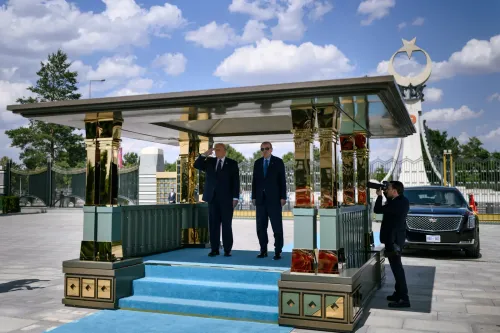
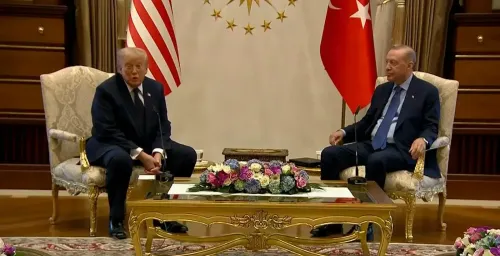
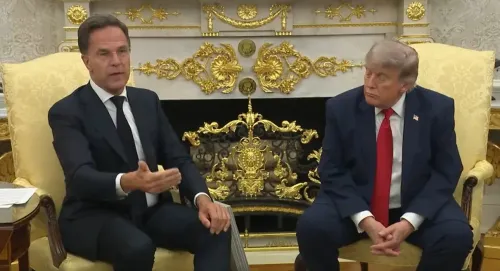
US President Donald Trump on Wednesday, 8 July publicly accused several major NATO allies of refusing to back the United States during its military operation against Iran, saying their reluctance left him deeply disappointed despite decades of American security guarantees to Europe. The remarks came as Trump stood alongside NATO Secretary General Mark Rutte ahead of an alliance summit in Ankara.
Trump's Direct Accusations
Trump said the alliance had failed a critical test when Washington sought support against what he described as “the number one state sponsor of terror.”
“I’m not happy with NATO because of the fact that they didn’t wanna help us with the number one state sponsor of terror, that’s Iran,” Trump said. “They were unwilling to help us.”
The President named Germany, France, the United Kingdom, and Italy as countries that declined to provide the level of support he sought. He said he personally telephoned leaders of each nation. He notably excluded Spain from even that effort, calling it “a wasted cause.”
Trump also expressed specific dissatisfaction with Britain’s response, quoting the Prime Minister as saying, “Well, we don’t wanna help you now, but we’ll help you when the war’s over” — a reply Trump called “not good.” He added that Italy was “very bad having to do with their bases.”
Trump said he had deliberately monitored how allies responded even though the US did not require direct military assistance. “I was really testing. I wanted to see whether or not they’d be there,” he said.
Rutte Pushes Back, Cites Operational Support
Rutte offered a pointed counter-narrative, arguing that European allies had in fact delivered substantial operational backing during the US campaign, which was codenamed Epic Fury.
“Five thousand planes taking off from European airports in support of Epic Fury. It was Europe as one big platform of power projection for the United States,” Rutte said, characterising Trump’s complaints as “isolated cases.”
The Secretary General cited specific examples: Germany, France, and other allies had provided base access and logistical support. He noted that Bucharest Airport in Romania was closed to commercial traffic for several days to facilitate Epic Fury operations, with the Romanian government’s full cooperation.
Trump acknowledged some assistance had been provided but maintained that key allies had still fallen short of his expectations. He said the United Kingdom had offered use of an island facility for two weeks, but that broader allied commitment was lacking.
Smaller NATO Members Drew Praise
In a notable contrast, Trump singled out some of NATO’s smaller member states for praise, saying they had expressed willingness to help. “Some of the very small countries wanted to help because they’re the most vulnerable,” he said, without naming them specifically.
This comes amid a broader pattern of Trump pressuring NATO allies to increase defence spending and demonstrate tangible solidarity, a posture Rutte has broadly supported while continuing to emphasise alliance unity.
What This Means for the Alliance
The public airing of grievances at an alliance summit is unusual and underscores the tensions within NATO over burden-sharing and the scope of collective commitments. Critics argue that Trump’s framing conflates political solidarity with direct military participation, while supporters contend that allies should have done more to signal support for a US operation targeting a shared adversary. The episode is likely to shape internal alliance debates on the definition of mutual defence obligations going forward.
Point of View
France, the UK, and Italy at a NATO summit is strategically calculated — it shifts blame for any diplomatic fallout from the Iran operation onto European shoulders while reinforcing his domestic narrative that allies free-ride on American power. Rutte’s counter-claim of 5,000 planes and base access is substantive, but it sidesteps Trump’s real demand: explicit political solidarity, not just logistical facilitation. The distinction matters. What mainstream coverage is missing is that this dispute is less about the Iran operation itself and more about redefining what Article 5 solidarity looks like in practice — a debate with consequences far beyond any single campaign.
NationPress
7 Oct 2026
Frequently Asked Questions
Why did Trump criticise NATO at the Ankara summit?
Trump accused key NATO allies — Germany, France, the UK, and Italy — of refusing to support the US military operation against Iran, saying their response disappointed him despite decades of American security commitments to Europe. He made the remarks on 8 July alongside NATO Secretary General Mark Rutte in Ankara.
What was NATO Secretary General Rutte’s response to Trump’s accusations?
Rutte pushed back, arguing that European allies had provided substantial operational support, including 5,000 aircraft departing from European airports and base access — including Bucharest Airport, which was closed to commercial traffic for the operation. He called Trump’s complaints ‘isolated cases.’
Which NATO allies did Trump specifically name?
Trump named Germany, France, the United Kingdom, and Italy as countries that declined to provide the support he sought. He also dismissed Spain as ‘a wasted cause,’ saying he did not even contact its government.
What was the US military operation Trump referred to?
Trump referenced a US military operation against Iran, which NATO documents referred to as ‘Epic Fury.’ He said the US did not require direct military assistance but was testing whether allies would stand with Washington against what he called the world’s top state sponsor of terrorism.
Which NATO members did Trump praise?
Trump praised some of NATO’s smaller member states, saying they had expressed willingness to help because, in his words, ‘they’re the most vulnerable.’ He did not name them specifically.