Trump Critiques NATO Allies, Celebrates Mideast Partnerships
Synopsis
During his meeting with Irish Prime Minister Micheal Martin, President Trump criticized NATO allies for not supporting US strikes on Iran, while praising Middle Eastern allies for their collaboration. Explore the contrasting views on NATO and Iran between US and European leaders.
Key Takeaways
Trump criticizes NATO for lack of support on Iran strikes.
Strong Middle Eastern partnerships highlighted.
Concerns over spending in Ukraine raised.
Diplomatic solutions emphasized by European leaders.
Differences in US and EU approaches to Iran and NATO noted.
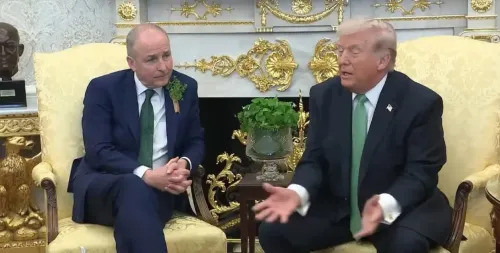
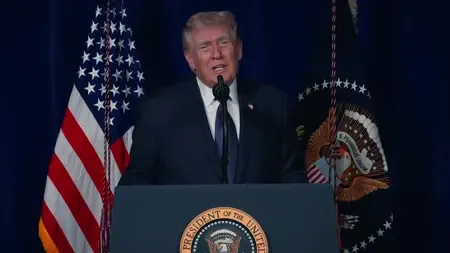
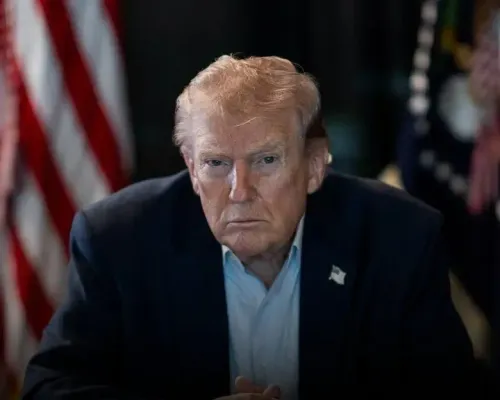
Washington, March 17 (NationPress) US President Donald Trump criticized NATO allies on Tuesday, referring to them as “foolish” for not supporting Washington’s military actions against Iran, while simultaneously defending the operations during a meeting with Irish Prime Minister Taoiseach Micheal Martin.
In their discussions at the Oval Office, Trump asserted that the US took decisive action against Iran independently and questioned NATO’s lack of support. “We don't need much help, and we actually don’t need any help,” he stated. “This is a significant test, as we don’t rely on them, though they should have been there.”
While acknowledging that NATO allies agreed on the importance of the action, Trump expressed dissatisfaction with their failure to contribute. “I was taken aback to see that NATO, while they concurred it was a crucial move… when they acknowledge it as a threat, yet choose not to assist, I find that very foolish.”
He claimed that the US operation had significantly degraded Iran’s military strength. “We’ve effectively dismantled their navy and military in all aspects. Their Air Force is now in ruins,” he noted, adding, “they possess no air force, no navy, and no radar.”
Trump reiterated that the mission aimed to prevent Tehran from developing nuclear weapons. “They would have acquired a nuclear weapon in just one month,” he emphasized, calling Iran a considerable threat.
At the same time, he acknowledged the support received from regional allies. “We’ve received outstanding backing from the Middle East,” he mentioned, listing Qatar, the UAE, Saudi Arabia, and Bahrain as key partners, adding, “Israel has been exceptionally strong… It has been a robust collaboration.”
On the situation in Ukraine, Trump raised concerns about US expenditures and the contributions from allies. “We didn’t need to involve ourselves in Ukraine,” he remarked. “We’re likely invested there for $400 billion… we supported them, but they didn’t reciprocate.”
He also confirmed that a meeting with Chinese President Xi Jinping is being rescheduled. “We’re resetting the meeting, and it appears it will occur in about five weeks,” Trump stated, highlighting the good relationship with China.
Addressing the situation in Cuba, Trump noted that the administration is contemplating further actions. “Cuba is currently in a dire situation… We will take measures regarding Cuba,” he indicated.
Secretary of State Marco Rubio stressed the necessity for structural change. “An economy that fails to function… must undergo dramatic changes,” he remarked, adding, “What they announced yesterday does not suffice.”
Vice President JD Vance pointed out ongoing threats in the region. “Numerous militia attacks against our base have occurred… and we must eliminate them upon discovery,” he stated, emphasizing that such groups “must not” be permitted to acquire nuclear capabilities.
Martin, aiming to promote a conciliatory stance, emphasized the significance of US-Europe relations. “The transatlantic relationship between Europe and the US is extremely important,” he mentioned, noting that despite existing tensions, “we can find common ground again.”
He agreed that Iran presents a serious danger but underscored the necessity for diplomacy. “A rogue state with a nuclear arsenal is unacceptable,” Martin asserted, adding, “Our goal is a peaceful resolution to conflict.”
This meeting underscored the differing tones between Washington and European leaders regarding Iran and NATO, while both sides reaffirmed the importance of their transatlantic partnership.
NATO, established in 1949, continues to serve as the primary military alliance connecting North America and Europe, although issues surrounding burden-sharing and strategic priorities have historically caused friction. The nuclear program and regional influence of Iran remain contentious topics, with the US advocating for a more aggressive strategy and European nations often leaning towards diplomatic solutions.
Point of View
Trump's remarks highlight a growing rift over military collaboration. His emphasis on Middle Eastern partnerships suggests a pivot in US foreign policy, challenging traditional alliances while aiming to fortify regional ties. This situation underscores the complex dynamics of global diplomacy.
NationPress
19 Sept 2026
Frequently Asked Questions
What did Trump say about NATO allies?
Trump referred to NATO allies as 'foolish' for not supporting US military actions against Iran, asserting that the US did not require their assistance.
Who did Trump meet during this discussion?
Trump met with Irish Prime Minister Taoiseach Micheal Martin to discuss US military actions and NATO's response.
What are Trump's views on Iran's military capabilities?
Trump stated that the US operation effectively dismantled Iran's military capabilities, claiming they have no functional air force or navy.
What was said about the US's financial commitment to Ukraine?
Trump expressed concern over the US spending around $400 billion on Ukraine, suggesting that the country did not provide sufficient support in return.
What did Martin emphasize regarding US-Europe relations?
Martin highlighted the importance of the transatlantic relationship and stressed the need for diplomacy to address the threat posed by Iran.